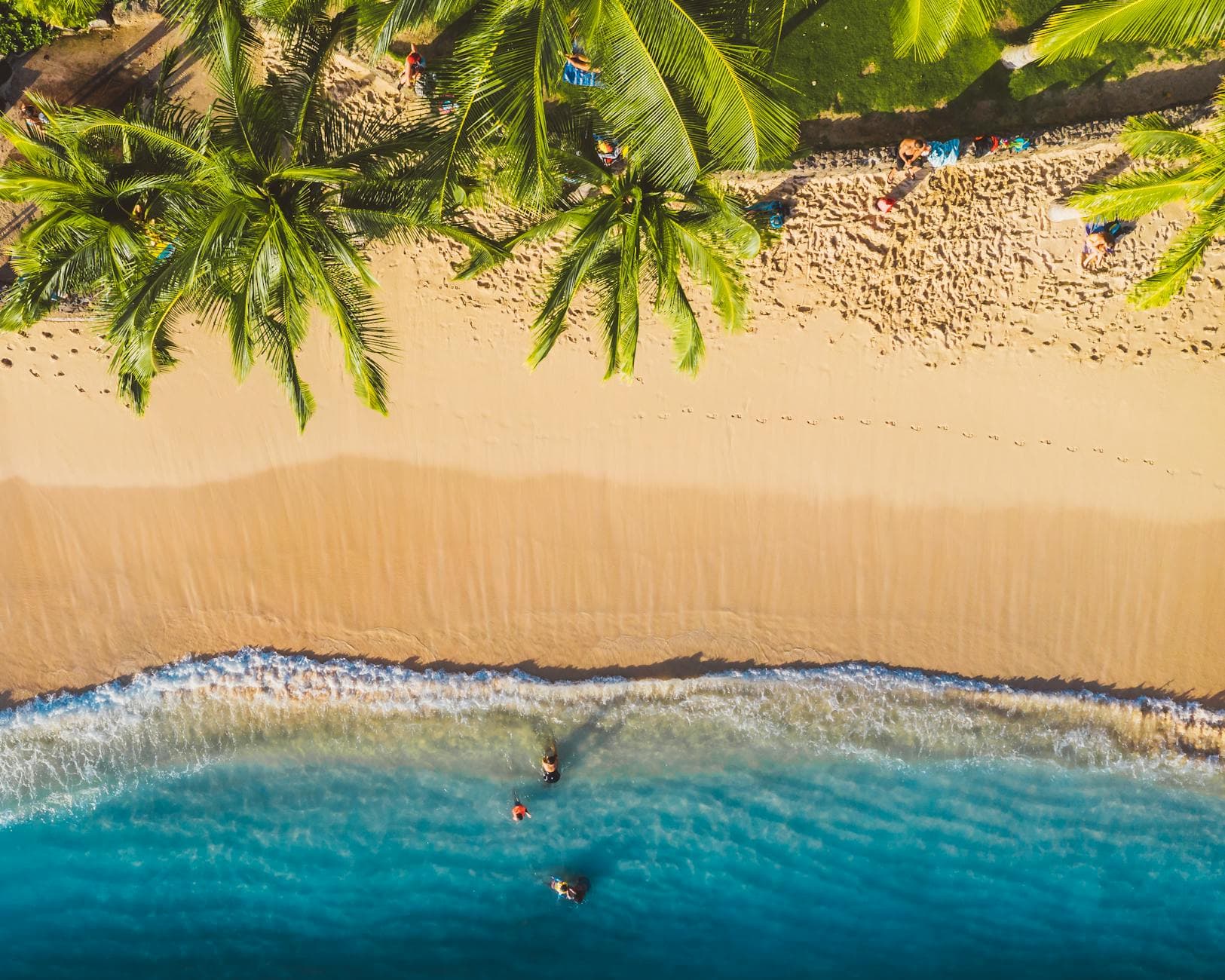
Bora Bora vs Fiji: Overwater Luxury vs Cultural Adventure for Your Honeymoon (2026)
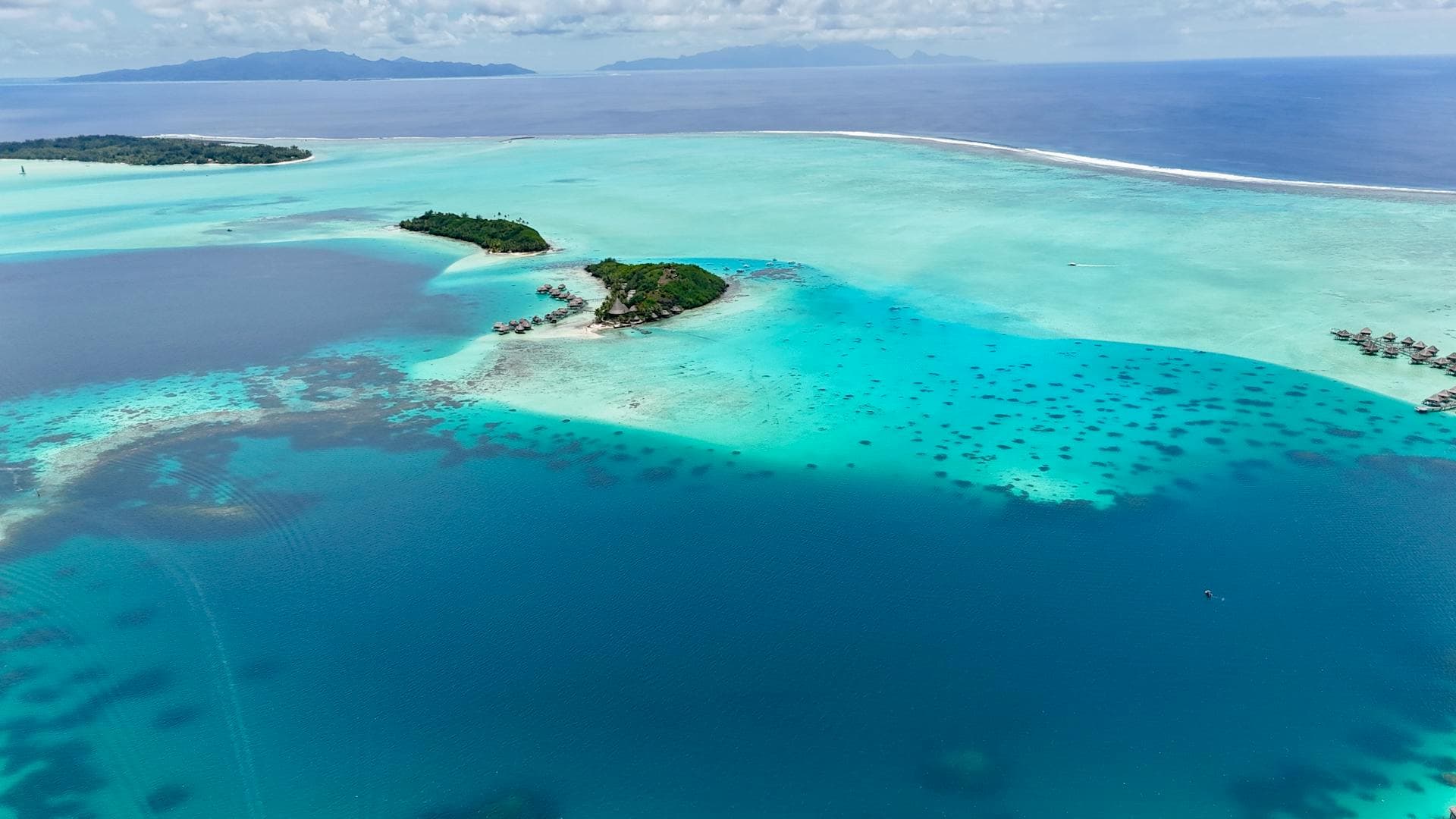
Photo: Pexels
Two South Pacific icons. One is the most photographed honeymoon destination on earth, a single volcanic island wrapped in a lagoon so blue it looks digitally altered, where overwater bungalows were literally invented. The other is an archipelago of 333 islands where the word "Bula" hits you before your luggage does, where soft coral reefs make the Maldives look colourless, and where a week costs roughly half of what you would spend in French Polynesia.
Bora Bora and Fiji both deliver turquoise water, thatched-roof overwater accommodation, and the kind of barefoot luxury that populates honeymoon Pinterest boards. But the experiences they offer are fundamentally different, and choosing the wrong one for your personality as a couple is a $10,000 mistake.
Bora Bora is a spectacle. You go there to stare at Mount Otemanu across an impossible lagoon, to float in a glass-floor bungalow above the water, and to exist inside what looks like an oversaturated desktop wallpaper. It is concentrated, visual, and expensive. The island is 12 square miles. There are roughly 30 resorts. You pick one and you stay put.
Fiji is an adventure. You go there to island-hop between volcanic peaks and coral atolls, to drink kava with a village chief, to dive the Great Astrolabe Reef, and to experience a culture so warm it makes Caribbean hospitality look standoffish. There are hundreds of islands, dozens of resort tiers, and a flexibility that Bora Bora simply cannot match.
This guide puts them side by side across every factor that matters (cost, accommodation, romance, activities, diving, food, culture, logistics, and weather) so you can stop debating and start packing.
Table of Contents
- Quick Verdict
- At a Glance: Bora Bora vs Fiji
- Getting There
- Best Time to Visit
- Beaches and Scenery
- Hotels and Resorts
- Overwater Accommodation
- Romance Factor
- Activities and Adventures
- Diving and Snorkelling
- Food and Dining
- Culture and People
- Cost Breakdown
- Nightlife
- Our Verdict
- FAQ
Quick Verdict
Choose Bora Bora if you want the single most visually spectacular honeymoon on earth: Mount Otemanu, the lagoon, the overwater bungalows, the concentrated luxury. You are willing to pay a premium for the iconic postcard backdrop and you prioritise romance, exclusivity, and photography over cultural immersion.
Choose Fiji if you want a honeymoon that extends beyond the resort fence: island-hopping, world-class diving, kava ceremonies, village visits, and genuine Fijian warmth. You want overwater accommodation without the Bora Bora price tag, and you value adventure and cultural connection alongside your beach days.
At a Glance: Bora Bora vs Fiji
| Category | Bora Bora | Fiji |
|---|---|---|
| Best For | Visual spectacle, pure luxury, photographers | Adventure, culture, divers, value seekers |
| Avg Daily Cost (couple) | $800–$1,800 | $350–$900 |
| 7-Night Budget (couple) | $8,000–$25,000+ | $4,000–$14,000 |
| Flight Time (LAX) | 12–14h (via Tahiti) | 10.5h (direct) |
| Flight Time (SYD) | 12–14h (via Auckland/Tahiti) | 3.5h (direct) |
| Best Months | May–October | May–October |
| Visa Required | No (EU territory, 90 days) | No (4-month permit on arrival) |
| Overwater Options | ~15 resorts | 3–4 resorts (growing) |
| Diving Quality | Good (lagoon focus) | World-class (soft coral capital) |
| Cultural Immersion | Moderate (Polynesian) | Exceptional (Fijian villages, kava) |
| Vibe | Exclusive, cinematic, intimate | Warm, adventurous, communal |
| Our Rating | 8.5/10 | 9/10 |
Getting There
Bora Bora
Every journey to Bora Bora funnels through Tahiti. International flights land at Faa'a International Airport (PPT) in Pape'ete, the capital of French Polynesia. From there, a 50-minute domestic flight on Air Tahiti hops you across to Bora Bora Airport (BOB), which sits on a motu, a tiny islet on the barrier reef. Your resort then collects you by boat from the airport dock.
- From Los Angeles: 8 hours nonstop to Tahiti on Air Tahiti Nui or Air France, then the 50-minute connection. Total: 12–14 hours door-to-resort.
- From New York / East Coast: 16–20 hours total, connecting through LAX.
- From the UK: 22–26 hours via LA or Paris (Air France flies Paris to Pape'ete with a technical stop).
- From Australia / New Zealand: 10–14 hours via Auckland (Air New Zealand to Tahiti, 5.5 hours).
The Tahiti bottleneck: If your domestic connection doesn't align, you may need an overnight in Pape'ete. The InterContinental Tahiti (with views across to Moorea) is a fine decompression stop, but it adds $200–$400 and a night to your trip. Book domestic flights when you book international to avoid this.
Flights cost: Expect $2,500–$5,000 per couple from the US. Limited airline competition on the Tahiti route keeps prices elevated. From Australia/NZ, flights are more reasonable at $1,500–$3,000 per couple.
Fiji
Fiji is significantly easier to reach. Nadi International Airport (NAN) on Viti Levu, the main island, receives direct flights from major Pacific Rim cities.
- From Los Angeles: Fiji Airways flies nonstop in 10.5 hours. This is the easiest South Pacific gateway from North America.
- From San Francisco: Fiji Airways nonstop, roughly 11 hours.
- From New York / East Coast: 18–22 hours, connecting through LAX.
- From the UK: 22–26 hours, connecting through Singapore, Hong Kong, or Los Angeles.
- From Sydney: 3.5 hours direct on Fiji Airways, Qantas, or Virgin Australia. Multiple daily flights.
- From Auckland: 3 hours direct. Air New Zealand and Fiji Airways operate frequent services.
Once in Nadi, resort transfers are straightforward. The Mamanuca Islands (where many honeymoon resorts sit) are a 30–90 minute boat ride or a 10-minute seaplane hop. The Yasawa Islands require the Yasawa Flyer catamaran (2.5–4 hours) or a charter flight. Coral Coast resorts on the main island are a 1–2 hour drive.
Flights cost: $1,800–$3,500 per couple from the US. From Australia/NZ, $600–$1,500 per couple. The competition on Fiji routes keeps fares sharply lower than Bora Bora.
Verdict: Getting There
Fiji wins on logistics. The direct LAX flight, cheaper fares, shorter transfers, and more routing options from multiple continents make it the easier destination to reach. Bora Bora's mandatory Tahiti connection adds complexity, cost, and sometimes an unplanned overnight. For couples flying from Australia or New Zealand, the difference is dramatic: 3.5 hours to Fiji versus 10+ hours to Bora Bora.
For a full breakdown of Fiji flight options and inter-island transfers, see our Fiji Honeymoon Guide. For Bora Bora logistics, see the Bora Bora Honeymoon Guide.
Best Time to Visit
Here is something useful: both destinations share the same peak season.
Bora Bora: May–October
- Dry season (May–October): Cooler temperatures (24–28°C / 75–82°F), low humidity, minimal rain, best lagoon clarity. This is peak honeymoon season.
- Wet season (November–April): Warmer (27–32°C / 80–90°F), higher humidity, afternoon tropical showers. Cyclone season technically runs November to April, though Bora Bora rarely takes a direct hit.
- Best honeymoon months: June through September. The lagoon is crystal clear, humidity is manageable, and the Mount Otemanu sunsets are reliably spectacular.
Fiji: May–October
- Dry season (May–October): Warm days (25–28°C / 77–82°F), lower humidity, excellent diving visibility (20–40 metres), minimal rain. Peak season.
- Wet season (November–April): Hotter (28–32°C / 82–90°F), more humid, regular afternoon downpours. Cyclone risk is real: Fiji sits in the cyclone belt and gets hit more frequently than Bora Bora. Prices drop 20–30%.
- Best honeymoon months: June, July, and September. August can be busier with Australian school holidays. May and October offer dry-season weather with slightly lower prices.
Water temperature at both destinations stays between 26–29°C (79–84°F) year-round.
The Scheduling Reality
Because both destinations peak May–October, your wedding date doesn't automatically decide between them the way it does for, say, Maldives vs Bora Bora (where peak seasons are opposite). If you are getting married in summer, both work perfectly. If you are getting married in winter (November–March), both carry some weather risk, though Fiji's wet season is generally wetter and has more cyclone exposure than Bora Bora's.
Winter wedding? Consider the Maldives. Its dry season runs November through April, the inverse of the South Pacific.
Beaches and Scenery
Bora Bora: The Lagoon to End All Lagoons
There is no gentle way to say this: Bora Bora's scenery is in a league of its own. Mount Otemanu (727 metres) is an extinct volcanic peak that dominates the island, a jagged tower of moss-covered basalt that changes colour with the light. In the morning it glows deep green. At sunset it turns amber, then violet, then silhouette black. It provides a constant, jaw-dropping backdrop that no flat atoll destination (not the Maldives, not Fiji's outer islands) can replicate.
The lagoon is the centrepiece. Enclosed by a barrier reef and ringed by motus, it cycles through impossible shades of blue, teal, aquamarine, and green depending on depth, cloud cover, and time of day. The water is so clear in the shallows that boats appear to hover above the sandy bottom.
Matira Beach, on the southern tip of the main island, is consistently ranked among the world's best. A long crescent of fine white sand with wade-out-for-a-hundred-metres shallow water. It is also one of the few public beaches, giving it a relaxed community atmosphere.
The honest take: Bora Bora has fewer beaches than Fiji (it's a small island), but what it has is concentrated visual perfection. Every angle, every viewpoint, every sunset is framed by that volcanic peak rising from that impossible lagoon. It is the most photogenic honeymoon setting on earth. Full stop.
Fiji: 333 Islands of Variety
Fiji's scenery is broader, wilder, and more diverse. The archipelago stretches across 1.3 million square kilometres of ocean, from the large volcanic islands of Viti Levu and Vanua Levu (where most people arrive) to the tiny coral atolls of the Mamanuca and Yasawa chains (where most honeymooners end up).
The Mamanuca Islands deliver the classic postcard: palm-fringed white sand, turquoise shallows, coral reefs visible from the beach. Islands like Tokoriki, Matamanoa, and Castaway are small enough to walk around in 20 minutes.
The Yasawa Islands are more dramatic: volcanic peaks rising sharply from the ocean, limestone caves, long stretches of deserted beach. Sawa-i-Lau caves (sacred underground limestone caverns you can swim through) are unlike anything in Bora Bora.
Natadola Beach on Viti Levu is often called Fiji's best beach, a sweeping crescent of white sand backed by rolling green hills.
Where Fiji loses to Bora Bora: it doesn't have a single defining visual signature. No Mount Otemanu equivalent. No one lagoon that crystallises the entire experience into a single breathtaking panorama. But it compensates with sheer variety. You can visit five different islands in a week and each one feels like a different country.
Verdict: Beaches and Scenery
Bora Bora wins on concentrated visual impact. Fiji wins on variety and exploration. If you want to wake up every morning to the same perfect view and never tire of it, Bora Bora. If you want to island-hop and discover a different paradise each day, Fiji.
Hotels and Resorts
Bora Bora: ~30 Properties, High Floor
Bora Bora's resort market is compact and premium. Around 30 properties operate on the island and surrounding motus, and the overwater bungalow category is dominated by a handful of international luxury brands. Less competition means higher baseline prices and less negotiating power.
Mid-Range ($400–$800/night):
- Maitai Polynesia Bora Bora: One of the more accessible options, with overwater rooms starting around $400/night. Simple finishes, but the lagoon views are identical to what the luxury resorts charge triple for.
- Le Bora Bora by Pearl Resorts: Solid overwater bungalows with good lagoon access. From around $500/night.
Luxury ($800–$2,000/night):
- InterContinental Bora Bora Resort & Thalasso Spa: Arguably the best-positioned resort on the island. Overwater villas sit directly in front of Mount Otemanu. The deep-ocean water air conditioning system (SWAC) is an engineering marvel. Excellent spa. From around $900/night.
- Conrad Bora Bora Nui: Hilton's flagship, with some of the largest overwater villas in Bora Bora. Glass-floor living rooms, deep soaking tubs with lagoon views. From around $1,000/night.
- Four Seasons Resort Bora Bora: Consistently rated among the world's top resorts. Overwater bungalows with private plunge pools, world-class dining, and service that runs like clockwork. From around $1,200/night.
Ultra-Luxury ($2,000+/night):
- The St. Regis Bora Bora Resort: The most exclusive address on the island. Overwater villas up to 1,500 sq ft, butler service, private decks with unobstructed Otemanu views. The Royal Estate Villa runs $10,000+ per night. Standard overwater from around $1,500/night.
Fiji: Hundreds of Options, Every Price Point
Fiji's resort market is enormous and covers the full spectrum from $50/night backpacker bures to $5,000/night private island retreats. For honeymooners, the sweet spot sits between $200 and $1,200 per night, a range that barely exists in Bora Bora.
Budget-Luxury ($150–$400/night):
- Tokoriki Island Resort: Adults-only, beachfront bures on a small Mamanuca island. Consistently the top-rated resort in Fiji on TripAdvisor. Intimate (36 rooms), excellent reef snorkelling, and a romantic atmosphere that punches well above its $250–$400/night price.
- Matamanoa Island Resort: Another adults-only gem in the Mamanucas. Smaller and quieter than Tokoriki, with a beautiful house reef. From around $200/night.
- Castaway Island Resort: Family-friendly but with a dedicated couples' area. Classic Fijian style. From $180/night.
Luxury ($400–$1,200/night):
- Likuliku Lagoon Resort: Fiji's original overwater bure resort and still its most romantic. Adults-only, 45 rooms, traditional Fijian architecture meets luxury finishes. The overwater bures are genuinely spectacular. From around $700/night for an overwater bure.
- COMO Laucala Island: Owned by Red Bull co-founder Dietrich Mateschitz's estate, this private island resort is one of the most exclusive on earth. 25 villas, private airstrip, golf course, championship dive sites. From $5,000/night. This is Fiji's answer to ultra-luxury.
- Kokomo Private Island: 21 beachfront villas and 5 residences on an island in the Great Astrolabe Reef. World-class diving steps from your villa. From $2,500/night.
Mid-Range ($250–$600/night):
- Six Senses Fiji: Opened on Malolo Island with their signature sustainability-meets-luxury approach. Pool villas, excellent spa, farm-to-table dining. From around $500/night.
- Nanuku Auberge Resort: On the Coral Coast of Viti Levu, a boutique all-suite property with strong cultural programming. From around $400/night.
Verdict: Hotels and Resorts
Fiji offers dramatically more choice across more price points. You can have a genuinely luxurious honeymoon in Fiji for half the cost of a mid-range Bora Bora stay. Bora Bora's resorts are concentrated at the high end, with less variety and less competition. If budget flexibility matters, Fiji wins outright. If you want the specific Four Seasons / St. Regis / Conrad tier of international luxury branding against a volcanic backdrop, Bora Bora delivers that in a way Fiji's smaller resorts do not (Laucala and Kokomo excepted).
For full resort breakdowns, see our Fiji Honeymoon Guide and Bora Bora Honeymoon Guide.
Overwater Accommodation
Both destinations offer overwater stays, but they approach it very differently, and the price gap is significant.
Bora Bora: The Birthplace of Overwater
Bora Bora is where the overwater bungalow was invented. The first one was built in 1967 at Hotel Bora Bora (now closed), and the concept spread from here to the Maldives, Fiji, and beyond. Today, roughly 15 of Bora Bora's 30 resorts offer overwater accommodation, and the format is deeply refined.
Bora Bora overwater bungalows are typically larger than Fiji's, with more polished finishes: glass floor panels, direct lagoon access via private stairs, deep soaking tubs overlooking the water, and outdoor showers. The Four Seasons overwater bungalows include private plunge pools. The St. Regis versions feature butler service and separate living areas.
Starting price for overwater in Bora Bora: $500–$600/night (Maitai Polynesia). Mid-range: $900–$1,200/night (InterContinental, Conrad). Luxury: $1,500+/night (St. Regis, Four Seasons).
The defining advantage: nearly every overwater unit in Bora Bora has a direct sightline to Mount Otemanu. That volcanic backdrop elevates the overwater experience from "nice" to "unforgettable."
Fiji: Overwater at a Fraction of the Price
Fiji was slower to adopt overwater accommodation, but it has arrived, and at prices that make Bora Bora look absurd.
Likuliku Lagoon Resort is the headline act. Fiji's first true overwater bure resort, opened in 2007, with traditional Fijian thatched-roof bures built over the lagoon on Malolo Island in the Mamanucas. The overwater bures (10 units) feature glass floor panels, private decks with direct water access, and outdoor rain showers. The architecture blends traditional Fijian craftsmanship with modern luxury. Rates start around $700/night for an overwater bure, roughly 40% cheaper than a comparable Bora Bora overwater experience.
Marriott Momi Bay on the Coral Coast of Viti Levu offers overwater bure-style villas from around $350–$500/night. They lack the boutique intimacy of Likuliku, but they deliver the overwater experience at an even lower price point.
Starting price for overwater in Fiji: $350–$500/night (Marriott Momi Bay). Boutique luxury: $700–$1,000/night (Likuliku).
Verdict: Overwater
Bora Bora wins on overwater pedigree, variety of options, quality of finishes, and, crucially, the volcanic backdrop that makes every overwater moment cinematic. Fiji wins on value. If overwater accommodation is a must-have and budget matters, Fiji gives you the experience at 40–60% less. If you want the absolute pinnacle of overwater living with the world's most famous view behind it, Bora Bora justifies the premium.
Romance Factor
Both destinations are absurdly romantic. But the romance expresses itself differently.
Bora Bora: Spectacle as Romance
Bora Bora's romance is cinematic. Mount Otemanu is a permanent backdrop to everything: breakfast on the overwater deck, sunset cocktails at the resort bar, midnight swims in the lagoon. The mountain changes colour throughout the day, and it turns every ordinary moment into something that feels like a film still.
The shared activities build connection through adrenaline. Jet skiing tandem across the lagoon. A helicopter ride over the island. A private motu dinner with torches in the sand and the lagoon lapping at your feet. These are big, dramatic, memorable moments.
French Polynesian culture adds warmth. Traditional flower crowns (hei), ukulele music, and Polynesian blessing ceremonies for couples create an atmosphere that's romantic without feeling manufactured.
Peak romance experiences:
- Private dinner on an uninhabited motu, arranged by the Four Seasons or St. Regis ($300–$600 per couple)
- Polynesian couples' blessing ceremony
- Sunset sailing on the lagoon
- Overwater bungalow breakfast delivered by canoe (InterContinental)
- Lagoon Restaurant by Jean-Georges at the St. Regis, fine dining directly over the water with Otemanu glowing at sunset
Fiji: Warmth as Romance
Fiji's romance is human. The Fijian people are genuinely, disarmingly warm. Staff at resorts don't just serve you. They sing to you, weave you flower garlands, call you by name from day one, and remember your story. The Fijian concept of "kerekere" (communal generosity) permeates everything. You will feel welcomed in a way that goes beyond professional hospitality.
Couples who visit Fiji together often describe a specific kind of bonding: the shared experience of participating in a kava ceremony, of visiting a Fijian village and being welcomed by the chief, of watching a fire-walking performance and feeling the heat on your face. These are cultural experiences you have together that create memories deeper than any resort dinner.
The privacy is there too. Adults-only resorts like Tokoriki, Likuliku, and Matamanoa are small, intimate, and designed around couples. A beachfront bure at Tokoriki with the reef 20 metres away, the stars overhead, and absolute silence except for the ocean. That is a different kind of romance, but it is no less powerful.
Peak romance experiences:
- Overwater bure at Likuliku with the reef glowing beneath your glass floor at night
- Private island picnic arranged by your resort (most Mamanuca/Yasawa resorts offer this)
- Traditional Fijian "lovo" feast (earth oven cooking) on the beach, just for two
- Couples' spa at Tokoriki with ocean views
- Sunset kava ceremony: drinking the traditional earthy root beverage as the sky turns gold
Verdict: Romance
Bora Bora wins on visual, cinematic romance, the kind that photographs beautifully and makes your Instagram followers weep. Fiji wins on emotional, experiential romance, the kind that bonds you through shared cultural moments and genuine human warmth. Introverted couples who want to exist in a beautiful bubble tend to gravitate toward Bora Bora. Extroverted couples who feed off people and places tend to prefer Fiji.
Activities and Adventures
Bora Bora: Lagoon Playground
Bora Bora's activity menu centres on the lagoon. It is a contained, curated set of experiences, all excellent, but less varied than what Fiji offers.
Top experiences for couples:
-
Lagoon tour by outrigger: The signature Bora Bora experience. Half-day boat tour circling the lagoon with stops for snorkelling, stingray and shark feeding in the shallows, and swimming in water that makes colour scientists question their instruments. $80–$150 per person.
-
Jet ski circumnavigation: Ride tandem around the entire lagoon, stopping at scenic viewpoints. Mount Otemanu from the water at speed is exhilarating. $150–$250 per couple.
-
Helicopter scenic flight: 15–30 minutes over the island gives you the iconic aerial view: the gradient blues, the motus, Otemanu from above. $250–$500 per person. Nothing else captures the scale.
-
4x4 safari tour: Off-road tour of the main island covering WWII gun emplacements (Bora Bora was a US military supply base), fruit plantations, and panoramic lagoon viewpoints. $80–$120 per person.
-
Parasailing: Tandem parasailing over the lagoon with Otemanu in the background. $150–$200 per couple.
Also available: stand-up paddleboarding, kayaking, ATV tours, Polynesian cultural shows, vanilla farm visits, fishing charters, and hiking to the summit ridge of Mount Pahia.
Fiji: The Adventure Advantage
Fiji's activity menu is broader, wilder, and extends well beyond any single resort or lagoon.
Top experiences for couples:
-
Island hopping: Fiji's greatest advantage. In a single trip, you can visit volcanic islands, flat coral atolls, mangrove-fringed coastlines, and uninhabited sand cays. The Mamanuca and Yasawa chains alone offer 20+ islands within boat transfer distance of each other. No equivalent exists in Bora Bora.
-
Sawa-i-Lau caves: Sacred limestone caves in the Yasawa Islands. You swim through an underwater passage from one cavern to another, emerging into a cathedral-like space lit by shafts of sunlight through the rock. Genuinely awe-inspiring. Tours run from Yasawa resorts.
-
Village visits: Guided visits to Fijian villages where you meet the chief, participate in a kava ceremony, see traditional crafts, and learn about Fijian communal life. These are real communities, not tourist performances. Dress modestly (sulu required), bring a bundle of kava root as a gift ($10–$20 at any Nadi market), and prepare to feel the warmth.
-
Zip-lining and river tubing: Viti Levu's interior offers zip-line courses through the rainforest canopy and inner-tube rides down jungle rivers. Kula Wild Adventure Park and Zip Fiji are the main operators. $80–$150 per person.
-
Sunset sailing: Charter a catamaran or traditional drua (Fijian double-hulled canoe) through the Mamanucas at sunset. The colours across the island chain are extraordinary. $100–$200 per person.
Also available: surfing (Cloudbreak, one of the world's most famous waves, is in the Mamanucas), white-water rafting on the Navua River, hiking to waterfalls on Taveuni, sport fishing, quad biking, and fire-walking performances.
Verdict: Activities
Fiji wins decisively on variety and adventure. Island hopping alone is a category of experience Bora Bora cannot offer. Bora Bora's activities are excellent but contained within a single lagoon system. If you need more than beach, snorkel, and spa for a full week, Fiji delivers more stimulation.
Diving and Snorkelling
This section matters. If underwater life is a priority, the gap between these destinations is significant.
Bora Bora: Pretty Lagoon, Limited Reef
Bora Bora's snorkelling is centred on the lagoon. The shallow sandy areas where blacktip reef sharks and southern stingrays congregate are iconic. You will see photos of honeymooners standing waist-deep while stingrays glide past their legs. The coral gardens on the barrier reef offer decent snorkelling, with good visibility (15–25 metres in dry season) and a reasonable variety of tropical fish.
Scuba diving around Bora Bora is solid but not world-class. The lagoon has several dive sites with reef sharks, manta rays (seasonal), barracuda, and eagle rays. Anau is the best-known site for manta encounters between May and November. The Tupitipiti site on the outer reef offers wall diving with larger pelagic visitors.
The honest assessment: Bora Bora's underwater life is good enough to fill a few excellent half-days, but it is not a diving destination in the way that Fiji is. The coral health is moderate: bleaching events and crown-of-thorns starfish have affected some areas. If you are certified divers choosing a destination primarily for underwater experiences, Bora Bora should not be at the top of your list.
Fiji: The Soft Coral Capital of the World
Fiji is, without exaggeration, one of the five best diving destinations on the planet. The country is officially known as the "Soft Coral Capital of the World," and the title is earned. The combination of nutrient-rich currents, volcanic topography, and protected marine areas creates reef systems of staggering colour and biodiversity.
Marquee dive sites:
-
Great Astrolabe Reef: The fourth-largest barrier reef on earth, surrounding Kadavu island in southern Fiji. Pristine hard and soft coral, manta rays, reef sharks, and visibility regularly exceeding 30 metres. Kokomo Private Island sits on its edge. Guests can dive the reef from the resort's jetty.
-
Rainbow Reef (Somosomo Strait): Between Vanua Levu and Taveuni, this current-swept channel is one of the world's most colourful dive sites. Soft corals in every conceivable colour (purple, pink, orange, yellow) coat the walls and bommies. The White Wall site is famous: an entire vertical face covered in white soft coral that glows in torch light.
-
Beqa Lagoon: Home to the Shark Reef Marine Reserve, where organised shark dives bring you face-to-face with bull sharks, tiger sharks, lemon sharks, and grey reef sharks in open water. This is not a cage dive. You sit on the ocean floor while sharks swim past at arm's length. Not for the faint-hearted, but an unforgettable shared experience for couples who dive.
-
Namena Marine Reserve: Between Viti Levu and Vanua Levu, a protected area with some of the healthiest coral in the Pacific. Schools of barracuda, tuna, hammerheads in the deeper water.
Snorkelling for non-divers: Even if you don't dive, Fiji's reefs are accessible. Many resorts have house reefs within wading distance. Tokoriki's house reef is excellent. Likuliku's lagoon has good snorkelling from the overwater bures. And boat-based snorkelling excursions to reef sites are offered by every resort.
Verdict: Diving and Snorkelling
Fiji wins overwhelmingly. It is not close. If diving or snorkelling is a significant part of your honeymoon, Fiji is the clear choice. Bora Bora offers pleasant lagoon snorkelling and decent reef diving, but Fiji offers world-class sites that serious divers fly halfway around the planet to experience. The Great Astrolabe Reef alone justifies the trip.
For more on Fiji's dive sites and how to plan a dive-focused honeymoon, see our Fiji Honeymoon Guide.
Food and Dining
Bora Bora: French-Polynesian Fusion
Bora Bora benefits from French colonial culinary influence. French Polynesia is a French overseas territory, and the result is baguettes, croissants, wine lists, and French cooking techniques fused with Polynesian ingredients: fresh mahi-mahi, tuna, coconut, vanilla (Tahitian vanilla is among the world's finest), breadfruit, and taro.
Poisson cru is the signature dish you will eat daily and never tire of: raw tuna (or mahi-mahi) marinated in lime juice and tossed with coconut cream, cucumber, tomato, and onion. It is clean, fresh, and perfect in the heat. Every resort serves its own version; the one at the InterContinental Thalasso's Iriatai restaurant is particularly good.
Standout dining:
- Lagoon Restaurant by Jean-Georges (St. Regis): Overwater fine dining by Jean-Georges Vongerichten. Polynesian-inspired tasting menus. $200–$400 per couple.
- Bloody Mary's: Legendary open-air restaurant on the main island with a sand floor. Choose your fish from the daily catch displayed on ice and have it grilled to order. Celebrity names carved into the entrance planks date back to the 1970s.
- Fare Manuia (InterContinental Thalasso): Beachfront BBQ with fresh seafood. Less formal, excellent value by Bora Bora standards.
You can eat off-resort in Bora Bora, which is a meaningful advantage over one-island-one-resort destinations like the Maldives. Roulettes (food trucks) in Vaitape, the main town, serve Chinese-Polynesian fusion, crêpes, and grilled fish for $15–$30 per person, a fraction of resort prices.
Daily food costs: $150–$300 per couple at resort restaurants. Off-resort dining: $40–$80 per couple. Half-board packages ($150–$250 per person per day) usually make financial sense.
Fiji: Hearty, Fresh, and Cultural
Fijian cuisine is less refined than French Polynesian but more generous and culturally immersive. The food is hearty, coconut-heavy, and built around communal eating traditions.
Lovo is the experience you must have: an earth-oven feast where whole fish, chicken, root vegetables (taro, cassava, breadfruit), and palusami (taro leaves in coconut cream) are wrapped in banana leaves and slow-cooked over hot stones buried in a pit. The smoky, tender result is extraordinary. Most resorts host a lovo night at least once a week.
Kokoda is Fiji's answer to poisson cru, raw fish marinated in lime and coconut cream. Simpler than the French Polynesian version, but excellent when freshly prepared.
Standout dining:
- Kokomo Private Island restaurant: Farm-to-reef dining with ingredients from the island's organic garden and the surrounding reef. Exceptional but requires staying at the resort (or knowing someone who is).
- Tokoriki Island Resort restaurant: Intimate, chef-driven menus that change daily based on what the fishermen bring in. For a 36-room resort, the food quality is remarkable.
- Nadi town dining: In Nadi, head to Tu's Place or Nadina Authentic Fijian Restaurant for local curries, roti, and kokoda at local prices ($10–$20 per person).
Fijian cuisine has strong Indian influence (ethnic Indians make up roughly 37% of the population), so you will also find excellent curries, dal, roti, and chutney at most resorts and throughout Viti Levu.
Daily food costs: $80–$200 per couple at resort restaurants. Off-resort on Viti Levu: $20–$50 per couple. All-inclusive packages are common at Fiji resorts and usually the smarter financial play.
Verdict: Food and Dining
Bora Bora wins on culinary sophistication: the French-Polynesian fusion is genuinely distinctive, and restaurants like Lagoon by Jean-Georges are world-class. Fiji wins on cultural dining experiences (lovo feasts, village meals) and overall value. Both are expensive for dining by non-resort standards, but Fiji's food costs run 30–50% lower than Bora Bora's.
Culture and People
This is the category where the gap is widest.
Bora Bora: Polynesian Beauty, Limited Depth
French Polynesia has a rich Polynesian cultural heritage: the navigation traditions, the tattooing art, the oral histories, the dance forms (particularly the ote'a, a mesmerising hip-shaking dance performed at resort cultural nights). The aesthetic culture is beautiful: flower crowns, pareo wraps, shell jewellery, and the Polynesian physical grace that is immediately evident.
But for most honeymooners staying at resort properties, the cultural exposure is surface-level. You will see a Polynesian dance performance, you may attend a pareo-tying demonstration or a flower crown workshop, and you will eat poisson cru. The deeper Polynesian culture, including the marae (sacred sites), the oral traditions, and the political complexities of a French overseas territory, rarely surfaces during a week at the Four Seasons.
The main island of Bora Bora has a small, friendly local community. Vaitape is a one-street town with a market, a few shops, and a scattering of restaurants. It is pleasant but not a cultural destination.
Fiji: Culture Is the Product
Fiji's culture is not a resort amenity. It is the reason many couples return.
The Fijian concept of "vanua" (the interconnection of land, people, and spirit) permeates daily life. Fijian communities are organised around villages led by hereditary chiefs. Social life revolves around communal obligations, feasts, and the drinking of kava (yaqona), a mildly sedative root beverage served in a coconut shell during formal welcome ceremonies and casual evening gatherings alike.
What you will experience:
-
Kava ceremony (sevusevu): If you visit a Fijian village, you will be invited to sit cross-legged in the chief's bure and participate in a kava ceremony. You present a bundle of kava root (vakona) as a gift, the chief accepts it, and the preparation begins. You drink from the communal bilo (coconut shell). Clap once before receiving, drink it in one go, clap three times after. The kava tastes earthy and slightly numbing. The experience is deeply communal and humbling.
-
Village visits: Guided tours to nearby villages are offered by most resorts. You will see how Fijians live: thatched bures, communal cooking, children playing, elders weaving mats. These are not staged performances. You are a guest in someone's actual home. Dress modestly (wear a sulu, remove your hat), bring kava as a gift, and be prepared to feel genuinely welcomed.
-
Meke performances: Traditional Fijian dance and storytelling, often performed at resort "Fiji Night" events. The war dances are powerful; the fan dances are graceful. The singing (always harmonised, always in Fijian) is hauntingly beautiful.
-
Fire walking: Originating from Beqa Island, fire walking is a sacred tradition where Fijian men walk barefoot across white-hot stones. Demonstrations are performed at some resorts and are genuinely impressive.
-
The "Bula" factor: The word "Bula!" (roughly: life, health, happiness) is the Fijian greeting, and it is everywhere. Airport staff, bus drivers, resort workers, children on the road, strangers on the beach: everyone says it, everyone means it, and the cumulative effect of being greeted with genuine warmth a hundred times a day changes the texture of your entire trip.
Verdict: Culture
Fiji wins overwhelmingly, and it is not close. If cultural immersion, human connection, and authentic experiences matter to your honeymoon, Fiji is in a different league. Bora Bora's Polynesian culture is beautiful but largely experienced through resort-filtered performances. Fiji's culture wraps around you from the moment you land.
Cost Breakdown: 7-Night Honeymoon for Two
| Expense | Bora Bora | Fiji |
|---|---|---|
| Flights (2 pax, from US) | $2,500–$5,000 | $1,200–$2,200 (from LAX) |
| Resort transfers | $0–$100 (boat, usually included) | $50–$300 (boat or seaplane) |
| Hotel (7 nights) | $3,500–$14,000 | $1,400–$8,400 |
| Food & Drinks (7 days) | $1,200–$2,500 | $600–$1,500 |
| Activities | $500–$1,200 | $300–$800 |
| Extras (spa, tips, misc) | $300–$800 | $200–$600 |
| Budget Total | $8,000–$10,000 | $4,000–$6,000 |
| Mid-Range Total | $12,000–$16,000 | $6,000–$10,000 |
| Luxury Total | $18,000–$25,000+ | $10,000–$16,000 |
Key Cost Differences Explained
- Flights: Fiji's direct LAX route and competition from multiple carriers keep fares $500–$1,500 cheaper per couple than Bora Bora's limited Tahiti routing.
- Accommodation: This is where the gap is widest. A week in a mid-range overwater bungalow in Bora Bora (InterContinental Thalasso, ~$900/night) costs $6,300. A week in an overwater bure at Likuliku in Fiji (~$700/night) costs $4,900. A week at Tokoriki (beachfront bure, ~$300/night) costs $2,100. Fiji's floor is dramatically lower.
- Food: Both are expensive by normal standards, but Fiji runs 30–50% cheaper, especially if you eat off-resort on Viti Levu.
- Activities: Bora Bora's helicopter tours and jet ski excursions push activity costs higher. Fiji's village visits and reef snorkelling are cheaper or free.
Bottom line on cost: A comparable honeymoon in Fiji costs roughly 40–60% less than Bora Bora. A couple on a $6,000 budget can have a genuinely luxurious week in Fiji (beachfront bure at Tokoriki, meals, flights, activities). That same $6,000 in Bora Bora buys a budget overwater room and careful dining. Fiji is the clear value winner.
For a deeper dive into honeymoon budgeting, see our How Much Does a Honeymoon Actually Cost? guide.
Nightlife
Let's be direct: neither destination is a nightlife destination. If club scenes and cocktail-bar hopping matter to your honeymoon, you want Greece or Mexico.
Bora Bora
Resort bars, sunset cocktails, and Polynesian dance shows. A few bars in Vaitape on the main island if you want to venture out. That is the extent of it. Most honeymooners are in bed by 10pm and completely happy about it.
Fiji
Slightly more social options. Resort "Fiji Nights" with meke dancing, fire shows, and kava sessions are cultural entertainment rather than nightlife. On Viti Levu, Nadi and Suva have bars and clubs if you want them, but most honeymooners at island resorts are similarly asleep by 10pm.
Verdict: Nightlife
Draw. Neither destination is about nightlife, and that is part of the appeal. If anything, Fiji has a marginal edge because resort cultural nights (with kava, singing, and fire dancing) are more engaging than typical resort entertainment.
Our Verdict
We will be direct: for most honeymooners, Fiji is the better choice.
Here is why. Fiji delivers everything a honeymoon needs (beautiful beaches, overwater accommodation, excellent diving, warm hospitality, romantic privacy) at 40–60% less than Bora Bora, with better logistics, more variety, and a cultural dimension that Bora Bora cannot match. The Fijian warmth is not a brochure cliché; it is a real, tangible thing that changes the quality of your trip. Couples who visit Fiji don't just come back relaxed. They come back moved.
The island-hopping flexibility is a genuine advantage. In a 10-day Fiji honeymoon, you can start with two nights on the Coral Coast of Viti Levu (village visits, zip-lining, waterfalls), move to four nights at Likuliku or Tokoriki in the Mamanucas (overwater bure, reef snorkelling, private beach), and finish with three nights at a Yasawa resort (Sawa-i-Lau caves, deserted beaches, sunset kava). That is three fundamentally different experiences in one trip. In Bora Bora, you check into one resort and you stay there for the week.
The diving alone might make the decision. If you are divers, even casual ones, Fiji is in a different weight class. The Great Astrolabe Reef, Rainbow Reef, and Beqa shark dives are bucket-list experiences that Bora Bora's pleasant lagoon snorkelling cannot touch.
But Bora Bora has something Fiji does not: the view.
Mount Otemanu rising from that lagoon is the most visually spectacular honeymoon setting on earth. No qualifier, no caveat. It is a place that makes real life look CGI. If what you want from your honeymoon is to exist inside the most beautiful postcard ever printed (to wake up every morning to a view that makes you both fall silent), then Bora Bora justifies every dollar of its premium. Some experiences are worth paying double for, and Bora Bora might be one of them.
Choose Fiji if...
- Budget matters: you want luxury without the Bora Bora markup
- You are divers or snorkellers: Fiji's reefs are world-class
- Cultural immersion matters: village visits, kava ceremonies, genuine Fijian warmth
- You want variety: island hopping, multiple destinations within one trip
- You are flying from Australia or New Zealand: Fiji is 3.5 hours away
- Adventure is part of the plan: caves, zip-lines, river rafting, shark dives
- You want to feel something: not just see something beautiful, but be changed by the people and the culture
Choose Bora Bora if...
- Visual spectacle is your priority: Mount Otemanu and the lagoon are unmatched
- You want the iconic overwater bungalow experience at its most refined
- Photography matters: every frame is a masterpiece
- You prefer concentrated luxury over exploration
- French-Polynesian cuisine appeals: the food is more sophisticated
- You are on the US West Coast: the Tahiti flight is manageable
- Money is not the main consideration: and you want the single most photogenic honeymoon on earth
If we had to book one honeymoon tomorrow for a couple who had never been to either destination, we would book 7 nights at Tokoriki Island Resort in Fiji with a day trip to a Yasawa village and a dive excursion on the house reef. Total cost: roughly $5,000–$7,000 including flights from LAX. The couple would come home bronzed, bonded, and already planning the return trip.
If that same couple said "money is no object and we want the most breathtaking visual experience possible," we would book them into the Four Seasons Bora Bora or the InterContinental Thalasso. They would spend $15,000–$20,000 and they would not regret a cent.
Both are extraordinary. Choose the one that matches who you are as a couple, not just what looks best on a screen.
Keep Exploring
Destination guides:
- Fiji Honeymoon Guide 2026: Full island-by-island breakdown with resort reviews and real pricing
- Bora Bora Honeymoon Guide 2026: Everything you need to plan a Bora Bora honeymoon
- Complete Maldives Honeymoon Guide 2026: The third member of the overwater trinity
- Best Honeymoon Destinations for 2026: Where both destinations rank overall
Related comparisons:
- Maldives vs Bora Bora Honeymoon: The other great overwater showdown
- Fiji vs Maldives Honeymoon: Culture and value vs seclusion and luxury
- Bali vs Maldives Honeymoon: Southeast Asia vs Indian Ocean
Planning resources:
- How Much Does a Honeymoon Actually Cost?
- Best All-Inclusive Honeymoon Resorts 2026
- Luxury Honeymoon Guide 2026
- The Complete Honeymoon Planning Checklist
FAQ
Is Bora Bora or Fiji cheaper for a honeymoon?
Fiji is significantly cheaper, roughly 40–60% less for a comparable experience. A 7-night Fiji honeymoon with flights, beachfront bure, meals, and activities can be done well for $4,000–$6,000 per couple. A similar-quality Bora Bora honeymoon starts at $8,000–$10,000 and runs $15,000–$25,000 at the luxury tier. The gap is driven primarily by accommodation (Fiji has a much wider range of price points) and flights (more airline competition to Fiji).
Which has better overwater bungalows: Bora Bora or Fiji?
Bora Bora has more overwater options (~15 resorts offer them) with more polished finishes and the volcanic backdrop. Fiji has fewer overwater properties (Likuliku Lagoon Resort and Marriott Momi Bay are the main options) but at significantly lower prices. An overwater bure at Likuliku ($700/night) delivers a genuinely luxurious overwater experience at roughly 40% less than a mid-range Bora Bora overwater bungalow. If overwater is your must-have, Bora Bora offers more choice. If you want the overwater experience without the Bora Bora price tag, Fiji's Likuliku is the answer.
Which is better for diving: Bora Bora or Fiji?
Fiji, by a wide margin. Fiji is officially the "Soft Coral Capital of the World" and offers world-class dive sites including the Great Astrolabe Reef, Rainbow Reef, and the Beqa shark dives. Bora Bora has decent lagoon diving with reef sharks and seasonal manta rays, but it is not a tier-one dive destination. If diving is a priority, Fiji is the clear choice.
Can I island-hop in Bora Bora?
Not really. Bora Bora is a single island with surrounding motus, and your resort is your base for the duration. You can take day trips to the main island or other motus, but island-hopping between fundamentally different destinations is not part of the Bora Bora experience. In Fiji, island-hopping between the Mamanucas, Yasawas, and main island is easy, affordable, and one of the trip's highlights.
Is Fiji safe for honeymooners?
Yes. Fiji is a safe destination for tourists. Resort islands are secure, and the Fijian people are genuinely welcoming. Standard travel precautions apply in urban areas (Nadi, Suva), but resort areas and outer islands have essentially zero safety concerns for visitors. Fiji has a long history of welcoming honeymooners and has dedicated "adults-only" resorts specifically designed for couples.
Which is more romantic: Bora Bora or Fiji?
Both are extraordinarily romantic, but in different ways. Bora Bora's romance is visual and cinematic: the lagoon, the mountain, the overwater bungalow at sunset. It is the kind of romance that photographs spectacularly. Fiji's romance is warmer and more experiential: the Fijian hospitality, the cultural moments, the shared adventures. Couples who prioritise visual beauty and luxury lean toward Bora Bora. Couples who prioritise warmth, adventure, and shared experiences lean toward Fiji.
How far in advance should I book?
For peak season (May–October at both destinations), book 6–9 months ahead, especially for specific resorts. Bora Bora's limited supply means popular properties (Four Seasons, St. Regis) can sell out premium rooms 9–12 months in advance for honeymoon season. Fiji has more inventory but popular adults-only resorts like Tokoriki and Likuliku also book up quickly. For shoulder season, 3–4 months is usually sufficient.
Can I combine Bora Bora and Fiji in one trip?
Technically yes, but it is not practical. They are thousands of miles apart in the South Pacific, and connecting flights route through Auckland or back to LAX. A combined trip would lose 2–3 days just to transit. If you want a two-destination South Pacific honeymoon, pair Bora Bora with Moorea or Tahiti (both in French Polynesia, short flights), or pair Fiji with a few nights in Auckland or Sydney on the way home.
What about the Maldives instead?
The Maldives is the third member of the overwater villa trinity and worth considering. It offers more overwater options than either Bora Bora or Fiji, unmatched house reef snorkelling, and total private-island seclusion. Its peak season (November–April) is the inverse of Bora Bora and Fiji's, making it ideal for winter wedding honeymoons. See our Maldives vs Bora Bora and Fiji vs Maldives comparisons for the full breakdown.
Planning a Bora Bora or Fiji honeymoon? Explore our destination guides, use our budget calculator to build your trip budget, or check our planning checklist to get started.
Plan Your Trip
Where to Stay in Bora Bora
Hand-picked hotels and resorts across budget, mid-range, and luxury tiers.
InterContinental Thalasso
Mid-RangeSt. Regis Bora Bora
LuxuryFour Seasons Bora Bora
LuxuryStill deciding between destinations?
Compare them side-by-side →Compare destinations side-by-side
See how this destination stacks up against others on cost, weather, and romance.