Amalfi Coast Honeymoon Guide: Positano, Ravello, and the Real Costs (2026)
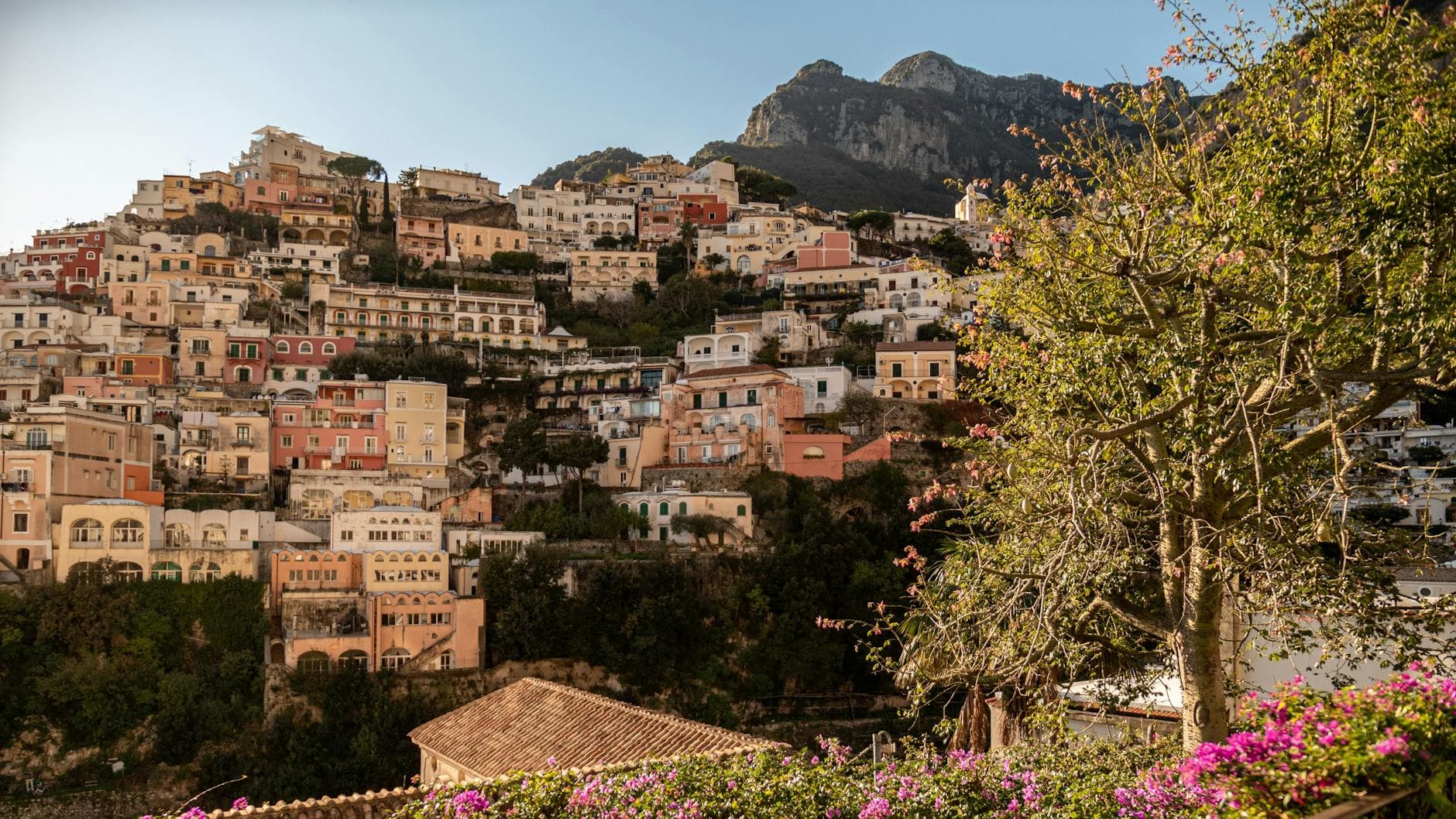
Photo: Bogdan Giurca on Pexels
The Amalfi Coast is probably the most romanticized stretch of coastline in the world. Pastel villages stacked into vertical cliffs, lemon groves tumbling toward the Tyrrhenian Sea, candlelit dinners on terraces where the sunset lasts ninety minutes. You have seen it in a thousand Instagram posts. You have seen it in films. You have imagined it while sitting in a conference room under fluorescent lighting.
Here is what those images do not tell you: the roads are single-lane and terrifying. Parking costs more per hour than some hotel rooms in Southeast Asia. Positano in July feels less like a romantic escape and more like standing in a crowded elevator that smells of sunscreen. And the prices — the prices will test the structural integrity of your honeymoon budget.
None of that means you should not go. The Amalfi Coast earns its reputation. But it earns it for couples who plan carefully, pick the right town, visit at the right time, and know what they are actually paying for. This guide covers all of it: every town worth staying in, what hotels actually cost in 2026, a realistic day-by-day itinerary, and the mistakes that turn a dream honeymoon into a logistical headache.
Table of Contents
- Quick Reference
- Town-by-Town Guide
- Real Cost Breakdown
- 7-Day Amalfi Coast Honeymoon Itinerary
- Best Honeymoon Hotels
- When to Go
- Getting There
- Dining Guide
- Common Mistakes
- Keep Exploring
- FAQ
Quick Reference
| Detail | Info |
|---|---|
| Best months | May, June, September, October |
| Peak season | July-August (avoid if possible) |
| Budget range | $250-$800+/night depending on town and hotel tier |
| Mid-range 7-day total | $5,500-$8,000 per couple (accommodation, meals, transport, activities) |
| Luxury 7-day total | $12,000-$25,000+ per couple |
| Nearest airport | Naples International (NAP), ~65 km |
| Transfer time | 75-120 min by car depending on destination town |
| Visa | Schengen zone — 90 days visa-free for US, UK, Canadian, Australian citizens |
| Currency | Euro (EUR) |
| Language | Italian (English widely spoken in tourist areas) |
| Time zone | CET (UTC+1), CEST in summer (UTC+2) |
| Tipping | Not expected but appreciated; 5-10% at restaurants for exceptional service |
| Power | Type C/F plugs, 230V |
Town-by-Town Guide
The Amalfi Coast stretches roughly 50 kilometres along the southern edge of the Sorrentine Peninsula, from Positano in the west to Vietri sul Mare in the east. Five towns matter for honeymooners. Each has a distinct personality, price bracket, and type of couple it suits best.
Positano
The headline town. The one you have seen in every photo. The one that costs the most.
Positano is a vertical town — quite literally built into a cliff face, with houses and hotels stacked on top of each other in shades of terracotta, salmon, and faded yellow. The main beach (Spiaggia Grande) sits at the bottom, and everything else is connected by steep staircases. If either of you has knee problems, this is not the town.
The appeal is undeniable. Positano has a glamour that the other towns cannot replicate. The boutiques sell handmade sandals and linen dresses. The restaurants hang lanterns over cliff-edge tables. The sunsets are absurd. It is a place that makes you feel like you are inside a painting — and it charges accordingly.
The downside: Positano is crowded from June through September. Day-trippers from Sorrento and Naples flood in by bus and ferry. The main drag (Via dei Mulini) gets genuinely congested by midday. And the prices are 30-50% higher than comparable quality in Ravello or Amalfi town.
Best for: Couples who want the iconic Amalfi Coast experience, do not mind crowds or steep walks, and have a generous budget.
Hotels:
- Hotel Le Sirenuse — The crown jewel of Positano, and arguably the Amalfi Coast. A converted 18th-century palazzo with a Michelin-starred restaurant (La Sponda), an oyster bar, a heated infinity pool, and rooms decorated with hand-painted tiles. Sea-view doubles start around $1,200/night in peak season, with suites running $2,500-$5,000. If money is secondary, this is the hotel.
- Hotel Poseidon — A more attainable luxury option, family-run for three generations. Rooms are bright and tiled in classic Amalfi style. The rooftop terrace restaurant has one of the best sunset views in town. Doubles from $350-$700/night depending on season and view.
- Hotel Buca di Bacco — Right on Spiaggia Grande, which means beach access without the staircase cardio. Rooms are straightforward but the location is hard to beat. Doubles from $280-$550/night.
- Villa Franca — Perched at the top of Positano with panoramic views, a rooftop pool, and a spa. Less famous than Le Sirenuse but significantly cheaper for a similar caliber of luxury. Doubles from $450-$900/night.
Ravello
The town that most honeymooners overlook — and the one most honeymooners should actually book.
Ravello sits 350 metres above the coast, which means no beach access (the nearest is a 20-minute drive or bus ride to Minori or Atrani). What it has instead is silence, gardens, panoramic views that make Positano look like a postcard, and a sense of refinement that the coast towns traded away for tourism revenue years ago.
The town centres around two extraordinary villa gardens: Villa Rufolo (which inspired Wagner) and Villa Cimbrone (with its Terrace of Infinity, one of the most photographed viewpoints in Italy). The Ravello Festival runs from June through September, staging classical concerts in open-air venues perched on clifftops. Imagine watching a string quartet perform while the sun sets over the Mediterranean. That is a Tuesday in Ravello.
The atmosphere is older, quieter, and more literary than Positano. Gore Vidal lived here for decades. D.H. Lawrence wrote in Ravello. It attracts a crowd that is more interested in a long lunch with a bottle of Falanghina than in posting selfies.
Best for: Couples who value tranquility over nightlife, who find Positano too performative, and who want the best value-to-quality ratio on the coast.
Hotels:
- Belmond Hotel Caruso — An 11th-century palazzo with an infinity pool that appears to float above the coastline. The pool alone is worth the trip. Rooms blend medieval architecture with immaculate contemporary design. Doubles from $900-$2,000/night, but the experience rivals anything in Positano at 20-30% less.
- Hotel Villa Cimbrone — Inside the famous villa gardens, which means you have the Terrace of Infinity to yourself before and after public hours. Dreamy, secluded, and deeply romantic. Doubles from $500-$1,200/night.
- Palazzo Avino — A 12th-century private residence turned luxury hotel, with a Michelin-starred restaurant (Rossellinis), a spa, and a private beach club accessible by shuttle. Doubles from $700-$1,500/night.
- Hotel Parsifal — A converted 13th-century convent (yes, really) with a cloister garden and views that rival hotels three times the price. The rooms are simpler but the setting is extraordinary. Doubles from $180-$350/night. The best budget-luxury option in Ravello.
Amalfi Town
The historic heart of the coast. More Italian, less international.
Amalfi town is where the coast gets its name, and it has a different energy from both Positano and Ravello. The centrepiece is the Cathedral of St. Andrew (Duomo di Amalfi), with its striking Arab-Norman facade and 62-step staircase. The piazza in front is the social hub — locals and tourists share espresso at the same cafes, and the vibe is less curated than Positano.
The town has a genuine working-class character that Positano largely lost decades ago. There are hardware stores next to boutique hotels. The Paper Museum (Museo della Carta) documents Amalfi's history as a paper-making centre. The Valle delle Ferriere nature reserve starts from the edge of town and offers hiking through lush subtropical terrain.
For honeymooners, Amalfi town is the practical middle ground: central location, good ferry connections, more restaurant variety, and prices that are 20-40% lower than Positano for comparable quality.
Best for: Couples who want a base with good transport links, a more authentically Italian atmosphere, and mid-range budgets.
Hotels:
- Hotel Santa Caterina — Set in its own citrus groves just outside town, with a glass elevator carved into the cliff that descends to a private beach. The rooms are generous by Amalfi Coast standards, and the saltwater pool is surrounded by bougainvillea. Doubles from $500-$1,100/night. A strong contender for best overall honeymoon hotel on the coast.
- NH Collection Grand Hotel Convento di Amalfi — A 13th-century monastery converted into a luxury hotel, clinging to the cliff above town. The cloister, the infinity pool, and the walk-in history are the draw. Doubles from $350-$800/night.
- Hotel Aurora — Family-run, right on the waterfront, with a rooftop terrace restaurant. No frills but excellent location and genuine warmth. Doubles from $180-$350/night.
- Residenza Luce — A boutique B&B in a restored historic building. Individually designed rooms, generous breakfasts, and prices that make Amalfi town very attractive. Doubles from $150-$280/night.
Praiano
The local secret. Fewer tourists, better sunsets, real quiet.
Praiano sits between Positano and Amalfi, and most tourists drive through it without stopping. That is precisely why you should consider staying. The town stretches along the coast road without a concentrated centre — it is more of a dispersed village than a compact town. The beaches are smaller and rockier (Marina di Praia is the main one, a tiny cove wedged between cliffs). The restaurants are fewer but often better value.
What Praiano has that nowhere else on the coast can match: unobstructed west-facing views. While Positano faces south and Amalfi faces east, Praiano catches the full arc of the sunset. Watching the sun drop into the sea from a hotel terrace in Praiano, with a glass of local white wine and the sound of absolutely nothing — that is the Amalfi Coast honeymoon most people are imagining when they picture the Amalfi Coast honeymoon.
The trade-off is access. Praiano is less well-served by ferries (though SITA buses stop here), and you will need to bus or drive to reach most restaurants and attractions. For couples who plan to spend long days at their hotel and venture out selectively, this is ideal. For couples who want to explore a new town every day, the logistics become a mild friction.
Best for: Couples who want peace, sunset views, and lower prices — and do not mind being slightly off the beaten path.
Hotels:
- Casa Angelina — A striking minimalist boutique hotel that stands out on a coast defined by traditional decor. All white interiors, floor-to-ceiling glass, and a terrace restaurant that feels like dining on a cloud. Doubles from $400-$900/night.
- Hotel Tramonto d'Oro — The name means "golden sunset" and it delivers. A family-run hotel with a pool, a good restaurant, and views that compete with properties twice the price. Doubles from $200-$450/night.
- Hotel Onda Verde — Built into the cliff with terraced gardens and a small pool. Quiet, well-maintained, and genuinely welcoming. Doubles from $170-$350/night.
- Le Suite di Praiano — A small property with just a handful of suites, each with a private terrace and sea view. Feels like staying in someone's exceptionally well-appointed holiday home. Doubles from $220-$400/night.
Furore
The wild card. A fjord village with almost no tourists.
Furore barely qualifies as a town. It is a fjord — the Fiordo di Furore — carved into the coastline between Praiano and Amalfi, with a handful of houses clinging to the rocks above a narrow inlet. The beach is a tiny strip of stone at the bottom of the ravine, accessible by a staircase from the coastal road bridge. Every June, the village hosts a cliff-diving competition from that bridge, which tells you something about the local character.
There is almost nothing here in terms of infrastructure: no proper piazza, no strip of restaurants, no tourist information office. There is a winery (Gran Furor Divina Costiera by Marisa Cuomo, producing some of the most respected wines on the coast), a couple of agriturismos, and an overwhelming sense of being somewhere that the modern tourism industry has not yet reformatted.
For honeymooners, Furore works as a one-or-two-night detour within a broader Amalfi Coast trip, or as a base for adventurous couples who want to hike, cook, and drink excellent wine in complete isolation.
Best for: Adventurous couples who find even Praiano too busy. Nature lovers, hikers, wine enthusiasts.
Hotels:
- Agriturismo Sant'Alfonso — A working farm and guesthouse on the hillside above the fjord, with lemon and olive groves, home-cooked meals using their own produce, and views that feel earned rather than bought. Doubles from $120-$220/night including breakfast and sometimes dinner.
- Hotel Furore Inn Resort — The only proper hotel in Furore, with a pool, a decent restaurant, and modern rooms that feel incongruously polished for such a wild setting. Doubles from $180-$350/night.
- Il Bacco — A restaurant with rooms, where the food is the main event. The family has been producing wine here for generations. Simple rooms but extraordinary meals. Doubles from $100-$180/night.
Real Cost Breakdown
The Amalfi Coast is not a budget destination. It is not even a mid-range destination in the way that, say, the Algarve or the Croatian coast can be. Peak season on the Amalfi Coast is expensive by European standards, and significantly more expensive than most other Mediterranean honeymoon options. Here is what things actually cost in 2026.
Accommodation (Per Night, Double Room, Peak Season)
| Town | Budget | Mid-Range | Luxury | Ultra-Luxury |
|---|---|---|---|---|
| Positano | $200-$300 | $350-$700 | $700-$1,200 | $1,200-$5,000 |
| Ravello | $150-$250 | $300-$600 | $600-$1,000 | $1,000-$2,500 |
| Amalfi | $140-$250 | $280-$550 | $500-$900 | $900-$1,500 |
| Praiano | $130-$220 | $220-$450 | $400-$800 | $800-$1,200 |
| Furore | $100-$180 | $180-$350 | $350+ | N/A |
Food and Drink (Per Couple, Per Day)
| Category | Cost |
|---|---|
| Breakfast (if not included) | $15-$30 at a cafe |
| Lunch (seated restaurant) | $40-$80 |
| Lunch (pizza al taglio or panini) | $12-$20 |
| Dinner (mid-range restaurant, with wine) | $80-$150 |
| Dinner (upscale/Michelin, with wine) | $200-$500+ |
| Cocktails/aperitivo | $15-$30 each |
| Coffee | $1.50-$3 (always cheap in Italy) |
| Water (restaurant) | $3-$6 per bottle |
| Limoncello (local, from a shop) | $8-$15 per bottle |
Transport
| Route/Mode | Cost |
|---|---|
| Private transfer, Naples airport to Positano | $120-$180 (sedan), $150-$220 (minivan) |
| SITA bus (any coast route) | $2-$4 per ride |
| Ferry, Positano to Amalfi | $10-$15 one way |
| Ferry, Amalfi to Capri | $25-$35 one way |
| Scooter rental (per day) | $40-$70 |
| Private boat tour (half day, 2 people) | $350-$700 |
| Private boat tour (full day, with Capri) | $700-$1,500 |
| Taxi, Amalfi to Ravello | $30-$45 |
| Parking (per day, where available) | $25-$50 |
Activities
| Activity | Cost |
|---|---|
| Villa Rufolo gardens (Ravello) | $10 per person |
| Villa Cimbrone gardens (Ravello) | $10 per person |
| Emerald Grotto (Grotta dello Smeraldo) | $8 per person |
| Ravello Festival concert ticket | $25-$80 |
| Cooking class (half-day, per person) | $80-$150 |
| Path of the Gods hike | Free (self-guided) |
| Lemon grove tour with tasting | $20-$40 per person |
| Blue Grotto, Capri (boat + entry) | $20-$30 per person |
| Ceramic painting workshop | $40-$70 per person |
Realistic 7-Day Totals (Per Couple)
| Budget Level | Accommodation | Food | Transport | Activities | Total |
|---|---|---|---|---|---|
| Budget-conscious | $1,400 | $700 | $250 | $150 | $2,500 |
| Mid-range | $3,000 | $1,200 | $450 | $350 | $5,000 |
| Comfortable | $4,500 | $1,800 | $600 | $500 | $7,400 |
| Luxury | $8,000 | $2,800 | $900 | $600 | $12,300 |
| Ultra-luxury | $15,000+ | $4,000+ | $1,500+ | $800+ | $21,000+ |
These totals exclude flights to Naples. Budget return flights from the US East Coast typically run $600-$1,200 per person in economy, $2,000-$4,000 in business. From the UK, budget carriers can get you to Naples for as little as $60-$150 return if booked early.
Use our Budget Calculator to build a customized estimate based on your specific preferences.
7-Day Amalfi Coast Honeymoon Itinerary
This itinerary uses a two-base approach: three nights in Positano or Praiano (western coast, sunset views) and three nights in Ravello (hilltop serenity, cultural depth), with one night flexible. It balances activity with rest — because a honeymoon where you are exhausted by day four is not a good honeymoon.
Day 1: Arrival and First Evening in Positano
Fly into Naples (NAP). Arrange a private transfer in advance — do not try to figure out buses after a transatlantic flight. The drive takes 75-90 minutes along the coast road, and the first glimpse of Positano from above is worth the transfer fee alone.
Check into your hotel. Unpack. Do nothing for at least two hours. Sit on your balcony. Look at the water. You are on your honeymoon.
In the late afternoon, walk down to Spiaggia Grande. Get a drink at one of the beach bars. Watch the light change.
Dinner: Book a table at La Sponda at Hotel Le Sirenuse. Four hundred candles, no electric lighting, and food that matches the setting. It is expensive ($250-$400 for two with wine) and it is worth it for a honeymoon splurge. If La Sponda is booked or beyond budget, Next2 on the beach serves excellent seafood at half the price.
Day 2: Positano at Leisure
This is a slow day. You just got married. Act like it.
Morning: Sleep in. Have breakfast on your terrace. Wander down to the town and browse the boutiques along Via dei Mulini. Get sandals custom-made at one of the leather shops — they take about two hours and cost $80-$150.
Afternoon: Rent a sunbed on Spiaggia del Fornillo (the smaller, less crowded beach west of Spiaggia Grande, accessible by a short footpath). Swim. Read. Nap.
Late afternoon: Walk up to the Church of Santa Maria Assunta and its majolica-tiled dome. The interior is worth five minutes.
Dinner: Da Vincenzo — a family-run restaurant one block back from the main drag. Unpretentious, deeply local, and the seafood linguine is the best value meal in Positano. Book ahead in season. Expect $80-$130 for two with wine.
Day 3: Boat Day to Capri
This is the day that justifies the entire trip for many couples.
Catch the morning ferry from Positano to Capri (about 50 minutes, $20-$25 per person). Alternatively, book a private boat for the day ($700-$1,200) that will take you around the Faraglioni rocks, into the Blue Grotto if conditions allow, and along the Li Galli islands on the way back.
On Capri: take the funicular up to Capri Town. Walk to the Giardini di Augusto for the view down to Via Krupp. If you have energy, the chairlift from Anacapri to Monte Solaro (the island's highest point) takes 12 minutes and the panorama from the top is staggering.
Lunch on Capri is expensive. Lo Smeraldo in the Piazzetta is a reliable mid-range option. For better value, walk five minutes away from the main square to Pulalli Wine Bar, which serves excellent bruschetta and local wine on a terrace overlooking the harbour.
Return ferry in late afternoon. Collapse on your hotel terrace.
Dinner: Light meal at your hotel or a simple pizza at Chez Black on Spiaggia Grande. After a full day on the water, you will not want a three-hour tasting menu.
Day 4: Path of the Gods, Then Move to Ravello
Morning: Hike the Sentiero degli Dei (Path of the Gods) from Bomerano to Nocelle. This is a 7.8-kilometre trail along the ridgeline above the coast, with views that are — without exaggeration — among the best coastal hiking views in the Mediterranean. The trail takes 2-3 hours at a comfortable pace and is moderate difficulty (some uneven terrain and a few exposed sections, but nothing technical). Wear proper shoes, not sandals.
The trail ends in Nocelle, a tiny village above Positano. From there, take the 1,500-step staircase down to Positano (legs permitting) or the local bus.
Afternoon: Check out of Positano. Transfer to Ravello (30-45 minutes by car, or bus via Amalfi). Check in, shower, decompress.
Dinner: Rossellinis at Palazzo Avino in Ravello — two Michelin stars, a tasting menu that weaves Campanian tradition with modern technique, and a terrace that looks out over the entire coast. This is the other honeymoon splurge dinner (expect $300-$500 for two). For a less committal first night, Ristorante Vittoria on the main piazza serves solid traditional cooking in a more casual setting ($60-$100 for two).
Day 5: Ravello Gardens and Culture
Morning: Visit Villa Rufolo gardens first thing, before the tour groups arrive. The 13th-century gardens inspired Wagner's Parsifal, and the layered terraces overlooking the sea are genuinely breathtaking. Then walk to Villa Cimbrone and the Terrace of Infinity — a belvedere lined with marble busts where the coastline unfolds below you in both directions. If you are staying at Hotel Villa Cimbrone, you can access this before and after public hours.
Late morning: Wander Ravello's quiet streets. Stop at the Duomo and its small museum. Browse the ceramics shops. Have an espresso in the piazza.
Afternoon: Book a cooking class. Several excellent options in Ravello teach you to make fresh pasta, local sauces, and lemon desserts using ingredients from their own gardens. Mamma Agata (on the road between Ravello and Scala) is legendary — Mamma Agata cooked for Humphrey Bogart and Jacqueline Kennedy, and her daughter and granddaughter continue the tradition. Classes run about three hours and include lunch (or dinner) with wine.
Evening: If the Ravello Festival is in season (June-September), attend a concert. Performances in the Villa Rufolo gardens, with the sea and sky as a backdrop, are transcendent. Tickets are $25-$80 and sell out, so book weeks in advance.
Day 6: Amalfi Town and the Coast
Morning: Bus or drive down to Amalfi town (20 minutes). Visit the Cathedral of St. Andrew and the Cloister of Paradise. Walk through the old town centre. Visit the Paper Museum (Museo della Carta) if you have any interest in craftsmanship — it is small, fascinating, and uncrowded.
Late morning: Take a short bus ride or walk to the neighbouring village of Atrani — a compact, unspoiled fishing village that is technically a separate town but sits right next to Amalfi. The piazza opens directly onto a small beach, and the atmosphere is more local than anywhere else on the coast. Have lunch at Le Arcate, which serves fresh seafood on a terrace overlooking the water.
Afternoon: Take a ferry or boat from Amalfi harbour to the Emerald Grotto (Grotta dello Smeraldo), where sunlight filters through an underwater cavity and turns the water an unearthly green. It is smaller and less famous than Capri's Blue Grotto but arguably more beautiful and far less crowded.
Alternatively, hike into the Valle delle Ferriere nature reserve from Amalfi — a lush valley with waterfalls, rare ferns, and a subtropical microclimate that feels wildly out of place on the Italian coast.
Dinner: Return to Ravello. Il Flauto di Pan at Villa Cimbrone is an excellent choice — creative Campanian cuisine served in the villa's elegant dining room ($120-$200 for two). For something simpler, Babel in Ravello town does outstanding wood-fired pizza and local dishes ($50-$80 for two).
Day 7: Slow Morning, Then Departure
No itinerary. No agenda. Sleep late. Have a long breakfast. Sit in the garden. Read.
If you have a late flight: take a final walk through Ravello's streets. Buy a bottle of Costa d'Amalfi DOC wine and a jar of local lemon marmalade to take home. Have one more espresso in the piazza.
Transfer to Naples airport (allow 90-120 minutes, more in peak season traffic).
If you have an extra day: Add a night in Naples itself. The city is chaotic, extraordinary, and home to the best pizza on the planet. L'Antica Pizzeria da Michele or Sorbillo are non-negotiable. The Museo Archeologico Nazionale has the Pompeii collection and is worth two hours minimum.
Best Honeymoon Hotels
The Amalfi Coast has an extraordinary density of exceptional hotels. These ten represent the strongest options for honeymooners specifically — meaning romantic atmosphere, privacy, views, and the kind of service that makes you feel like the only guests.
1. Hotel Le Sirenuse (Positano)
The most famous hotel on the Amalfi Coast. An 18th-century palazzo owned by the Sersale family since 1951, with 58 rooms decorated in a style that mixes antique majolica tiles with contemporary art. The heated infinity pool overlooks the town and sea. La Sponda restaurant is lit by 400 candles nightly. Franco's Bar serves cocktails on the terrace until midnight. The Aveda spa is small but excellent. Honeymoon suites from $2,000/night.
2. Belmond Hotel Caruso (Ravello)
The infinity pool here has appeared in more travel magazines than any other in Italy. Perched at 300 metres above sea level, the 11th-century building has been immaculately restored with gardens, frescoed ceilings, and a sense of grandeur that feels earned rather than manufactured. The restaurant serves refined Italian cuisine on a terrace with the same view as the pool. Honeymoon packages available with champagne, spa treatments, and private dining. From $900/night.
3. Hotel Santa Caterina (Amalfi)
Set in private citrus and vegetable gardens just outside Amalfi town, with a glass elevator that descends through the cliff to a private beach and saltwater pool. The rooms are lavish without being ostentatious — hand-painted ceramics, antique furniture, sea-facing balconies. The restaurant uses produce from its own gardens. This hotel manages to feel both luxurious and genuinely warm. From $500/night.
4. Palazzo Avino (Ravello)
A 12th-century private residence turned five-star hotel, with a pink facade that glows at sunset. Two restaurants including the two-Michelin-starred Rossellinis. A clubhouse pool, a spa, and a private beach club at Marmorata (accessible by hotel shuttle). The rooms are individually designed with hand-painted tiles and antique pieces. From $700/night.
5. Casa Angelina (Praiano)
The architectural outlier on the coast. While every other luxury hotel leans into traditional Amalfi style, Casa Angelina is all white minimalism — clean lines, floor-to-ceiling glass, and contemporary art. The effect is dramatic against the wild coastal backdrop. The restaurant (Un Piano nel Cielo) holds a Michelin star and serves creative Mediterranean cuisine at altitude. From $400/night.
6. Hotel Villa Cimbrone (Ravello)
Staying inside the famous gardens gives you exclusive access to the Terrace of Infinity before opening hours. The building is a 12th-century villa restored in the early 1900s by an eccentric English lord. Rooms are furnished with antiques and art. The gardens themselves are the main attraction — wisteria walkways, rose gardens, and that vertiginous terrace. From $500/night.
7. Il San Pietro di Positano (Positano)
Cut into the cliff face between Positano and Praiano, with a private beach accessible by elevator, a Michelin-starred restaurant, and a tennis court improbably perched on a terrace. Every room has a balcony or terrace with a sea view. The style is pure mid-century Italian glamour. Closed November through March. From $800/night.
8. Hotel Tramonto d'Oro (Praiano)
The best value luxury option on the coast. The name means "golden sunset" and the west-facing position delivers spectacular evenings. A family-run property with a pool, a well-regarded restaurant, and rooms that are comfortable without pretending to be palatial. The owners are warm and genuinely helpful with recommendations. From $200/night.
9. NH Collection Grand Hotel Convento di Amalfi (Amalfi)
A 13th-century Capuchin monastery clinging to the cliff above Amalfi town. The cloister, the Arab-Norman columns, and the infinity pool perched on the cliff edge make this one of the most atmospheric hotels on the coast. Rooms blend monastic simplicity with modern comfort. The walk into town takes five minutes. From $350/night.
10. Hotel Parsifal (Ravello)
A 13th-century convent converted into a 17-room hotel, with a cloister garden and views that rival properties costing five times as much. The rooms are simple but spotless, the breakfast is generous, and the location — on a quiet lane in Ravello, steps from Villa Rufolo — is excellent. This is the hotel for couples who want to be in Ravello without spending Ravello luxury prices. From $180/night.
When to Go
The Amalfi Coast has a clearly defined season. Many hotels and restaurants close entirely from November through March. The coast road remains open, but the atmosphere shifts from holiday paradise to quiet hillside community. Here is what each period actually feels like.
May-June: The Sweet Spot
The best time for a honeymoon, full stop. Daytime temperatures sit in the mid-20s Celsius (75-80F). The sea is warm enough for swimming by late May. The lemon groves are in bloom, filling the air with a scent that genuinely lives up to the cliche. Tourist numbers are manageable — you can walk through Positano without being swept along by crowds. Hotels are open but not fully booked, meaning better rates and upgrade possibilities.
The only caveat: early May can still see rain (3-5 rainy days is typical). Late May through June is near-perfect.
July-August: Peak Season
Hot. Crowded. Expensive. Daytime temperatures hit 32-35C (90-95F) with high humidity. Positano's streets become genuinely congested. Beaches fill up by 10am. Restaurant reservations are essential everywhere. Hotel prices peak, with many properties imposing minimum stays of 3-5 nights.
The upside: the longest days, the warmest water, and the liveliest atmosphere. If you thrive on energy and do not mind heat, August has its own kind of magic. But for most honeymooners, the crowds and prices outweigh the benefits.
September-October: Shoulder Season
September is arguably as good as June, with warmer sea temperatures (the Tyrrhenian has had all summer to heat up) and gradually thinning crowds. The light takes on a golden quality that photographers love. Prices begin to drop in late September.
October is a gamble. The first two weeks can be glorious — warm days, empty beaches, off-season prices. But the second half of October brings increasing rain, and some hotels and restaurants begin to close for the season. By late October, the coast is shutting down.
November-April: Off-Season
Most hotels, restaurants, and ferry services close. The towns feel empty, which is either romantic or lonely depending on your temperament. Rain is frequent from November through February. It can be beautiful — the dramatic weather, the empty paths, the sense of having the coast to yourself — but it requires a different mindset and careful planning around what is actually open.
Not recommended for a first-time honeymoon visit unless you specifically want solitude and do not need beaches or warm water.
Getting There
Flying In
Naples International Airport (NAP) is the gateway. Direct flights operate from most major European cities and several US hubs (JFK, Newark, Miami, Philadelphia on seasonal routes). From London, budget carriers (easyJet, Wizz Air, Ryanair) fly to Naples for $50-$150 return if booked early.
There is no airport on the Amalfi Coast itself. From Naples, you need onward transport.
Naples Airport to the Amalfi Coast
Private transfer (recommended for honeymooners): Pre-book a car service. The drive takes 75-120 minutes depending on your destination town and traffic (summer weekends are worst). Expect to pay $120-$220 depending on vehicle type and destination. Companies like Luxury Limo Positano, AmalfiCoast.com transfers, and Your Driver in Italy are reliable. The driver will meet you in arrivals with a sign. You sit in an air-conditioned car and watch the scenery unfold. After a long flight, this is worth the money.
SITA bus: The cheapest option ($4-$8 total) but involves a bus from the airport to Naples central station, then another bus from Sorrento to your destination along the coast road. Total journey time: 2.5-4 hours with connections. The coast road section is scenic but the buses are not air-conditioned, standing room is common in summer, and the driving style on hairpin bends may test your marriage before it has properly begun.
Ferry: From May to October, ferries run from Naples (Molo Beverello port) to Positano and Amalfi. The ferry takes about 75 minutes and offers gorgeous coastal views. However, getting from the airport to the port adds another 30-45 minutes by taxi. Total journey: 2-2.5 hours. Fares are $15-$25 per person.
Rental car (not recommended): The Amalfi Coast road (SS163) is a narrow, winding two-lane road carved into the cliffside. Buses take up the entire width. Scooters weave unpredictably. Parking in Positano or Amalfi ranges from difficult to impossible and costs $25-$50/day where available. The drive is stressful enough to ruin your first day. Take a transfer. Rent a scooter later if you want independent mobility.
Getting Around the Coast
SITA buses: The public bus system runs along the coast road connecting all towns. Buses are frequent in summer (every 30-60 minutes) but crowded. Fares are $2-$4 per ride. Useful for short hops between adjacent towns.
Ferries: Seasonal ferry services (Travelmar and NLG) connect Positano, Amalfi, Minori, Maiori, and Salerno. Scenic and avoids the road. Fares are $8-$15 per one-way trip. Runs April-October only.
Taxis: Available but expensive. Amalfi to Ravello costs $30-$45. Positano to Amalfi costs $50-$70. Agree on a price before getting in — meters are uncommon.
Water taxis and private boats: Available for hire in Positano and Amalfi. Expensive but spectacular. A water taxi between Positano and Amalfi runs $100-$150. A private boat for the day costs $400-$1,200 depending on size and itinerary.
Scooter rental: If you are comfortable on two wheels, a scooter is the most liberating way to explore. Rental costs $40-$70/day. You will need an international driving permit (IDP) in addition to your home licence. Helmets are legally required and provided. The coast road is less intimidating on a scooter than in a car, but it still requires confidence and alertness.
Dining Guide
The Amalfi Coast is not just a place to eat well — it is a place where the food is inseparable from the landscape. Lemons grow in terraced groves above the restaurants that use them. Fish comes from boats you can see from your table. The mozzarella is made in the hills behind the coast, often that morning. Here are ten restaurants worth planning around.
La Sponda — Positano
At Hotel Le Sirenuse. Four hundred candles, no electric light, and a menu that elevates Campanian coastal cuisine to fine-dining heights without losing its soul. The crudo is exceptional. The pasta with local clams is simple and perfect. Service is impeccable without being stiff. Reserve two weeks ahead in summer. $250-$400 for two with wine.
Da Vincenzo — Positano
A family-run institution one street back from the main drag. The Esposito family has been cooking here for decades, and the emphasis is on fresh, seasonal, unfussy food. The fried seafood platter is outstanding. The pasta with courgette flowers is a summer signature. Warm, unpretentious, and about half the price of the more famous restaurants. $80-$130 for two.
Il Ritrovo — Montepertuso (above Positano)
In the tiny hilltop village of Montepertuso, a 10-minute taxi ride above Positano. Chef Salvatore runs this restaurant and an associated cooking school. The food is mountain-meets-coast: grilled meats alongside fresh pasta and seafood. The terrace has views down to the coast. Locals eat here, which tells you everything. $70-$120 for two.
Rossellinis — Ravello
Two Michelin stars at Palazzo Avino. Chef Mimmo Di Raffaele creates a tasting menu that reinterprets Campanian classics with precision and imagination. The wine list is deep, particularly in local producers. The terrace setting is predictably extraordinary. This is the coast's most refined dining experience. $300-$500 for two with wine pairing.
Cumpa Cosimo — Ravello
The antithesis of Rossellinis, and equally essential. Netta Bottone has been running this family trattoria for over 50 years, and the portions are heroic. Homemade pasta in seven or eight varieties, grilled meats, local cheese, and a house wine that costs less than a glass of water at some Positano restaurants. No reservations, no pretension, no nonsense. $50-$80 for two.
Le Arcate — Atrani
On the waterfront in tiny Atrani, this restaurant serves fresh-caught fish in preparations that do not try to be clever — grilled, baked, or in pasta with the day's catch. The setting is perfect: tables on a terrace above the small beach, with fishing boats pulled up on the shore below. $60-$100 for two.
Il Pirata — Praiano
A seafood restaurant on the Marina di Praia beach, built into the cliff face above a small cove. The owner, known locally as Pirata, sources fish directly from local boats. The spaghetti alle vongole (clams) and the mixed fried seafood are exceptional. Arrive by water taxi for full effect. $70-$120 for two.
Trattoria da Gemma — Amalfi
Operating since 1872, this is the oldest restaurant in Amalfi town. Now run by the fourth generation, it serves classic Amalfi cuisine — zuppa di pesce (fish soup), paccheri with prawns, and a legendary soufflé al limone for dessert. Book the terrace table overlooking the Duomo steps. $80-$140 for two.
Lo Guarracino — Positano
Hidden on a cliff path between Spiaggia Grande and Fornillo beach, this restaurant is easy to miss and hard to forget. The terrace juts out over the water, and the menu focuses on simply prepared local seafood. No dress code, no posturing — just excellent food in an impossibly beautiful setting. $70-$110 for two.
Ristorante Max — Positano
In the upper part of town, with a terrace shaded by lemon trees. The menu spans traditional and creative Italian cuisine, with particularly strong pasta dishes and a well-curated wine list. More relaxed than La Sponda, more refined than the beach restaurants. A good middle ground for a special dinner. $100-$180 for two.
Common Mistakes
1. Driving Yourself
The single most common mistake. The Amalfi Coast road (SS163) is a white-knuckle experience even for locals. Tour buses take up the entire lane. Scooters appear from nowhere. The cliff drops are unguarded. Parking in Positano involves circling for 45 minutes and paying $40/day for a spot 200 stairs above your hotel. Take a private transfer on arrival day, use buses and ferries during your stay, and rent a scooter only if you are genuinely confident on two wheels.
2. Booking Too Many Towns
A seven-day honeymoon does not need five hotel changes. Checking out, packing, transferring, checking in, and unpacking eats half a day each time. Two bases is ideal (one western coast, one Ravello or Amalfi). Three is the maximum. One-night stops are for backpackers, not honeymooners.
3. Skipping Ravello
Most first-time visitors focus entirely on Positano and maybe Amalfi town. Ravello is where the coast reveals its depth — the gardens, the concerts, the silence, the long lunches. Do not skip it. Two or three nights in Ravello is the single best recommendation in this guide.
4. Visiting in Late July or August Without Expecting Crowds
If you go in peak summer, go with open eyes. It will be hot, crowded, and expensive. Plan around it: visit beaches early, dine late, spend midday in your hotel pool or at altitude in Ravello. Do not go in August expecting the serene, empty coast you saw in a photographer's portfolio — that was taken in October.
5. Not Booking Restaurants in Advance
In peak season, the best restaurants are fully booked days or weeks ahead. La Sponda, Rossellinis, and Da Vincenzo can fill up a week in advance for dinner. Book before you arrive. Your hotel concierge can help, but do not leave it to the last minute.
6. Overscheduling Every Day
This is a honeymoon, not a sightseeing marathon. Build in at least two days with no agenda — just the hotel, the pool, the terrace, a long lunch, each other. The Amalfi Coast rewards slowness. The couples who enjoy it most are the ones who resist the urge to optimize every hour.
7. Ignoring the Shoulder Season
May, June, and September offer better weather, lower prices, smaller crowds, and a more relaxed atmosphere than July-August. If your dates are flexible, the shoulder season is objectively superior for a honeymoon.
8. Not Bringing Proper Shoes
Between the steep stairs in Positano, the cobblestones in Ravello, and the Path of the Gods hike, you need shoes with grip and support. Bring one pair of comfortable walking shoes in addition to your evening wear. Flip-flops on the Positano steps are a recipe for a honeymoon spent in an Italian emergency room.
Keep Exploring
Planning a broader Italy honeymoon or comparing Mediterranean options? These guides will help.
- Italy Honeymoon Guide 2026 — Rome, Tuscany, Lake Como, and the Amalfi Coast in one comprehensive guide
- Santorini vs Amalfi Coast — The two most iconic Mediterranean honeymoon coastlines compared side by side
- Greece vs Italy Honeymoon — Deciding between the two biggest draws in European honeymoon travel
- Europe Honeymoon Guide 2026 — The full continent covered: Amalfi, Santorini, Paris, the Scottish Highlands, and more
- Greece Honeymoon Guide 2026 — Santorini, Crete, the Peloponnese, and the secret islands
- Luxury Honeymoon Guide 2026 — The world's best luxury honeymoon destinations with real price breakdowns
- Best Honeymoon Destinations 2026 — Our ranked guide to the top honeymoon destinations worldwide
- Budget Calculator — Build a customized honeymoon budget in minutes
- Honeymoon Planning Checklist 2026 — Step-by-step planning timeline from engagement to departure
FAQ
How much does an Amalfi Coast honeymoon cost?
A mid-range 7-day honeymoon for two (comfortable hotels, restaurant dining, one boat trip, local transport) costs $5,000-$8,000 excluding flights. Luxury runs $12,000-$25,000+. Budget-conscious couples can manage $2,500-$3,500 with careful choices — staying in Praiano or Furore, eating lunch at pizzerias, and using public buses. These figures are for accommodation, food, transport, and activities on the coast; add $600-$4,000 per person for flights depending on your origin and class.
Is Positano or Ravello better for a honeymoon?
It depends on what kind of honeymoon you want. Positano is glamorous, photogenic, and lively — ideal if you want beach access, boutique shopping, and Instagram-worthy scenery at every turn. Ravello is quiet, refined, and culturally rich — ideal if you want gardens, concerts, long lunches, and views without crowds. Many couples split their time between both, and that is the approach we recommend. If forced to choose one: Ravello. Better value, fewer crowds, and the kind of serenity that actually feels like a honeymoon rather than a holiday.
What is the best month to visit the Amalfi Coast for a honeymoon?
June and September are the two best months. June has long days, warm weather without extreme heat, blooming lemon groves, and manageable tourist numbers. September has warmer sea temperatures, golden light, and gradually decreasing crowds. May is also excellent but slightly cooler and with more rain risk. Avoid August unless you specifically want peak-season energy and are prepared for the crowds and prices that come with it.
Should we rent a car on the Amalfi Coast?
No. The coast road is narrow, stressful, and parking ranges from expensive to impossible. A private transfer from Naples airport to your hotel is the best arrival option. During your stay, use SITA buses, ferries, taxis, and your own feet. If you want independent mobility, rent a scooter (requires an international driving permit and genuine confidence on two wheels). The only scenario where a car makes sense is if you are combining the Amalfi Coast with a broader road trip through Campania or southern Italy, and even then, park it at your hotel and leave it there for the duration of your coast stay.
Can we do the Amalfi Coast on a budget?
Yes, with planning. Stay in Praiano or Furore instead of Positano (save 30-50% on accommodation). Eat lunch at bakeries and pizzerias rather than sit-down restaurants. Use SITA buses ($2-$4) instead of taxis ($30-$70). Skip private boat tours in favour of public ferries. Visit during shoulder season (May or late September-October) for lower hotel rates. A budget-conscious couple can have a genuinely wonderful 7-day honeymoon for $2,500-$3,500 excluding flights — less than a single night at Le Sirenuse.
Is the Path of the Gods hike worth doing on a honeymoon?
Absolutely. The Sentiero degli Dei is one of the finest coastal hikes in Europe, and it does not require mountaineering skills. The 7.8-kilometre trail from Bomerano to Nocelle takes 2-3 hours at a relaxed pace and rewards you with panoramic views of the entire coastline. Wear proper walking shoes (not sandals or flip-flops), bring water and sunscreen, and start early to avoid midday heat. The hike is moderate — some uneven terrain and a few exposed sections, but nothing that should deter reasonably fit adults. It is one of those shared experiences that honeymooners remember long after they have forgotten which restaurant they ate at on which night.
How many days do you need on the Amalfi Coast?
Five to seven days is ideal for a honeymoon. Fewer than five feels rushed — you will spend too much time in transit and not enough time actually experiencing the coast. More than seven risks the destination losing its novelty, especially if you are staying in one or two towns. Seven days allows for: two to three days in Positano or Praiano, two to three days in Ravello, a day trip to Capri, the Path of the Gods hike, and — critically — at least two days with no plan at all.
Is the Amalfi Coast safe for honeymooners?
Very safe. The towns on the Amalfi Coast have virtually no violent crime and very little petty crime compared to Naples or Rome. The main safety considerations are practical rather than criminal: wear proper shoes on steep stairs and hiking trails, stay hydrated in summer heat, apply sunscreen liberally (the Mediterranean sun at this latitude is intense), and exercise caution if renting a scooter on the coast road. If you are taking ferries, note that sea conditions can cause cancellations — always have a backup transport plan for days when boats are not running.
Plan Your Trip
Where to Stay in Amalfi Coast
Hand-picked hotels and resorts across budget, mid-range, and luxury tiers.
Hotel Santa Caterina
LuxuryNeed personalised recommendations?
Ask our AI Honeymoon Concierge →Compare destinations side-by-side
See how this destination stacks up against others on cost, weather, and romance.