Maldives vs Mauritius Honeymoon 2026: Cost, Villas & Real Verdict
Both are Indian Ocean island destinations. Both appear on every honeymoon shortlist published in the last decade. Both deliver warm turquoise water, white sand, tropical sunsets, and the kind of photographs that make your wedding album look underdressed. But the Maldives and Mauritius are fundamentally different propositions, and the couple who picks the wrong one spends serious money on a trip that does not match what they actually wanted.
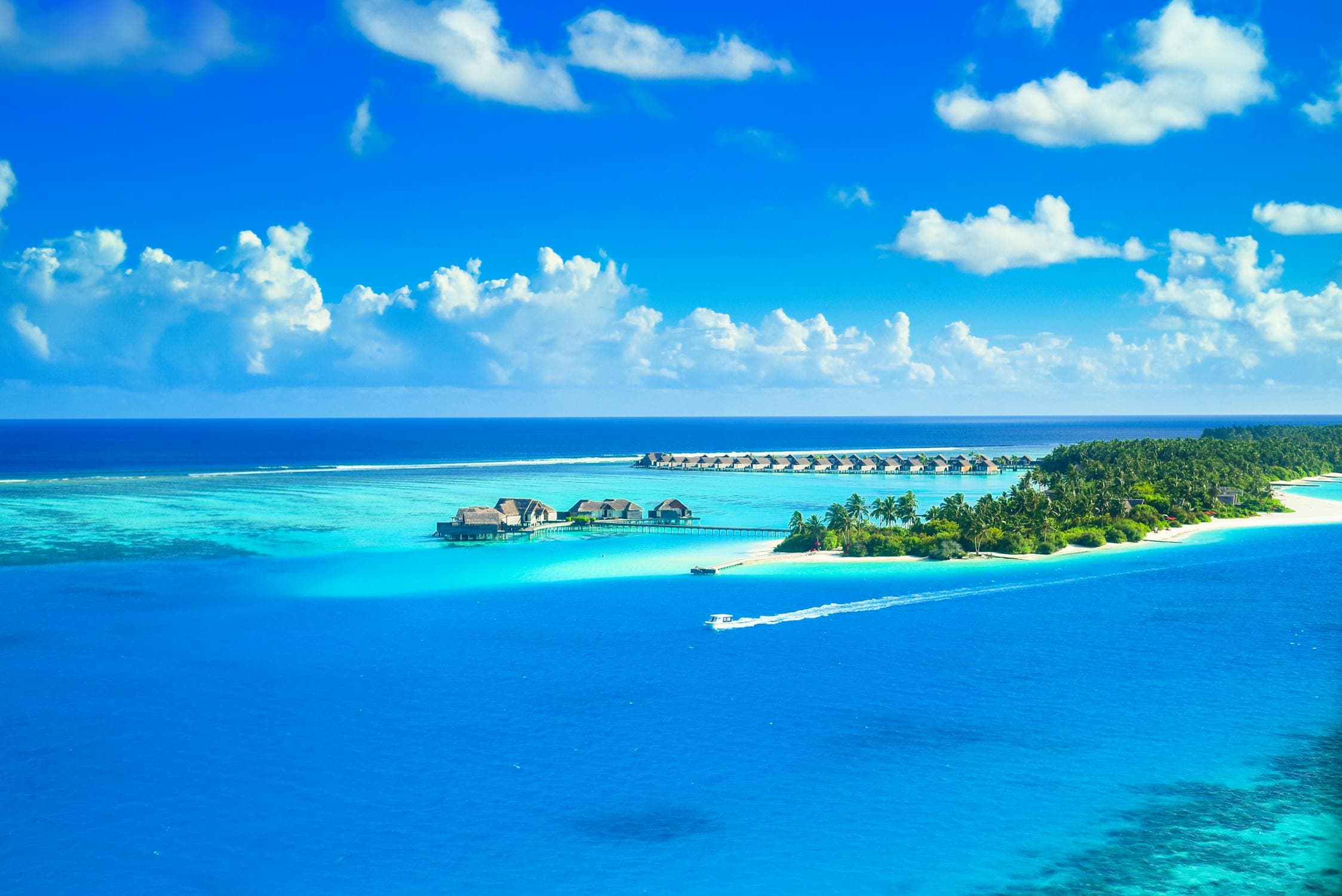
Here is the essential difference. The Maldives is 1,192 flat coral islands spread across 900 km of open ocean, most of them barely a metre above sea level. The tourism model is one island, one resort. You fly in, transfer by seaplane, check into your overwater villa, and the world outside ceases to exist. There are no towns to visit, no mountains to climb, no roads to drive. The ocean is your floor, your view, your entertainment. It is seclusion engineered to perfection.
Mauritius is a single volcanic island roughly the size of Greater London, sitting 2,000 km off the southeast coast of Africa. It has mountains that rise to 828 metres, a volcanic crater lake, waterfalls that drop into jungle gorges, a seven-coloured sand formation that geologists still argue about, sugar cane fields stretching to the horizon, Hindu temples alongside colonial churches, and a street food culture that blends Creole, Indian, Chinese, and French cooking into something entirely its own. You can wake up on a white sand beach, hike through a national park before lunch, visit a rum distillery in the afternoon, and eat dal puri at a roadside stall for dinner. All in the same day, without breaking a sweat.
The Maldives is a honeymoon where the world shrinks to two people and a lagoon. Mauritius is a honeymoon where you explore an entire island together.
This guide puts them head to head across every category that matters (beaches, cost, accommodation, food, activities, romance, weather, nightlife, and logistics) so you can stop debating and start booking the one that fits.
Table of Contents
- Quick Verdict
- At a Glance
- Overwater Villas
- Cost Comparison
- Beaches and Scenery
- Romance Factor
- Activities and Experiences
- Food and Dining
- Weather and Best Time to Visit
- Nightlife
- Getting There and Logistics
- 7-Day Itineraries
- Our Verdict
- How Does Mauritius Compare to the Seychelles?
- Keep Exploring
- FAQ
Quick Verdict
Choose the Maldives if you want total seclusion, an overwater villa above a turquoise lagoon, world-class snorkelling from your doorstep, and a honeymoon where the hardest decision is which spa treatment to book. You are paying for privacy, marine spectacle, and the permission to stop thinking.
Choose Mauritius if you want a honeymoon with range: beaches one day, mountain hikes the next, street food markets in the evening, and a cultural depth that no single-resort island can match. Your money stretches further, your days are more varied, and you come home with stories, not just sunburns.
At a Glance: Maldives vs Mauritius
| Category | Maldives | Mauritius |
|---|---|---|
| Best For | Seclusion seekers, snorkellers, spa purists | Explorers, foodies, active couples |
| Avg Daily Cost (couple) | $500–$1,500+ | $150–$500 |
| Flight Time (NYC) | 18–22h (via Dubai/Doha) | 20–26h (via Dubai/Paris/Johannesburg) |
| Flight Time (London) | 10–12h (direct or 1 stop) | 11–13h (direct or 1 stop) |
| Best Months | November–April | May–December |
| Visa Required | No (30-day free on arrival) | No (60-day free on arrival) |
| Overwater Villas | 100+ resorts offer them | Very few (limited properties) |
| Vibe | Serene, private, minimalist | Lush, diverse, culturally rich |
| Beaches | Powder-white, flat, private resort sand | Varied (white sand, volcanic rock, reef-protected lagoons) |
| Value for Money | Lower (resort-captive pricing) | Higher (self-catering, local dining, car rental) |
| Our Rating | 9/10 | 8.5/10 |
Overwater Villas: The Defining Difference
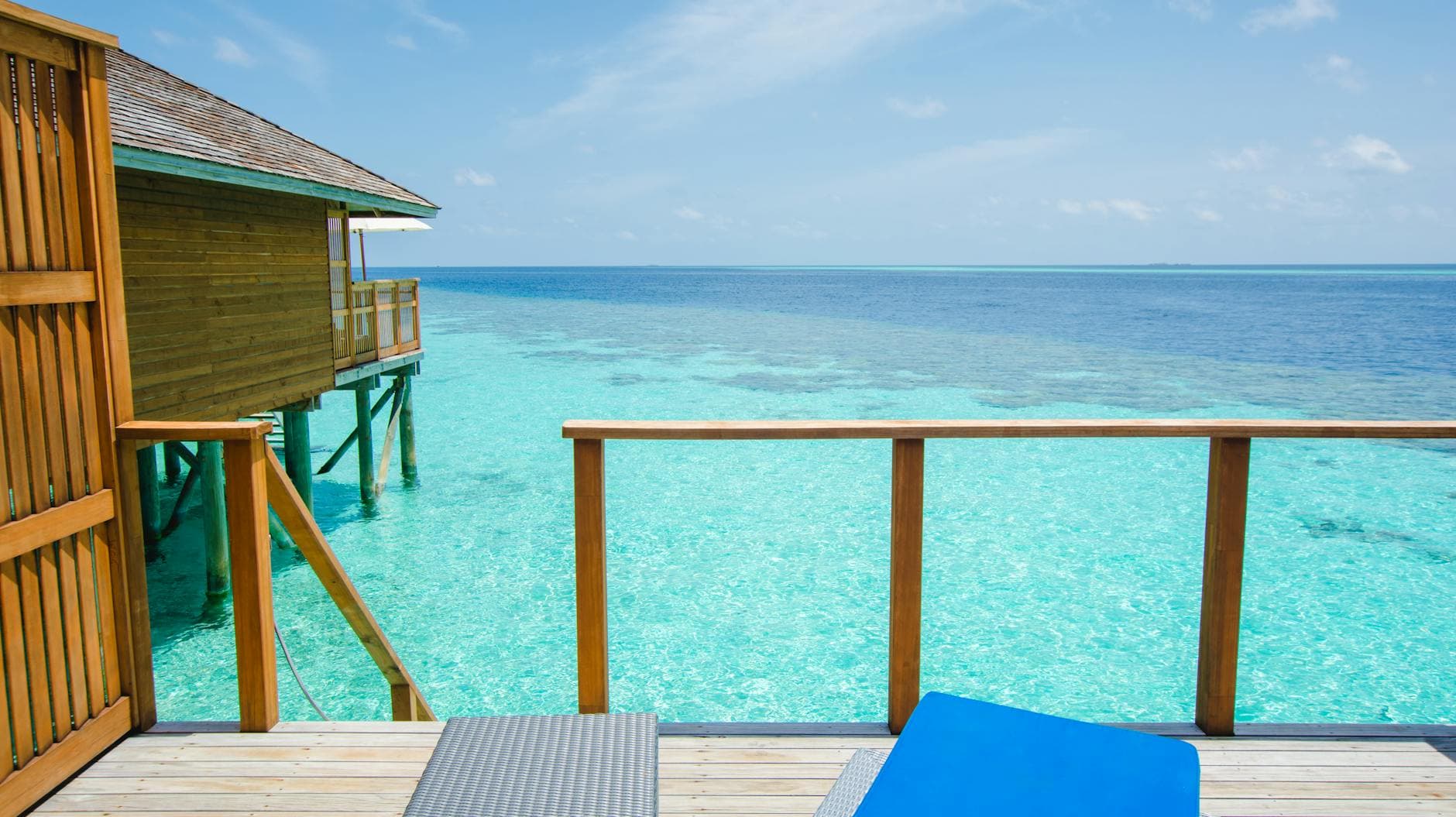
If an overwater villa is part of your honeymoon vision — waking up above a turquoise lagoon, glass-floor panels revealing the reef below, your own steps descending into the ocean — this section settles your destination before any other factor.
Maldives: The Global Capital of Overwater Villas
The Maldives introduced the modern overwater villa concept in the 1960s and still leads the world on every metric: quantity, quality, and price range.
- Scale: Over 100 of the Maldives' 160+ tourist resorts offer overwater accommodation. This is not a luxury upgrade — it is the standard product.
- What you actually get: A standalone villa on stilts directly above the lagoon. Standard features: unobstructed ocean views from bed, a sun deck with loungers and often a private plunge pool, steps descending directly into the water for swimming, and in many resorts, glass floor panels so you can watch fish from inside the room without getting wet.
- Price range (per villa per night):
- Budget overwater: $300–$500 (Adaaran Meedhupparu, Holiday Inn Kandooma, Cinnamon Hakuraa Huraa)
- Mid-range: $500–$1,000 (Lily Beach, Constance Moofushi, Kuramathi)
- Luxury: $1,000–$5,000+ (Soneva Jani, One&Only Reethi Rah, Four Seasons Landaa Giraavaru)
- Why it is exceptional: The combination of the lagoon directly beneath you, a house reef accessible from your own deck, total seclusion with no roads or other guests in view, and silence broken only by the ocean is a product that exists at scale nowhere else on earth.
Mauritius: Very Limited Overwater Options
This is where honest guidance matters. Mauritius is a volcanic island with a deep fringing reef — the coastal geography does not naturally support overwater construction the way the Maldives' shallow, flat-bottomed lagoons do.
- What exists: A small number of luxury resorts have introduced over-lagoon or over-water elements. The LUX Grand Baie (opened 2023) has a limited inventory of overwater pool villas — highly sought-after and book out months in advance. The JW Marriott Mauritius Resort at Le Morne has lagoon-adjacent suites with extended decking over the water. The Shangri-La Le Touessrok has overwater restaurant seating but minimal overwater accommodation.
- The numbers: At any given time, Mauritius has roughly 30–60 overwater or over-lagoon villa keys across the entire island. The Maldives has tens of thousands. If the overwater experience is your primary objective — five mornings waking up above the reef — Mauritius cannot deliver this.
- What Mauritius offers instead: Beachfront villas with private plunge pools directly on the sand (Le Morne and Belle Mare), garden pool villas with beach access, and hillside suites with panoramic ocean views framed by Le Morne Brabant. These are genuinely excellent, and at $200–$500/night deliver more space and more scenery than a comparably-priced Maldives room on land. But they are a different product.
Overwater Villa Verdict
Winner: Maldives — definitively. If waking up above the ocean is the dream, book the Maldives. Mauritius compensates with superb beachfront villa experiences, but the overwater category as the defining honeymoon feature belongs to the Maldives.
Budget $5,000–$8,000: The Maldives still delivers mid-range overwater villas (Lily Beach, Kuramathi). Mauritius at this budget gives you more on-land variety, better food, and a richer trip — just not above the water.
Budget $15,000+: The Maldives at the luxury tier (Soneva Jani, Six Senses Laamu, Four Seasons Kuda Huraa) delivers overwater accommodation with no meaningful comparison anywhere on earth.
Cost Comparison
This is where the two destinations diverge most sharply, and where Mauritius builds an enormous structural advantage.
7-Night Honeymoon for Two: Budget Comparison
| Expense | Maldives (Budget) | Maldives (Mid-Range) | Maldives (Luxury) | Mauritius (Budget) | Mauritius (Mid-Range) | Mauritius (Luxury) |
|---|---|---|---|---|---|---|
| Flights (2 pax, from US) | $2,400 | $3,000 | $4,800 | $2,200 | $3,000 | $5,000 |
| Transfers | $600 | $900 | $1,200 | $50 | $100 | $200 |
| Accommodation (7 nights) | $2,100 | $5,600 | $14,000 | $500 | $1,400 | $5,600 |
| Food & Drinks (7 days) | $700 | $1,400 | $2,500 | $200 | $500 | $1,400 |
| Activities/Excursions | $300 | $800 | $2,000 | $200 | $500 | $1,200 |
| Car Rental / Transport | $50 | $100 | $300 | $200 | $350 | $500 |
| Spa | $200 | $500 | $1,200 | $50 | $200 | $600 |
| TOTAL | $6,350 | $12,300 | $26,000 | $3,400 | $6,050 | $14,500 |
Key Cost Differences Explained
-
Accommodation is the largest gap. A Maldives overwater villa at a mid-range resort runs $600–$1,000 per night. A Mauritius beachfront hotel room at a well-reviewed property runs $150–$300 per night. Self-catering villas on the Mauritius coast start at $60–$120 per night with no loss of location quality.
-
Transfers create an invisible tax in the Maldives. Each resort sets its own seaplane price per person: Conrad Maldives, for example, lists US$700 per adult return (resort's getting-here page), which is US$1,400 for a couple before you have seen your room. Resorts close to Male use speedboats, which cost less. In Mauritius, a taxi from the airport to your hotel is $20–$40. A rental car for the entire week is $180–$350.
-
Food costs diverge dramatically. The Maldives resort-captive model means $100–$400 per day for a couple on meals. In Mauritius, a couple eating at local restaurants and street food stalls spends $25–$60 per day including drinks. Over 7 days, that gap reaches $500–$2,400. A dal puri from a roadside vendor costs 30 Mauritian rupees, about $0.65. A proper Creole fish curry at a local restaurant runs $8–$15 per person.
-
The self-catering option. Mauritius has a well-established vacation rental market. A coastal villa with a pool and ocean views for $80–$180 per night, combined with market shopping and local dining, delivers a genuinely excellent honeymoon for $3,000–$5,000 total. This option does not exist in the Maldives.
-
Flights are comparable. Both require connections for most travellers outside of Europe. Mauritius sometimes edges slightly cheaper on European routes because Air Mauritius operates direct flights from London, Paris, and several other European cities.
Bottom line on cost: A mid-range Mauritius honeymoon ($6,050) costs roughly what a budget Maldives honeymoon ($6,350) does, but the Mauritius version includes a rental car, varied dining, activities, and a richer overall experience. A luxury Mauritius honeymoon ($14,500) undercuts a luxury Maldives trip ($26,000) by nearly $12,000. Mauritius delivers more variety per dollar spent than almost any Indian Ocean destination.
Winner: Mauritius. The pricing flexibility is enormous. From $3,400 self-catering to $14,500 luxury resort, you can design a honeymoon at any price point without sacrificing quality. The Maldives has a high cost floor built into the resort-island model, and there is no way around it.
Beaches and Scenery
Maldives: Infinite Blue Minimalism
The Maldives is flat. The highest natural point in the country is roughly 2.4 metres above sea level. There are no hills, no waterfalls, no jungle-covered mountains. What you get is ocean stretching to the horizon, sandbars that appear and vanish with the tide, and a colour palette that shifts from pale aquamarine to deep sapphire across the width of a single lagoon.
- Beach quality: Exceptional and consistent. Every resort island has its own ring of fine white sand: powdery, bright, cool underfoot. The beaches are private, uncrowded, and manicured. You share sand only with the other guests at your resort.
- The lagoon effect: Most resort islands sit inside their own lagoon, creating the signature graduated turquoise that looks computer-generated in photographs but is somehow real in person.
- Underwater scenery: This is the Maldives' strongest card. House reefs accessible from the beach or your overwater villa steps are alive with reef sharks, sea turtles, manta rays, eagle rays, and dense schools of tropical fish. The marine diversity is world-class. Many resorts employ resident marine biologists who lead guided snorkel sessions.
- What you do not get: Landscape variety above the waterline. No boulders, no peaks, no forests, no geological drama. The beauty is horizontal and aquatic. After several days, the visual experience above sea level is consistent: sand, palm, ocean, sky, repeat.
Mauritius: Volcanic Drama Meets Lagoon Calm
Mauritius is a volcanic island, and it looks like one. The interior rises to 828 metres at Piton de la Petite Riviere Noire, with dense tropical forest, deep gorges, crater lakes, and waterfalls cutting through basalt rock. The coastline is almost entirely encircled by a barrier reef, creating calm, shallow lagoons along most of the western and northern shores: warm, swimmable, and sheltered from the open Indian Ocean.
- Beach quality: Varied and genuinely excellent in the right spots. The north and west coasts have the best beaches. Trou aux Biches is a long curve of white sand backed by casuarina trees, with calm lagoon water that barely reaches your waist for 100 metres out. Mont Choisy extends north from Trou aux Biches, wide and uncrowded even in peak season. Flic en Flac on the west coast is a lively beach town with a long sand strip, good snorkelling, and sunset views across to Le Morne. Belle Mare on the east coast offers powder-white sand, turquoise water, and a quieter atmosphere.
- Le Morne Brabant: The postcard image of Mauritius. A UNESCO World Heritage Site, Le Morne is a dramatic 556-metre basalt monolith jutting out of the ocean on the island's southwest tip. The beach at its base is one of the most photographed in the Indian Ocean: white sand, kite surfers in the lagoon, the mountain rising vertically behind. The cultural significance is real: enslaved people who escaped into the mountain's caves built a community there in the 18th and 19th centuries. It is beautiful and it means something.
- Chamarel: The Seven Coloured Earths, a geological formation of rolling sand dunes in shades of red, brown, violet, blue, green, and yellow, caused by volcanic basalt decomposing into different clay minerals. Adjacent is the Chamarel Waterfall, an 83-metre cascade into a jungle gorge. Neither exists on any flat coral island.
- Black River Gorges National Park: 6,574 hectares of native forest covering the island's mountainous interior. Hiking trails lead to viewpoints, waterfalls, and the habitat of the Mauritius kestrel (once the rarest bird on earth, population 4 in 1974, now recovered). The scenery is lush, steep, and dramatic, the visual opposite of a Maldives sandbar.
- Underwater scenery: Good but a tier below the Maldives. The lagoon snorkelling is pleasant (colourful fish, occasional turtles, healthy coral patches) but the house reef access and marine diversity of the Maldives are on a different level. Where Mauritius excels underwater is in diving: the cathedral site at Flic en Flac (a massive underwater cavern), the Stella Maru wreck, and seasonal encounters with sperm whales off the west coast.
Verdict: Beaches and Scenery
The Maldives has the better underwater spectacle and the more pristine, private beach experience. Mauritius has vastly more above-water drama: mountains, waterfalls, volcanic formations, a UNESCO cultural landscape, and a coastline that changes character every 20 kilometres.
Winner (beaches): Maldives. For pure sand-and-lagoon perfection, the Maldives is hard to beat. Every resort beach is immaculate, private, and framed by water that makes your eyes hurt. Mauritius beaches are excellent but not quite as uniformly pristine, and the public beaches come with beachside vendors and other visitors.
Winner (scenery): Mauritius. Overwhelmingly. Le Morne, Chamarel, Black River Gorges, the crater lake at Trou aux Cerfs, the dramatic south coast cliffs at Gris Gris: Mauritius has genuine topography and geological variety that the Maldives, by virtue of its flat coral geography, cannot offer.
Winner (underwater): Maldives. The house reef access, marine biodiversity, and coral health are significantly stronger.
Romance Factor
Both destinations trade on romance. But they sell very different versions of it.
Maldives: Seclusion as Romance
The Maldives romance model is built on isolation. You and your partner are placed on a private island, in a private villa, with the ocean as your private garden. The world contracts to two people and a horizon.
- Private overwater dining: Many resorts offer dinners served on your villa deck or on a private sandbank, with the ocean under the stars. Candles, a personal chef, no other guests in sight. This is the Maldives at its most romantic, and it is genuinely difficult to replicate anywhere else.
- Sunrise and sunset from bed: Overwater villas face the ocean. You wake up to the sunrise and fall asleep to the sound of the reef. The intimacy is architectural: the building itself is designed to make you feel alone in the world.
- Couples' spa rituals: Overwater treatment rooms, flower baths, sunset yoga for two. The wellness-as-romance pipeline is well-developed here.
- The "no decisions" factor: After months of wedding planning (the venues, the seating charts, the family negotiations), the Maldives offers a honeymoon where no decisions are required. Someone else cooks. Someone else cleans. You just exist together. For many couples coming off wedding burnout, this is the most romantic thing available.
- Sandbank picnics for two: A boat drops you on an uninhabited sandbar in the middle of the ocean with champagne, lunch, and snorkelling gear. Total privacy, total silence, total indulgence.
Mauritius: Shared Discovery as Romance
The Mauritius romance model is built on doing things together: exploring, discovering, laughing at wrong turns, sharing a meal you found by accident.
- Sunrise over Le Morne: Watching the sun come up behind that dramatic basalt monolith from the beach at its base, with nobody else around. The scale of the mountain and the silence of the dawn make this one of the most striking romantic settings in the Indian Ocean.
- Chamarel at golden hour: The Seven Coloured Earths and the waterfall in late afternoon light. It is geological strangeness and tropical beauty combined, and it is the kind of place where you take photographs you actually frame.
- Driving the south coast together: Renting a car and exploring the wild, less-touristy south of the island. Gris Gris cliffs where waves crash against basalt. Rochester Falls, a series of rectangular rock columns under a waterfall. The Bois Cheri tea estate overlooking a lake. Stopping wherever looks interesting. No itinerary, no schedule, no resort perimeter.
- Cooking together at a villa: Mauritius has excellent self-catering accommodation. Shopping at the Port Louis Central Market for fresh fish, chillies, and coconut, then cooking a Creole curry together with a bottle of local Phoenix beer. It is a domestic, intimate kind of romance that resort dining cannot offer.
- Sunset catamaran cruises: The west coast sunset catamaran trips departing from Flic en Flac or Black River are popular for a reason. Open ocean, dolphins, rum punch, the sun dropping behind the mountain silhouette. Less exclusive than a Maldives sandbank dinner, but more adventurous.
- The rum distillery date: Visiting Chamarel's Rhumerie de Chamarel or the Saint Aubin estate in the south. Tasting aged rum, walking through tropical gardens, having lunch in a colonial plantation house. It is a date with character.
Verdict: Romance Factor
Winner: Tie, with a caveat. If romance for you means total privacy, zero logistics, and the world shrinking to just the two of you, the Maldives delivers this better than any destination on earth. If romance means shared adventures, discovering things together, creating stories that start with "remember when we...": Mauritius delivers more material. The Maldives is romance as retreat. Mauritius is romance as exploration. Know which version your relationship runs on.
The caveat: if the overwater villa is the dream (waking up above the ocean, the glass floor, the steps into the lagoon) that specific romantic fantasy belongs exclusively to the Maldives. Mauritius cannot match it. Some dreams are worth paying for exactly as imagined.
Activities and Experiences
Maldives: Deep and Narrow
The Maldives does a small number of things at a world-class level:
- Snorkelling and diving. The primary reason to visit. House reef snorkelling at top resorts (Baros, Lily Beach, Constance Moofushi) is extraordinary: reef sharks, turtles, manta rays, and vibrant coral accessible from the beach or your villa steps. Organised dive trips explore channels, shipwrecks, and cleaning stations where you swim with whale sharks and mantas. Over 200 known dive sites across the atolls.
- Spa and wellness. Every resort has a spa, many exceptional: overwater treatment rooms with glass floors, Ayurvedic programmes, yoga pavilions, sound healing sessions. The isolation lends itself perfectly to wellness retreats.
- Sunset dolphin cruises on traditional dhoni boats. Spinner dolphins are abundant, and sunset dolphin-watching excursions are a highlight at nearly every resort.
- Sandbank picnics. Private boat to an uninhabited sandbar with champagne, lunch, and snorkelling gear. Genuinely romantic.
- Water sports. Jet skiing, parasailing, wakeboarding, kayaking, stand-up paddleboarding. Standard resort offerings.
What the Maldives does not have: hiking trails, cultural sites, towns to explore, markets to wander, roads to drive, mountains to climb, waterfalls to find, nightlife beyond the resort bar, local communities to visit (unless you book a specific local island excursion), or any meaningful land-based activity beyond walking the perimeter of your island in 15 minutes.
The honest assessment: After 5–7 days, couples who need activity variety find the Maldives limiting. The magic is real, but the menu is short. This is by design. The Maldives sells stillness.
Mauritius: Broad and Deep
Mauritius has a genuine adventure layer that makes a week feel short.
- Hiking Black River Gorges. The national park has 60 km of marked trails through native forest. The Macchabee Trail leads to viewpoints over the gorge. The Black River Peak trail climbs to 828 metres. The Alexandra Falls trail ends at a waterfall overlook. None are extreme (most are 2–5 hour walks) but they add a physical, exploratory dimension the Maldives entirely lacks.
- Le Morne hike. A guided hike up the UNESCO-listed Le Morne Brabant mountain. The trail is steep and requires a licensed guide, but the summit views (360-degree panoramas across the lagoon, the reef, and the open ocean) are among the best on the island. The historical significance (a refuge for escaped enslaved people) adds weight to the experience.
- Chamarel and the south. Seven Coloured Earths, Chamarel Waterfall, the Rhumerie de Chamarel rum distillery, the Ebony Forest reserve. A full day of geological oddity, natural beauty, and rum tasting.
- Water sports at Le Morne. The flat lagoon at Le Morne is one of the world's premier kitesurfing spots. Even if you have never tried it, beginner lessons run $80–$120 for a two-hour session. The lagoon's shallow, warm water makes it forgiving for learners.
- Swimming with dolphins at Tamarin. Early morning boat trips from Tamarin Bay offer the chance to swim alongside spinner and bottlenose dolphins in open water. Not a guaranteed encounter, but the success rate is high. $50–$80 per person.
- Ile aux Cerfs. A small island off the east coast accessible by speedboat or catamaran. White sand beaches, a Bernhard Langer-designed golf course, and good snorkelling. It is the closest Mauritius gets to the private-island feel, though it is shared with other day-trippers.
- Cultural exploration. Port Louis, the capital, has the Central Market (spices, textiles, street food), the Aapravasi Ghat UNESCO World Heritage Site (where indentured labourers arrived after abolition), Chinatown, and the Caudan Waterfront. The Hindu temple at Grand Bassin (Ganga Talao) sits in a volcanic crater lake at 550 metres elevation and is one of the most striking religious sites in the southern hemisphere. The Eureka House is a 19th-century colonial mansion turned museum. Mauritius' cultural diversity (Indian, Creole, Chinese, French, African) is visible everywhere and adds a layer the Maldives does not have.
- Botanical gardens. The SSR Botanical Gardens at Pamplemousses, founded in 1770, are among the oldest in the Southern Hemisphere. Giant Victoria Amazonica water lilies, an avenue of royal palms planted in the 1850s, and a talipot palm that flowers once every 30–80 years.
- Snorkelling and diving. Good, though not Maldives-level. The Blue Bay Marine Park on the southeast coast has the best lagoon snorkelling: glass-bottom boat or snorkel directly over coral gardens in a protected area. Diving at Flic en Flac's Cathedral site (an underwater cave with light shafts piercing through), the Stella Maru wreck, and seasonal sperm whale encounters off the west coast are genuine highlights.
- Quad biking, zip-lining, canyoning. For couples who want adrenaline, Mauritius has commercial adventure operations in the south and interior: quad bike tours through sugar cane fields, zip-line courses over river gorges, and canyoning in the Black River area. These exist nowhere in the Maldives.
The honest assessment: A week in Mauritius fills itself. You will run out of days before you run out of things to do. The trade-off is that it requires more planning and initiative than the Maldives, where the resort handles everything. You need a rental car, you need to navigate, and you need to be comfortable with a honeymoon that has some logistical texture.
Verdict: Activities and Experiences
Winner: Mauritius. Decisively. The Maldives is best-in-class for underwater activities and spa wellness, but the total activity offering is narrow. Mauritius delivers hiking, cultural sites, mountain hikes, waterfalls, rum distilleries, botanical gardens, kitesurfing, dolphin swimming, street food exploration, and a genuine adventure layer that makes every day different. If your honeymoon needs more than 4 days of content, Mauritius has it in surplus.
Food and Dining
Maldives: Resort Dining (Beautiful but Captive)
Food in the Maldives ranges from excellent at the top-end resorts to adequate at the mid-range ones. The fundamental constraint is that you eat where you sleep. There are no external restaurants, no local eateries, no street food stalls. Every meal comes from your resort kitchen.
- Quality at the top end: Resorts like Soneva Fushi, One&Only Reethi Rah, and Huvafen Fushi employ internationally trained chefs and offer multiple specialty restaurants: Japanese, Italian, Middle Eastern, seafood grill, overwater dining. The food can be genuinely outstanding.
- Quality at the mid-range: Decent but repetitive. Many mid-range resorts cycle through the same buffet themes (Asian night, BBQ night, seafood night) supplemented by one or two a-la-carte restaurants. After 5–7 nights, the rotation feels predictable.
- Cost: Resort dining is expensive by any standard. A couple having breakfast, lunch, and dinner at a mid-range resort will spend $150–$400 per day on food alone, before alcohol. Wine markups are aggressive ($40–$80 for a bottle that retails for $15). This is why meal plans are almost mandatory.
- Local Maldivian cuisine: Traditional Maldivian food, such as mas huni (tuna with coconut), garudhiya (fish broth) and roshi (flatbread), is simple and fish-centric. Some resorts offer Maldivian nights, but this cuisine is underrepresented in the resort dining scene.
Mauritius: One of the Most Underrated Food Islands on Earth
Mauritius has a genuine food culture, and it is one of the most compelling reasons to choose it over the Maldives. The island sits at the crossroads of Indian, Creole, Chinese, and French culinary traditions, and the fusion that has developed over centuries is distinctive, flavourful, and cheap.
- Street food is extraordinary. Dal puri (stuffed lentil flatbread with curry) is the national snack and costs under $1. Dholl puri vendors set up at markets and roadsides across the island. Gateau piment (chilli fritters), mine frit (Mauritian fried noodles), roti with butter bean curry, and samoosas (the local spelling) are everywhere, cheap, and consistently good. This is honest food made by people who eat it themselves.
- Creole cuisine. Octopus curry with tomato and coconut. Vindaye (a turmeric-mustard marinade applied to fish). Rougaille (a Creole tomato stew with sausage or fish). Cari poulet (chicken curry with thyme and fresh coriander). The flavours are bold, layered, and nothing like generic "tropical resort food."
- Seafood. The fish market at Mahebourg and the central market in Port Louis sell the morning catch: marlin, tuna, camarons (freshwater prawns), octopus. Coastal restaurants grill fresh catch on the beach or serve it in Creole curry for $10–$20 per person.
- Chinese-Mauritian food. The Chinese community in Mauritius has been established since the 19th century. Bol renverse (an inverted bowl of rice, stir-fried vegetables, and fried egg) is a Mauritian-Chinese classic. Chinatown in Port Louis has a concentration of dumpling shops and noodle stalls.
- Fine dining. The luxury resorts (One&Only Le Saint Geran, Shangri-La Le Touessrok, The Oberoi) have excellent restaurants, but Mauritius also has independent fine dining. La Table du Chateau at Bel Ombre (farm-to-table in a colonial estate), Le Chamarel restaurant (Creole fine dining with a valley view), and several beachside restaurants at Grand Baie serve food that competes with the resort kitchens.
- Rum. Mauritius produces excellent rum. Chamarel's Rhumerie de Chamarel and the New Grove distillery both offer tastings and tours. The aged rums are genuinely good: complex, smooth, and a fraction of the price of comparable Caribbean bottles. A rum tasting afternoon is a legitimate honeymoon activity.
- Cost comparison. A couple eating breakfast at their hotel, lunch at a local restaurant, and dinner at a mid-range beachside place will spend $30–$60 per day in Mauritius. The same couple in the Maldives spends $150–$400 per day. Over a week, that is $210–$420 versus $1,050–$2,800. The gap is not subtle.
Verdict: Food and Dining
Winner: Mauritius. This is not close in terms of the overall food experience across a 7-night honeymoon. The Maldives has excellent resort restaurants at the top end, but the captive dining model limits variety and inflates cost. Mauritius gives you genuine culinary range (Indian street food, Creole home cooking, Chinese-Mauritian noodles, French-influenced fine dining, local rum distilleries, and fresh seafood from markets) at a fraction of the price. The freedom to eat dal puri at a roadside stall for lunch and Creole octopus curry at a beachside restaurant for dinner is worth more than seven nights of the same resort buffet rotation.
Weather and Best Time to Visit
Maldives: November to April
The Maldives operates on a dual-monsoon calendar:
- Northeast monsoon / dry season (November–April): Clear skies, calm seas, low humidity, underwater visibility of 30m+. This is peak season. December through March commands the highest prices, often 50–100% above shoulder rates.
- Southwest monsoon / wet season (May–October): More rain, rougher seas on western atolls, reduced diving visibility. Manta ray season peaks June–November in Baa Atoll. Resorts drop rates by 30–50%.
Water temperature is 27–30C (80–86F) year-round. No cyclone risk: the Maldives sits near the equator, outside the cyclone belt.
Best honeymoon months: November and April offer dry-season weather with slightly lower pricing than the December–March peak.
Mauritius: May to December
Mauritius has a subtropical climate with two main seasons:
- Winter (May–October): Cooler and drier. Temperatures 17–25C (63–77F). The east coast can be breezy from the trade winds, but the sheltered west coast (Flic en Flac, Le Morne) stays calm and warm. Clear skies, lower humidity, and the best hiking weather. This is technically the "low season". Hotel prices are 20–40% lower than summer peak.
- Summer (November–April): Warmer and wetter. Temperatures 25–33C (77–91F). Afternoon tropical showers are common but rarely last more than an hour. The ocean is warmer and calmer. This is peak tourist season, particularly December–January.
- Cyclone risk (January–March): Mauritius sits within the Southwest Indian Ocean cyclone belt. Direct cyclone hits are infrequent (roughly once every 5–10 years for a significant storm), but the risk exists. January through March is the most vulnerable window. This is a real consideration the Maldives does not have.
Water temperature is 23–28C (73–82F) year-round, a few degrees cooler than the Maldives, but comfortably swimmable in every month.
Best honeymoon months: September and October offer warm, dry weather, calm seas, lower prices, and zero cyclone risk. May and June are also excellent. The winter is settling in, the crowds have gone, and the west coast is glorious. Avoid February and March if cyclone anxiety will ruin your trip.
The Planning Angle
The Maldives and Mauritius have complementary peak seasons. If your wedding is November through April, the Maldives is in its prime. If your wedding is May through October, Mauritius offers its best conditions at lower prices. October and November work well for both destinations.
Winner: Maldives, narrowly. The Maldives has no cyclone risk and a more reliable dry season. Mauritius has the edge on temperature comfort in winter (less oppressive humidity) and offers better value in its dry season, but the cyclone risk in January–March is a genuine downside that the Maldives does not carry. For peace of mind when booking months in advance, the Maldives is safer.
Nightlife
Maldives: Quiet by Design
Nightlife in the Maldives is, by design, almost non-existent. The one-island, one-resort model means your evening entertainment is whatever the resort provides. This typically means:
- Resort bar with cocktails and occasional live music (a singer with an acoustic guitar, a small local band)
- Beach cinema screenings at some resorts
- Stargazing from the overwater villa deck
- Underwater restaurant dining (a handful of resorts offer this, Ithaa at Conrad Maldives is the most famous)
- Wine tastings and themed dinner events
There are no clubs, no beach bars outside the resort, no late-night anything. Alcohol is available only at resorts: local islands prohibit it. If your honeymoon vision involves dancing until 2am, the Maldives is the wrong destination.
For most honeymooning couples, the quiet is the point. You came here to be alone with each other, not to find a DJ set.
Mauritius: Modest but Real
Mauritius is not Ibiza, but it has a genuine nightlife scene that the Maldives cannot match.
- Grand Baie is the centre of Mauritian nightlife. Bars and clubs line the waterfront: Banana Beach Club, Insomnia, and several beachside cocktail bars that get lively after 10pm on weekends. The atmosphere is friendly, the music leans toward sega (the traditional Mauritian rhythm, hypnotic drum-driven music that gets everyone dancing), and the crowd is a mix of tourists and locals.
- Flic en Flac has a more relaxed bar scene: beachside spots with live music, rum-heavy cocktails, and a sunset-to-midnight energy.
- Sega dance. Sega is the traditional music and dance of Mauritius: African-influenced, rhythmic, and performed with drums, a ravanne (a large goatskin tambourine), and vocal call-and-response. Many beach hotels organise sega nights where performers dance barefoot on the sand and teach guests the hip-swaying steps. It is culturally authentic, genuinely fun, and nothing like the polished entertainment at a Maldives resort.
- Casino. Mauritius has several casinos, including the Casino du Domaine at Grand Baie. Not essential for most honeymooners, but it exists if you want an evening of roulette and cocktails.
Verdict: Nightlife
Winner: Mauritius. The Maldives has no nightlife by design, and for many honeymooning couples that is a feature, not a bug. But if you want the option of a night out (a beach bar with live sega music, a cocktail strip in Grand Baie, or even just a late dinner at a restaurant that is not inside your hotel), Mauritius delivers what the Maldives structurally cannot.
Getting There and Logistics
Maldives
All international flights land at Velana International Airport (MLE) in Male. From there, you transfer to your resort by speedboat or seaplane.
- From the US East Coast: 18–22 hours. Most routes connect through Dubai (Emirates), Doha (Qatar Airways), or Istanbul (Turkish Airlines). Two connections are common.
- From the UK: 10–12 hours. British Airways operates seasonal direct flights from London. Otherwise, one stop via Dubai or Colombo.
- From Asia: Singapore (4.5h direct), Kuala Lumpur (4.5h direct), Dubai (4h direct).
Transfer logistics matter. Seaplanes to distant atolls are priced per person by each resort (US$700 per adult return at Conrad Maldives, as above); speedboats to closer resorts cost less. Seaplanes operate only during daylight hours: if your international flight lands after dark, you need an overnight in Male (an extra $50–$200 plus a wasted day). Always confirm transfer arrangements before booking.
Getting around: You do not get around. You stay on your resort island. That is the model. If you want to visit Male or a local island, the resort can arrange a trip, but this is an excursion, not general mobility.
Mauritius
All international flights land at Sir Seewoosagur Ramgoolam International Airport (MRU) in the southeast. From there, you drive to your hotel.
- From the US East Coast: 20–26 hours. Connections through Dubai, Johannesburg, or Paris. No direct US flights.
- From the UK: 11–13 hours. Air Mauritius flies direct from London Heathrow. British Airways also operates the route seasonally. One stop via Dubai or Johannesburg adds 2–4 hours.
- From Asia: Dubai (6h direct), Singapore (7h with one stop), Kuala Lumpur (8h with one stop).
Getting to your hotel is simple. Taxis from the airport cost $20–$40 to most destinations. Most hotels offer airport transfers for free or at modest cost. No seaplanes, no daylight restrictions, no hidden $1,200 surcharges.
Rental car. This is the game-changer. Mauritius is a small island (65 km north to south, 45 km east to west). Renting a car for the week costs $25–$50 per day, and it transforms your honeymoon from a resort stay into an island exploration. Roads are decent, traffic is manageable outside Port Louis rush hour, and having your own wheels means you can reach any beach, hike, waterfall, or restaurant on the island in under 90 minutes. Driving is on the left (British colonial legacy).
Important logistics note: Mauritius drives on the left. If you are from the US and have never driven on the left, this is a learning curve. Most rental cars are manual transmission. If you want automatic, book early. It is available but in shorter supply.
Verdict: Logistics
Winner: Mauritius. Both require long-haul connections from the US. From Europe, both are accessible with one stop or a direct flight. But once you land, Mauritius is dramatically simpler. You take a taxi, you rent a car, you explore the entire island independently. The Maldives adds an expensive and logistically complex transfer layer: seaplanes that cost $600–$1,200 per couple, operate only in daylight, and potentially strand you in Male overnight. The freedom of a rental car in Mauritius versus the confinement of a single resort island in the Maldives is a fundamental lifestyle difference.
7-Day Itineraries
7 Days in the Maldives: Seclusion and Reef
Day 1: Arrive and decompress. Land at MLE. Seaplane transfer to your atoll. Check into your overwater villa. Spend the afternoon on the deck, watching the lagoon change colour as the sun moves. First swim off the villa steps. Watch the sunset with champagne. Dinner at the main restaurant.
Day 2: House reef exploration. Morning guided snorkel on the house reef with the resort marine biologist: reef sharks, turtles, and the resident eagle ray. Long lunch on the beach. Afternoon couples' spa in the overwater pavilion. Dinner at the Asian specialty restaurant.
Day 3: Dolphin cruise. Lazy morning on the deck with room service. Afternoon sunset dolphin cruise on a traditional dhoni. Spinner dolphins are almost guaranteed. Return for dinner at the seafood grill.
Day 4: Sandbank picnic. A private boat delivers you to an uninhabited sandbar in the middle of the ocean. Champagne, packed lunch, snorkelling gear, silence. Returned to the resort by late afternoon. Night snorkelling session after dinner: the reef transforms after dark.
Day 5: Dive day. Two-tank morning dive at a nearby channel or cleaning station. Afternoon free. Private dinner served on your villa deck: candles, the ocean, no other people.
Day 6: The do-nothing day. Sleep late. Swim. Order room service. Read. Watch fish through the glass floor panels. Kayak around the island (a 15-minute lap). Stargaze from the deck. Do not leave the villa unless the impulse is overwhelming.
Day 7: Depart. Final sunrise from the overwater deck. Breakfast. Seaplane to Male. International flight.
Estimated cost: $7,000–$15,000 for two including flights from the US, mid-range overwater villa (7 nights), half-board meal plan, seaplane transfers, and 2–3 excursions.
7 Days in Mauritius: Mountains, Beaches, and Street Food
Day 1: Arrive and settle in. Land at MRU. Pick up rental car. Drive to the west coast (Flic en Flac or Le Morne area, roughly 1 hour). Check into your hotel or villa. Afternoon swim at Flic en Flac beach. Sunset over the Indian Ocean. Dinner at a beachside restaurant: grilled marlin and a Phoenix beer.
Day 2: Le Morne and the south coast. Morning guided hike up Le Morne Brabant (4–5 hours, moderate difficulty, book a guide in advance). The summit views are extraordinary. Afternoon drive along the south coast: Gris Gris cliffs, Rochester Falls, the Bois Cheri tea plantation with its hilltop cafe overlooking a lake. Dinner at Chamarel: Le Chamarel restaurant for upscale Creole food with a valley view.
Day 3: Chamarel and rum. Morning at the Seven Coloured Earths and Chamarel Waterfall. Rum tasting at Rhumerie de Chamarel. The aged rums are genuinely good. Afternoon visit to the Ebony Forest reserve (short trails, endemic plants, viewpoints). Drive back to the west coast. Evening: al puri and gateau piment from a roadside stall, eaten on the beach at sunset.
Day 4: Black River Gorges. Full-day exploration of the national park. Hike the Macchabee Trail or the Alexandra Falls trail (2–4 hours). Look for the Mauritius kestrel and the pink pigeon. Pack a lunch from the local market. Afternoon cool-down swim at Tamarin Bay. Dinner at a local Creole restaurant: octopus vindaye, rougaille, and rice.
Day 5: East coast and Ile aux Cerfs. Drive to the east coast (about 1 hour). Speedboat to Ile aux Cerfs: white sand beach, turquoise water, snorkelling. Spend the day on the island. Return in the late afternoon. Drive to Belle Mare for a sunset walk on the beach. Dinner in Trou d'Eau Douce: fresh seafood at a harbour-side restaurant.
Day 6: Port Louis and the north. Morning at Port Louis Central Market: spices, textiles, street food breakfast. Visit the Aapravasi Ghat (UNESCO). Drive to SSR Botanical Gardens at Pamplemousses. Afternoon at Trou aux Biches beach, the best lagoon swimming on the island, shallow and warm. Evening in Grand Baie: cocktails at a waterfront bar, dinner at a seafood restaurant, and if the mood strikes, a sega night at a beach bar.
Day 7: Beach day and depart. Final morning swim. Breakfast. If time permits before your flight, stop at Grand Bassin (the Hindu temple in the volcanic crater lake, an otherworldly sight). Drive to the airport. Return rental car. International flight.
Estimated cost: $3,500–$7,000 for two including flights from the US, mid-range hotel or villa (7 nights), rental car, local restaurant and street food dining, all activities and entrance fees.
Our Verdict
Both the Maldives and Mauritius are excellent honeymoon destinations. Neither is a wrong choice. But they serve profoundly different travel personalities, and being honest about yours determines which one delivers better memories.
The Maldives is the better honeymoon if: Your budget is comfortable at $10,000–$25,000, your vision is built around an overwater villa and world-class snorkelling, and your ideal post-wedding state is to stop moving entirely. The Maldives delivers this specific experience better than any destination on earth. It is not versatile, but in its lane, it is unmatched.
Mauritius is the better honeymoon if: You want a complete experience: beaches, mountains, waterfalls, street food, cultural sites, driving adventures, and the flexibility to design every day differently. Mauritius delivers 70% of the Maldives' beach quality with five times the variety, at roughly 50% of the cost. For couples who get restless after two days by the pool, Mauritius is the clear winner.
If we have to pick one recommendation for most couples: Mauritius. Here is why. Most honeymoons are 7–10 days, and Mauritius fills that time with more range and richness than any single-resort island can. You get Le Morne and Trou aux Biches for beach days, Black River Gorges and Chamarel for adventure days, Port Louis and Grand Baie for culture and nightlife, and a food scene that rewards curiosity with every meal. A couple spending $6,000 on a Mauritius honeymoon will come home with more stories, more photographs of genuinely different places, and more variety of experience than a couple spending $12,000 on a Maldives honeymoon. The value gap is stark.
But if the overwater villa is the dream: Go to the Maldives. Do not compromise. Mauritius has a handful of properties experimenting with overwater accommodation, but the Maldives is the global capital of this specific experience. Waking up above the ocean, stepping off the deck into the reef, watching sunset from a bathtub with the Indian Ocean beneath you. This exists in the Maldives in a way it does not exist anywhere else. Some honeymoon dreams are worth paying full price for.
If you have the budget and the time: Start with Mauritius for the exploration phase (the mountains, the food, the driving, the culture) and then fly to the Maldives for the decompression phase. The connection routes through Dubai, with total travel time of 5–8 hours. A 10–12 day combined trip at mid-range level costs $10,000–$18,000 for two and delivers the definitive Indian Ocean honeymoon.
How Does Mauritius Compare to the Seychelles?
Mauritius and the Seychelles are often mentioned in the same breath, but they are quite different destinations, and the distinction matters when you are planning a honeymoon.
Mauritius is one large volcanic island — about the size of Greater London — with a well-developed road network, towns, markets, a rum trail, and mountains rising to 828 metres. The Seychelles, by contrast, is an archipelago of 115 granite and coral islands scattered across the western Indian Ocean. The largest, Mahe, has a capital city and proper infrastructure, but the magic of the Seychelles lies in its smaller islands — Praslin, La Digue, Curieuse — where there are no traffic jams, and sometimes no cars at all. The Seychelles does not do mass tourism. The entire country has fewer hotel rooms than a mid-sized Caribbean resort town, and it is deliberately kept that way.
Budget is where the two destinations diverge most sharply. Mauritius is the most affordable of the three Indian Ocean heavyweights — Maldives, Seychelles, and Mauritius — by a meaningful margin. A solid mid-range week in Mauritius, with a good beach hotel, rental car, and a mix of dining out and resort meals, costs $4,000–$6,000 for two. The equivalent Seychelles trip, with boutique hotel stays on Mahe and Praslin and inter-island ferry tickets, runs $7,000–$9,000. At the luxury end, the Seychelles has properties like Six Senses Zil Pasyon on Felicite Island and North Island that sit at $2,000–$4,000 per night — pricing that rivals the Maldives rather than undercutting it. If budget is a primary factor, Mauritius is the clear winner of the three.
Couples who choose the Seychelles over Mauritius are typically after one specific thing: pure seclusion without the Maldives' one-resort, one-island constraint. The Seychelles lets you island-hop — spending a few nights on Praslin, a day cycling La Digue, a boat trip to a deserted granite cove — with all the variety of the Seychelles' UNESCO forests and granite boulder beaches. You get genuine discovery and adventure alongside the beach relaxation, at a lower price than the Maldives. Mauritius has hiking and cultural exploration too, but the Seychelles' scattered island geography makes the island-hopping dimension feel more like an expedition and less like a day trip.
Both are excellent Indian Ocean honeymoons. Mauritius suits couples who want culture, value, and a full itinerary. The Seychelles suits couples who want dramatic scenery, wildlife, and the freedom to explore between islands without the ultra-premium price tag of the Maldives. For a detailed head-to-head on overwater villas, snorkelling, and budget, read our Maldives vs Seychelles honeymoon guide.
Keep Exploring
Destination guides:
- Complete Maldives Honeymoon Guide 2026: Every atoll, resort tier, and budget scenario
- Maldives Honeymoon Packages 2026: Curated packages by budget level
- Best Honeymoon Destinations for 2026: Our full ranked list
- Luxury Honeymoon Guide 2026: Top-tier options worldwide
More comparisons:
- Maldives vs Seychelles Honeymoon: Two Indian Ocean paradises head to head
- Maldives vs Bora Bora Honeymoon: The two overwater villa capitals
- Bali vs Maldives Honeymoon: Budget-friendly vs ultra-luxury
Planning tools:
- How Much Does a Honeymoon Cost in 2026?: Real numbers for every budget level
- Budget Calculator: Build your personalised trip budget
- Compare Destinations: Side-by-side destination comparison tool
- Honeymoon Planning Checklist 2026: Timeline, tasks, and tips
FAQ
Is Mauritius or the Maldives cheaper for a honeymoon?
Mauritius is significantly cheaper at every budget level. A mid-range 7-night Mauritius honeymoon with hotel stays, rental car, local dining, and activities costs $5,500–$7,000 for two. The equivalent Maldives trip with an overwater villa, half-board meals, and seaplane transfers costs $12,000–$15,000 for two. The gap comes from three factors: Maldives resort-captive dining ($150–$400 per day for a couple versus $30–$60 in Mauritius), expensive seaplane transfers ($600–$1,200 per couple), and higher accommodation floor prices. Mauritius also offers self-catering villas and apartments that bring the total for an excellent honeymoon down to $3,000–$5,000.
Which has better beaches: Maldives or Mauritius?
For pure sand-and-lagoon perfection with total privacy, the Maldives wins. Every resort has its own private beach, the sand is uniformly powder-white, and the lagoons are the graduated turquoise that defines tropical fantasy. Mauritius has excellent beaches (Trou aux Biches, Le Morne, Belle Mare, and Flic en Flac are all genuinely beautiful) but they are public, busier, and the sand quality is slightly less consistent. Where Mauritius gains ground is scenery beyond the beach: Le Morne Brabant rising behind the shore, volcanic mountains in the background, and a coastline that changes character dramatically from north to south.
Can I get overwater villas in Mauritius?
Options are extremely limited. A small number of luxury resorts have introduced overwater or over-lagoon suites (the LUX Grand Baie and the JW Marriott Mauritius have experimented with over-water elements) but availability is tiny compared to the Maldives' 100+ resorts offering them. If sleeping above the ocean is non-negotiable for your honeymoon, the Maldives is the destination. Mauritius compensates with beachfront villas, hillside suites with panoramic ocean views, and private pool villas that deliver luxury through a different architectural model.
Is Mauritius safe for honeymooners?
Very safe by regional standards. Mauritius consistently ranks as one of the safest countries in Africa. Violent crime against tourists is rare. Petty crime (bag theft, opportunistic break-ins to rental cars) exists at low levels in tourist areas: use hotel safes and do not leave valuables visible in your car. Traffic can be challenging, particularly around Port Louis, so drive carefully and be patient with roundabouts. There are no dangerous land animals, and the lagoons are sheltered from strong currents (unlike some open-water beaches on the south coast). The standard travel precautions apply. The biggest practical concern is sunburn and mosquitoes in summer: bring reef-safe sunscreen and repellent.
When is the best time to visit Mauritius for a honeymoon?
September and October are the sweet spot: warm, dry weather, calm seas, lower hotel prices, and no cyclone risk. May and June are also excellent: the crowds have left, the winter dry season is settling in, and the west coast is warm and sheltered. Avoid February and March if cyclone risk is a concern. The Maldives' peak season (November–April) runs opposite to Mauritius' best value months (May–October), which makes them complementary if you are choosing based on your wedding date.
How long should I spend in Mauritius versus the Maldives?
For the Maldives, 5–7 nights is the sweet spot. The single-resort format means most couples find a week is perfect before the seclusion starts to feel limiting. For Mauritius, 7–10 days is ideal. The island has enough variety (beaches, mountains, cultural sites, food exploration) to fill 10 days without repeating experiences. A common Mauritius split: 3–4 nights on the west coast (Le Morne and Flic en Flac area), 2–3 nights on the north coast (Grand Baie and Trou aux Biches), and day trips to the south and east.
Can I combine Mauritius and the Maldives in one trip?
Yes. There are no direct flights between them, but the connection through Dubai is straightforward, roughly 5–8 hours total travel time. The recommended order is Mauritius first (the active, exploratory, cultural phase) then Maldives (the decompression, stillness phase). Budget an extra $300–$700 per person for the connecting flights. A 10–12 day combined trip at mid-range level costs $10,000–$18,000 for two and gives you the complete Indian Ocean experience: mountains, culture, and street food followed by an overwater villa and absolute silence.
Planning a Maldives or Mauritius honeymoon? Explore our destination guides, use our budget calculator to build your trip budget, or check our planning checklist to get started.
Plan Your Trip
Where to Stay in Maldives
Hand-picked hotels and resorts across budget, mid-range, and luxury tiers.
Still deciding between destinations?
Compare them side-by-side →Compare destinations side-by-side
See how this destination stacks up against others on cost, weather, and romance.