The Complete Honeymoon Planning Checklist: 12 Months to Departure (2026)

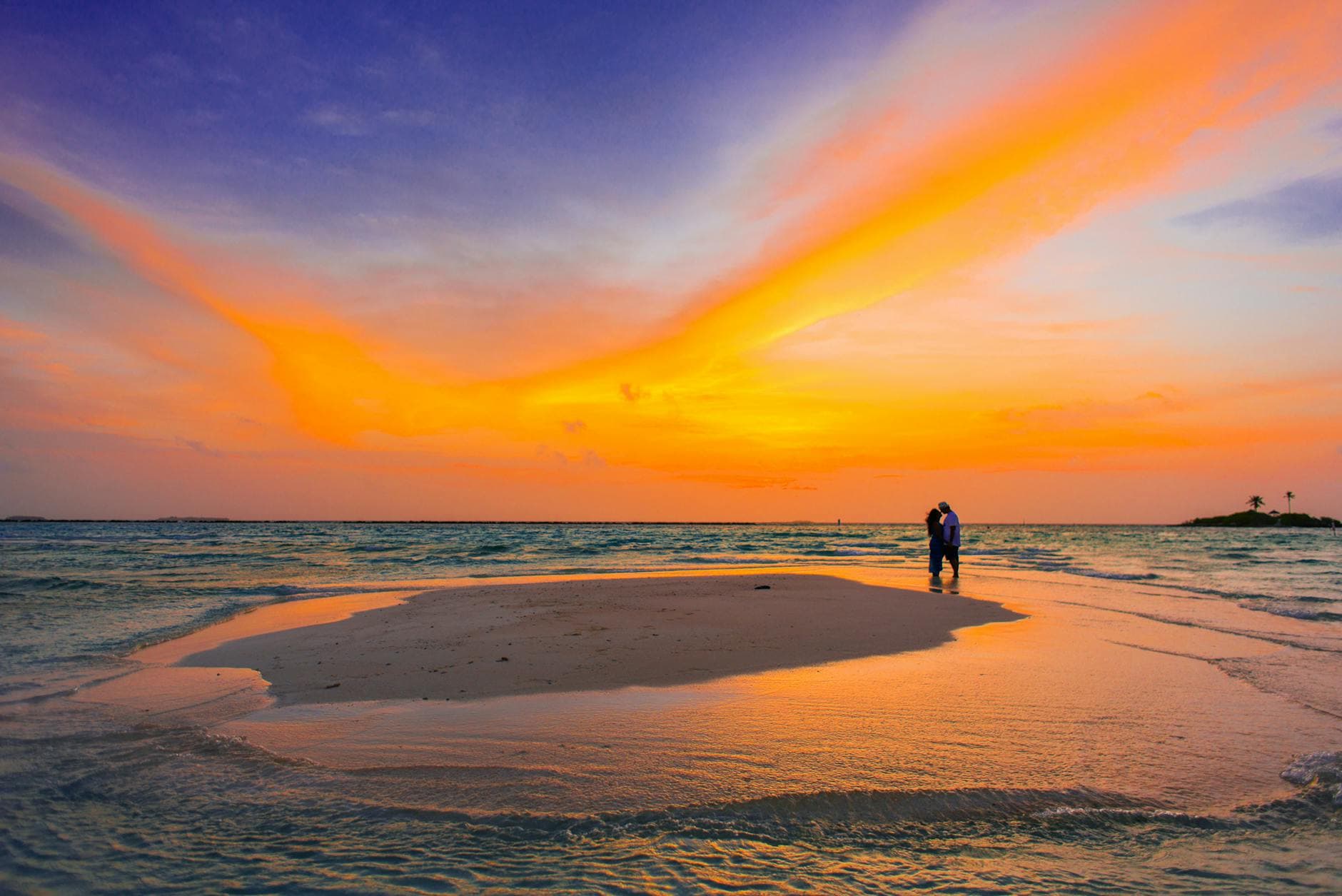
Photo: Pexels
Most couples start planning their honeymoon too late. That is not a scare tactic: it is a pattern we see constantly. The wedding consumes every spare hour for months, and the honeymoon gets pushed to "we'll figure it out after the venue deposit." Then suddenly it is three months before the trip, peak-season flights have doubled, the overwater villa you wanted is sold out, and your passport expired in January.
The fix is not complicated: start early and work a checklist. Honeymoon planning is not a single decision. It is a sequence of roughly 40 smaller decisions spread across 12 months, and each one has an ideal window. Book flights too early and you overpay. Book too late and you overpay worse. Skip travel insurance and you gamble thousands. Forget to notify your bank and your card gets frozen at a restaurant in Positano.
This guide gives you a month-by-month honeymoon planning timeline from 12 months out to departure day. Every task is here, in the order it should happen, with specific action steps instead of vague advice. Bookmark it. Share it with your partner. Check things off as you go.
How Much to Budget (and Where the Money Goes)
Before you open a single travel website, sit down together and agree on a number. Not a vague range: an actual dollar figure you are both comfortable spending. Every decision that follows depends on this one conversation.
Average Honeymoon Costs by Tier (2026)
Budget Tier: $2,000–$4,000 Domestic trips, road trips, short-haul flights to nearby beach towns, or international destinations where your currency stretches far (Bali, Thailand, Mexico, Portugal). You stay in guesthouses, boutique hotels, or vacation rentals. You eat at local restaurants, not resort dining rooms. This tier delivers genuinely wonderful honeymoons if you choose the right destination.
Mid-Range Tier: $5,000–$8,000 The sweet spot for most couples. This covers return flights to Europe, the Caribbean, or Southeast Asia, seven nights at a quality resort or upscale boutique hotel, a handful of booked experiences, and comfortable dining. You are not pinching pennies, but you are not ordering the tasting menu every night either.
Luxury Tier: $10,000–$25,000+ Overwater villas in the Maldives, cave suites in Santorini, safari lodges in Tanzania, five-star all-inclusives in Bora Bora. Business class flights, private transfers, spa packages, and sunset sailing charters. This tier is where the "once in a lifetime" honeymoon cliche actually lives.
Where to Allocate Your Budget
These percentages work across all three tiers and give you a realistic framework for splitting your total spend:
- Flights: 25%: The single biggest line item for most international honeymoons. For a $6,000 budget, that is $1,500 in airfare for two.
- Accommodation: 40%: Where you sleep defines the trip. On $6,000 that is $2,400, or roughly $340 per night for a seven-night stay.
- Food and drink: 15%: Covers dining out, groceries if you are self-catering, and the cocktails you will inevitably order at sunset. Budget $900 on a $6,000 trip, or about $130 per day for two.
- Activities and excursions: 15%: Snorkelling trips, cooking classes, wine tours, spa treatments. Another $900 on a $6,000 trip, enough for three to five paid experiences.
- Buffer: 5%: The $300 you will be glad you set aside when you discover that the restaurant everyone recommends costs more than you expected, or when you want to extend your car rental by a day.
One practical step right now: open a dedicated savings account or a separate pot within your existing bank. Label it "honeymoon fund." Set up a standing order from your joint account. Even $200 per month for 12 months puts $2,400 aside before you touch your wedding budget.
The Month-by-Month Honeymoon Planning Checklist
12 to 9 Months Before Departure
This phase is about big decisions and long lead-time items. You are laying the foundation for everything that comes later.
Set your budget as a couple Sit down together (not in passing, not via text) and agree on a total number. Use the tier breakdown above as a starting point. Decide whether you are funding it from savings, a honeymoon registry, or a combination. If you are setting up a honeymoon fund, start the standing order now.
Choose your destination Narrow it down to two or three options, then make a final call. Consider:
- Season and weather at your likely travel dates
- Visa and passport requirements (more on this below)
- Flight time and jet lag tolerance: do you want to arrive rested or is a long journey part of the adventure?
- What kind of trip you want: beach relaxation, cultural exploration, adventure, city and food, wildlife, or a mix
Do not overthink this. If you have always dreamed of the Amalfi Coast, go to the Amalfi Coast. The best honeymoon destination is the one you are both genuinely excited about.
Check your passports immediately This is the single most time-sensitive item on the entire list. Check both passports right now, not next week, not when you "get around to it." Verify two things:
- That neither passport expires within six months of your return date. Most countries require at least six months of validity beyond your travel dates.
- That you have at least two blank pages for stamps and visas.
If either passport needs renewal, start the process today. Standard passport renewal takes 6 to 8 weeks in the US, but processing times spike unpredictably. Expedited service costs more and still takes 2 to 3 weeks.
If you are changing your name after the wedding and want your passport to match, factor in additional time. Many couples travel on their maiden-name passport and update it after the honeymoon: this is perfectly fine and avoids the time pressure entirely.
Research visa requirements Some destinations require visas arranged in advance (India, Australia ETA, some African countries). Others offer visa-on-arrival or visa-free entry. Check the specific requirements for your nationality and destination. Do not assume: verify on the destination country's official immigration website.
Set a Google Flights price alert Go to Google Flights, enter your departure city, destination, and approximate travel dates. Click "Track prices." You will get email notifications when fares drop or rise. Do this the day you choose your destination, not when you are ready to book. The data you collect over the next few months will tell you whether that $900 fare is a good deal or an inflated one.
Start browsing accommodation You are not booking yet (unless you find a cancellation-friendly rate that is too good to pass up). You are building a shortlist. Save properties on Booking.com, Hotels.com, or directly on resort websites. Read recent reviews: focus on reviews from the last six months, not the overall score.
Research travel credit cards If you do not already have a card with travel rewards, now is the time to apply. Many travel cards offer sign-up bonuses worth $500 to $1,000 in travel credit if you meet a minimum spend within the first three months. Your wedding expenses can help you hit that threshold easily. Apply early so the card is active and earning points by the time you book flights.
9 to 6 Months Before Departure
This is the booking window. The decisions you made in phase one now become confirmed reservations.
Book your flights For international honeymoons, the 2 to 4 month advance booking window typically offers the best fares. Since you set your price alert months ago, you now have context for what a good price looks like. Book when the fare drops into your target range. A few specifics:
- Tuesday and Wednesday departures are consistently cheaper than Friday and Sunday.
- Connecting flights save money but cost you time and energy. On a honeymoon, a direct flight is worth the premium if it exists.
- Book directly with the airline if possible: it gives you more flexibility for changes and better customer service if things go wrong.
Book your accommodation For peak-season travel (June through September in Europe, December through March in the Maldives and Caribbean), the best rooms at popular properties sell out 6 to 9 months ahead. If your heart is set on a specific room type (a sunset-facing overwater villa, a caldera-view suite in Oia) book it now.
Look for free cancellation policies. Many hotels and booking platforms offer free cancellation up to 14 to 30 days before arrival. This lets you lock in availability now without committing fully.
Book experiences that sell out early Certain activities have limited capacity and book out months in advance:
- Michelin-starred or reservation-only restaurants (some release bookings 3 to 6 months ahead)
- Private boat charters and sunset cruises in peak season
- Popular cooking classes and wine tours
- Hot air balloon rides (Cappadocia, Serengeti, Bagan)
- Helicopter tours
If an experience is central to your honeymoon vision, book it now. If it is a nice-to-have, it can wait.
Discuss your honeymoon itinerary together This sounds obvious, but many couples skip it and end up with mismatched expectations. One person wants to lie on a beach for seven days straight. The other wants to hike, explore towns, and eat at a different restaurant every night. Neither is wrong, but you need to know before you arrive.
Sketch a rough day-by-day itinerary. It does not need to be hour-by-hour, just a general shape. Which days are "do nothing" days? Which days have booked activities? Is there a day trip you both want to take? Getting this on paper now prevents the "what should we do today?" conversation from becoming a recurring source of friction.
6 to 3 Months Before Departure
The big-ticket items are booked. This phase is about filling in the details that separate a good trip from a great one.
Buy travel insurance Do not skip this. You have just spent months planning and thousands of dollars booking a trip that happens right after you spend a fortune on a wedding. Travel insurance typically costs 5 to 8 percent of your total trip cost: roughly $300 to $500 for a mid-range honeymoon.
What to look for in a policy:
- Trip cancellation and interruption coverage (look for "cancel for any reason" if available)
- Medical coverage abroad, especially important if your destination has expensive healthcare (the US, Switzerland, Japan) or limited facilities (remote islands, safari regions)
- Emergency evacuation coverage
- Lost or delayed baggage coverage
- 24/7 assistance helpline
Compare policies on aggregator sites like Squaremouth or InsureMyTrip. Read the exclusions carefully. Pre-existing medical conditions, adventure sports, and pregnancy often require add-ons.
Make restaurant reservations In popular honeymoon destinations, the best restaurants book up weeks or months in advance during peak season. Identify three to four restaurants you genuinely want to try. Reserve a table for each. You can always cancel, but you cannot conjure a reservation the night before at a place with a two-month waitlist.
For destinations like Italy, Greece, or Japan, restaurant reservations are part of the experience. A sunset table at a cliffside restaurant in Ravello or an omakase counter in Kyoto is not something you leave to chance.
Book spa treatments If your resort has a spa, book your couples' massage or treatment package now rather than waiting until you arrive. Resort spas in peak season often fill their best time slots weeks ahead. Early morning and sunset appointments go first.
Start building your packing list You are not packing yet, but you should start a running list. Use a shared note in your phone so both of you can add items as they come to mind. Over the next three months, you will think of things you would never remember in a last-minute packing session. More on the specific packing checklist later in this guide.
Research destination-specific practicalities Spend an hour learning the things guidebooks bury in the back:
- Tipping customs (varies enormously by country)
- Electrical outlet types and voltage (buy adapters now, not at the airport)
- Local SIM cards vs. international roaming vs. eSIM options
- Public transport apps or ride-hailing apps used locally (Grab in Southeast Asia, Bolt in Europe, etc.)
- Dress codes for religious sites if you plan to visit temples, mosques, or churches
- Common scams or tourist traps at your destination
3 Months to 1 Month Before Departure
You are in the home stretch. This phase is about confirming, preparing, and handling the administrative tasks that are easy to forget.
Make all final payments Check every booking: flights, hotel, activities, transfers. Some require final payment 30 to 60 days before arrival. Set calendar reminders so nothing slips. Missing a payment deadline can mean losing your reservation entirely.
Notify your bank and credit card companies Call or use your banking app to set a travel notice on every card you plan to use abroad. Include your destination country and travel dates. Without this, your bank's fraud detection system may block your card after the first foreign transaction. This is one of the most commonly forgotten steps, and it is one of the most disruptive when it goes wrong.
While you are at it:
- Check your daily spending and ATM withdrawal limits. Increase them if needed.
- Confirm your card has no foreign transaction fees. If it does, consider bringing a card that does not.
- Make sure you know your card's PIN. Many countries require chip-and-PIN for card payments, not just tap or signature.
Handle health preparations Check whether your destination requires or recommends any vaccinations. Some vaccines need to be administered 4 to 6 weeks before travel, so do not leave this until the last minute.
Common travel health steps:
- Visit a travel health clinic or your GP for destination-specific advice
- Fill any prescription medications with enough supply for your entire trip plus a few extra days
- Get a copy of your prescriptions (generic names, not brand names) in case you need to refill abroad
- If you take medication that could raise questions at customs (anything injectable, controlled substances), carry a letter from your doctor
Arrange airport transfers Do not leave this to chance, especially if you are arriving late at night or at a destination where taxis are unreliable. Pre-book a transfer from the airport to your accommodation. Many hotels offer this service, sometimes complimentary. If not, book through a reputable local transfer company. Having someone holding a sign with your name when you walk out of arrivals after a 14-hour flight is worth every penny.
Sort out travel money Decide your currency strategy:
- Travel debit card (Wise, Revolut, Charles Schwab): Best exchange rates, low or no fees, works at ATMs worldwide. This is the best option for most couples in 2026.
- Credit card with no foreign transaction fees: Use for larger purchases. Always pay in the local currency when given the choice (decline dynamic currency conversion).
- Small amount of local cash: Withdraw from an ATM on arrival or exchange a small amount before you leave. You want enough for tips, taxis, and small vendors who do not take cards. Do not exchange large amounts at airport bureaux de change: their rates are terrible.
Create a shared travel document Put all your booking confirmations, reservation numbers, addresses, and emergency contacts into a single shared document (Google Docs works well). Include:
- Flight confirmation numbers and e-tickets
- Hotel reservation details with address and check-in time
- Activity booking confirmations
- Travel insurance policy number and claims phone number
- Embassy or consulate contact information for your destination
- A photo of both passports (stored securely)
Both of you should have access to this document offline.
1 Month to 1 Week Before Departure
Everything should be booked and paid for. This week is about confirming and finalising.
Confirm every reservation Go through your shared travel document and confirm each booking:
- Call or email your hotel to reconfirm dates, room type, and any special requests (honeymoon package, late check-in, airport transfer)
- Check your flight status: has the schedule changed? Have you been assigned seats?
- Reconfirm restaurant reservations, especially any made months ago
- Reconfirm activity bookings and check meeting points and times
Download offline maps and essential apps Open Google Maps (or Maps.me) and download the offline map for your destination region. This is critical: you do not want to rely on mobile data to navigate an unfamiliar place.
Download any apps you will need:
- Airline app (mobile boarding passes)
- Hotel or resort app (if one exists)
- Translation app (Google Translate with offline language packs)
- Local ride-hailing app
- Currency converter
- Your travel insurance provider's app
Handle currency exchange If you are bringing cash, exchange it now at your bank or a reputable online service. Airport exchange counters charge markups of 5 to 15 percent: that is $50 to $150 wasted on a $1,000 exchange.
Only bring as much cash as you need for the first day or two, tips, and small purchases. Use your travel debit card for everything else.
Print and save key documents Yes, print. Phones die, screens crack, and Wi-Fi fails at the worst moments. Print copies of:
- Passport photo pages
- Flight e-tickets
- Hotel confirmation
- Travel insurance policy summary
- Emergency contacts list
Keep printed copies separate from your phone and digital copies: one set in your carry-on, one in your checked luggage.
Departure Week
You are almost there. This final week is about packing, securing your home, and transitioning out of daily life.
Pack using the checklist below Do not pack the night before. Give yourself at least two days so you can remember what you forgot and buy what you are missing.
Set up out-of-office replies On your work email, personal email if needed, and any messaging platforms (Slack, Teams). Keep it simple: "I am on my honeymoon from [date] to [date]. I will respond when I return. For urgent matters, contact [colleague name]."
Arrange home security
- Ask a trusted neighbour or friend to collect mail and packages
- Set light timers or smart lights to turn on in the evenings
- Adjust your thermostat (no need to heat or cool an empty house at full capacity)
- Make sure all doors and windows are locked: check the ones you never use
- If you have plants, arrange watering
- If you have pets, confirm your pet sitter or boarding arrangements one final time
Charge everything The night before departure: charge your phone, tablet, e-reader, camera, portable battery pack, noise-cancelling headphones, and smartwatch. All of them. Fully.
Check in online Most airlines open online check-in 24 hours before departure. Check in as soon as it opens, select your seats if you have not already, and download your boarding passes to your phone and your airline's app.
The "Don't Forget" List: 10 Things Couples Commonly Miss
These are the items that do not appear on most generic travel checklists but cause real problems when overlooked on a honeymoon.
-
Travel adapter for your destination's outlet type. The UK, Europe, US, Asia, and Australia all use different plugs. Buy a universal adapter now: do not pay triple at the airport.
-
Checking your phone plan's international roaming charges. A single day of accidental roaming can cost $50 to $100. Either activate an international plan, buy a local SIM on arrival, or use an eSIM service like Airalo or Holafly. Set this up before you leave, not when you land.
-
Bringing a photocopy of your marriage certificate. Some resorts offer honeymoon packages or complimentary upgrades but may ask for proof. A photocopy or photo on your phone is enough.
-
Registering with your embassy or consular service. The US State Department's STEP program (Smart Traveler Enrollment Program) and the UK's equivalent allow you to register your travel plans so your government can contact you in an emergency. Takes two minutes.
-
Checking luggage allowances for inter-island or domestic flights. If your honeymoon involves a domestic flight (Male to a resort island, Bali to Komodo, Athens to Santorini), the luggage allowance on small aircraft is often just 15 to 20 kg. Overweight fees are steep and non-negotiable.
-
Leaving one credit card locked in the hotel safe. If your wallet gets lost or stolen, you need a backup card that is not with you. This has saved more travellers than any insurance policy.
-
Packing a basic first aid kit. Painkillers, antihistamines, anti-diarrheal medication, plasters, insect repellent, and any prescription medication. Resort pharmacies are either overpriced or nonexistent, and finding a pharmacy when you are nauseous at 11pm on a remote island is not the honeymoon memory you want.
-
Tipping cash in the local currency. Many service workers in tourism-dependent destinations rely on tips. Have small bills in the local currency for housekeeping, drivers, guides, and porters. Do not assume you can tip on card everywhere.
-
Backing up your photos daily. Set your phone to auto-upload to Google Photos, iCloud, or a similar service. Losing a phone or camera on your honeymoon with no backup is devastating. If you are using a dedicated camera, bring an extra memory card and upload to a laptop or cloud service each evening.
-
Discussing social media boundaries with your partner. This sounds trivial, but it causes real friction. Does one of you want to post every sunset while the other wants to be fully offline? Talk about it before you go. Agree on a level of phone use that works for both of you.
Honeymoon Packing Checklist
This is not a general travel packing list. These are the items that matter specifically for a honeymoon: the things you will wish you had packed if you leave them behind.
Documents and Money
- Passport (valid for 6+ months beyond return date)
- Printed flight confirmations and e-tickets
- Hotel booking confirmations
- Travel insurance policy documents
- Marriage certificate copy (for honeymoon perks)
- Two credit/debit cards (carry separately)
- Small amount of local currency in cash
- Driver's licence (if renting a car)
Tech and Connectivity
- Phone charger and cable
- Universal power adapter
- Portable battery pack (at least 10,000 mAh)
- Noise-cancelling headphones
- Camera and charger (if using a dedicated camera)
- Extra memory card
- eSIM or local SIM plan sorted before departure
Clothing and Accessories
- Two to three swimsuits (you need rotation: one is always drying)
- Lightweight cover-up or sarong
- One outfit for a nice dinner (you will want at least one dressy evening)
- Comfortable walking shoes
- Flip-flops or sandals
- Sunhat with a brim
- Sunglasses (bring a spare pair if you tend to lose them)
- Light rain jacket or packable windbreaker
Health and Comfort
- Prescription medications (plus a spare supply)
- Painkillers (paracetamol, ibuprofen)
- Anti-diarrheal medication
- Antihistamines
- Motion sickness tablets (if taking boats or small planes)
- Insect repellent (DEET-based for tropical destinations)
- High-SPF reef-safe sunscreen
- After-sun lotion or aloe vera gel
- Plasters and antiseptic wipes
- Rehydration sachets (essential in hot climates)
Honeymoon-Specific Items
- Something special for the first night (you know what we mean)
- A small Bluetooth speaker for music on your balcony or beach
- A journal or notebook, writing down moments beats scrolling through photos years later
- Snacks for the flight (airline food is unreliable at best)
- Ziplock bags for wet swimsuits, sandy items, and keeping electronics dry
- A tote bag or daypack for beach days and excursions
- Laundry detergent sheets (if you plan to hand-wash anything mid-trip)
Keep Exploring
Destination guides:
- Best Honeymoon Destinations for 2026 — Our ranked list to help you pick
- Bali Honeymoon Guide 2026 | Hawaii Honeymoon Guide 2026 | Greece Honeymoon Guide 2026
- Thailand Honeymoon Guide 2026 | Caribbean Honeymoon Guide 2026 | Bora Bora Honeymoon Guide 2026
- Complete Maldives Honeymoon Guide 2026 | Italy Honeymoon Guide 2026
Comparisons:
- Santorini vs Bali | Maldives vs Bora Bora | Hawaii vs Caribbean
- Greece vs Italy | Bali vs Maldives | Thailand vs Bali
Planning resources:
- Honeymoon Packages Guide: How to Find and Compare the Best Deals — What packages include and how to compare them
- 30 Honeymoon Ideas for Every Couple — Inspiration sorted by style
- Best All-Inclusive Honeymoon Resorts 2026 — 12 resorts reviewed with real prices
- Luxury Honeymoon Guide 2026 — What $15K+ actually gets you
- How Much Does a Honeymoon Actually Cost?
- 15 Cheap Honeymoon Destinations That Don't Feel Cheap
Frequently Asked Questions
How far in advance should you start planning a honeymoon?
Twelve months is ideal, especially if you are travelling to a popular destination during peak season. The critical bookings (flights, accommodation, and sell-out experiences) benefit from a 6 to 9 month lead time. If your wedding is in six months and you have not started, you are not too late, but you will have less flexibility on dates and fewer options for top-tier properties.
Should you book the honeymoon before or after the wedding?
Before. Specifically, book the major components (flights and accommodation) at least three to six months before the wedding. This takes the pressure off the post-wedding period when you are exhausted and do not want to make decisions. Your honeymoon should be something you look forward to during the wedding stress, not another item on the to-do list.
Is a honeymoon registry worth it?
Yes, with caveats. A honeymoon fund lets guests contribute to your trip instead of buying physical gifts, which is practical if you already live together and do not need a second toaster. The best platforms (Hitchd, Honeyfund, Blueprint Registry) let you create specific experience-based items ("sunset sailing trip," "couples' spa day") that feel more personal than a generic cash request. Be aware that most platforms charge a processing fee of 2.5 to 5 percent.
How much should you tip on a honeymoon?
It depends entirely on the destination. In the US, standard tipping culture applies (15 to 20 percent at restaurants, $2 to $5 per day for housekeeping). In Europe, tipping is lighter, rounding up the bill or leaving 5 to 10 percent is normal. In Southeast Asia, tips are smaller in absolute terms but deeply appreciated. In the Maldives, most resorts add a 10 percent service charge, but additional tips for exceptional service are common. Research your specific destination's norms before you go.
Can you plan a great honeymoon on a budget?
Absolutely. A memorable honeymoon is about the experience, not the price tag. Some of the most romantic destinations in the world are also among the most affordable: Bali, Thailand, Portugal, Mexico, Costa Rica, and Morocco all deliver extraordinary experiences at a fraction of the cost of luxury island resorts. The key is choosing a destination where your currency goes furthest, prioritising one or two splurge experiences rather than spending evenly across everything, and travelling in the shoulder season (just before or after peak) when prices drop 20 to 40 percent but the weather is still good.
Your Next Step
You now have every task, in order, with specific timing. The single most valuable thing you can do right now (today, not tomorrow) is check your passport expiration dates and set a Google Flights price alert for your top destination. Those two actions take five minutes and prevent the two most common honeymoon planning disasters.
Everything else follows from there. One task at a time, one month at a time, until you are standing at the departure gate with your bags packed, your reservations confirmed, and nothing left to worry about except which swimsuit to wear first.
Plan Your Trip
Where to Stay in Maldives
Hand-picked hotels and resorts across budget, mid-range, and luxury tiers.
Planning your budget?
Try the free Budget Calculator →Compare destinations side-by-side
See how this destination stacks up against others on cost, weather, and romance.