Complete Maldives Honeymoon Guide 2026: Planning, Budgets, and Where to Stay
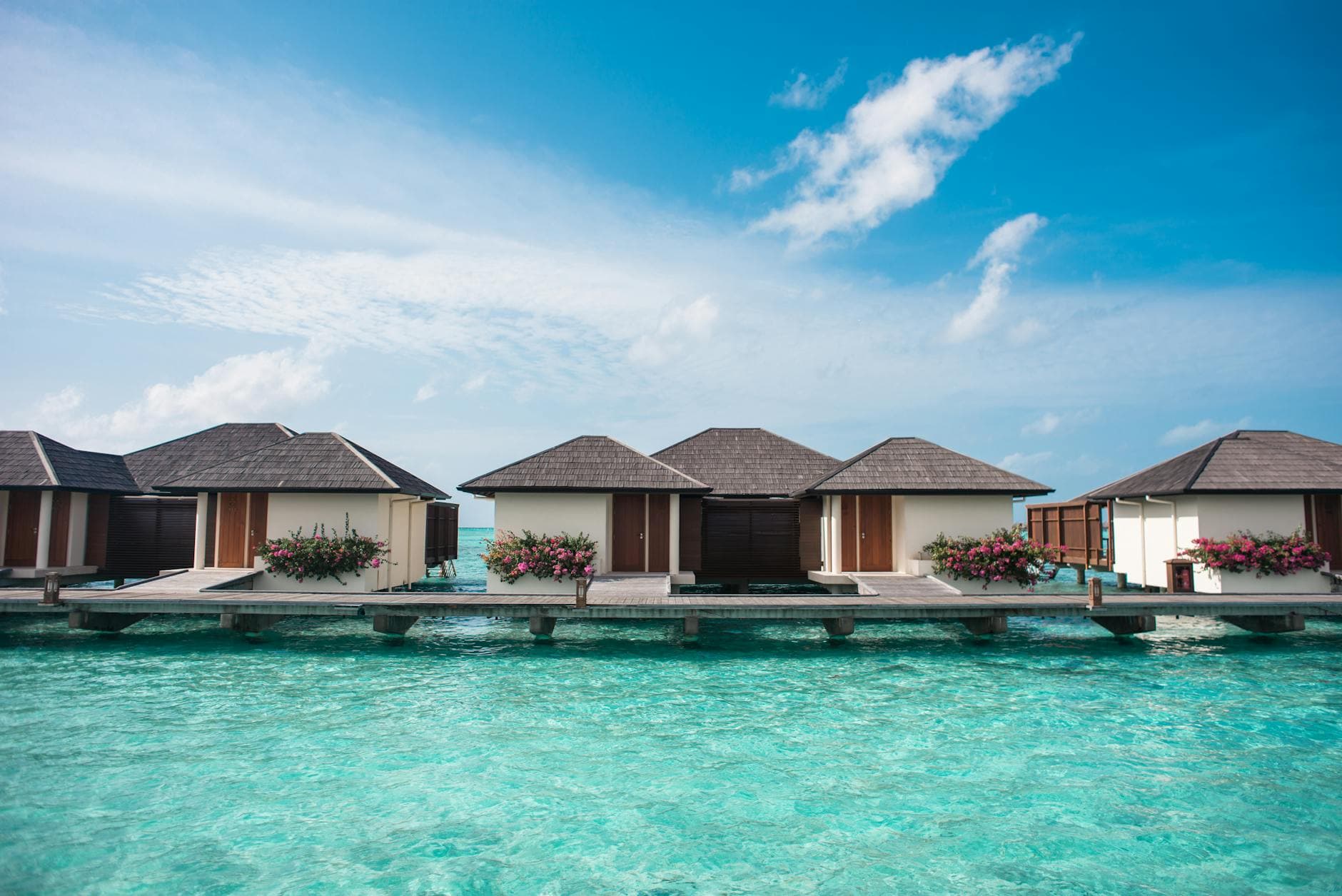
Photo: Pexels
There is a reason the Maldives appears on virtually every list of top honeymoon destinations in the world. Scattered across the Indian Ocean like a broken strand of pearls, this archipelago of 1,192 coral islands delivers something no other destination quite manages: total, uninterrupted immersion in turquoise water, white sand, and the kind of privacy that makes the rest of the world feel very far away.
For couples beginning married life together, the Maldives offers a rare combination of natural beauty, world-class luxury, and genuine seclusion. Whether you picture yourselves stepping from an overwater villa directly into a house reef teeming with manta rays, sharing a candlelit dinner on a private sandbank with nothing but stars overhead, or simply lying side by side on a stretch of beach that belongs to no one but you: the Maldives delivers on the fantasy.
But turning that dream into a real itinerary requires practical planning. The Maldives is not a single resort town you can wander through on foot. It is a nation of atolls spread across roughly 90,000 square kilometres of ocean, and the choices you make about which atoll, which type of accommodation, which season, and which transfer method will shape your entire experience.
This guide covers every decision you need to make, from your first budget conversation to the moment you board the seaplane. Consider it your definitive planning resource: the kind of article worth bookmarking and returning to as your trip takes shape.
Choosing Your Atoll
The Maldives is divided into 26 natural atolls, but only a handful contain the concentration of resorts and guesthouses that matter for honeymoon planning. Each has a distinct character.
North Male Atoll (Kaafu)
The most accessible atoll, home to the capital Male and Velana International Airport. Resorts here are reachable by speedboat in 20 to 90 minutes, which means no seaplane transfer and lower transport costs. The trade-off is slightly more boat traffic and proximity to the airport zone. For couples on a tighter timeline or budget, North Male is a practical choice that still delivers stunning reefs and private island resorts.
South Ari Atoll
The premier destination for marine life encounters. South Ari is one of the most reliable places on earth to swim with whale sharks year-round, and its outer reefs attract manta rays in large numbers. If underwater experiences are central to your honeymoon vision, this atoll should be at the top of your list. Transfers are typically by seaplane (25 to 40 minutes from Male), adding cost but also adding that iconic arrival experience, circling low over impossibly blue lagoons before touching down.
Baa Atoll (UNESCO Biosphere Reserve)
Designated a UNESCO Biosphere Reserve in 2011, Baa Atoll is the environmental jewel of the Maldives. Hanifaru Bay, within the reserve, hosts one of the largest known gatherings of manta rays in the world during the southwest monsoon season (June to November). Resorts in Baa tend toward the premium end, attracting couples who value ecological sensitivity alongside luxury. Transfers are by seaplane, typically 30 to 40 minutes.
Raa Atoll
Less developed than Ari or Baa, Raa Atoll offers a sense of frontier remoteness. Resorts here are relatively newer, meaning facilities tend to be modern and well-designed. The reefs are healthy and less visited, and the overall feeling is of being genuinely removed from the world. Seaplane transfers run 45 to 50 minutes. Raa is an excellent choice for couples who prioritise seclusion over convenience.
Noonu Atoll
Another relatively undeveloped atoll in the northern Maldives, Noonu is home to a small number of high-end resorts. The snorkelling and diving here is exceptional, with pristine reefs and regular sightings of reef sharks, turtles, and eagle rays. Like Raa, the remoteness is part of the appeal. Seaplane transfers are approximately 45 minutes.
Which Atoll Should You Choose?
- Best for easy access and lower transfer costs: North Male Atoll
- Best for whale sharks and marine life: South Ari Atoll
- Best for eco-conscious couples: Baa Atoll
- Best for total seclusion: Raa or Noonu Atoll
- Best all-rounder for first-time visitors: South Ari Atoll
Types of Accommodation
The accommodation you choose defines your Maldives experience more than almost any other decision. Understanding the differences matters.
Overwater Villas
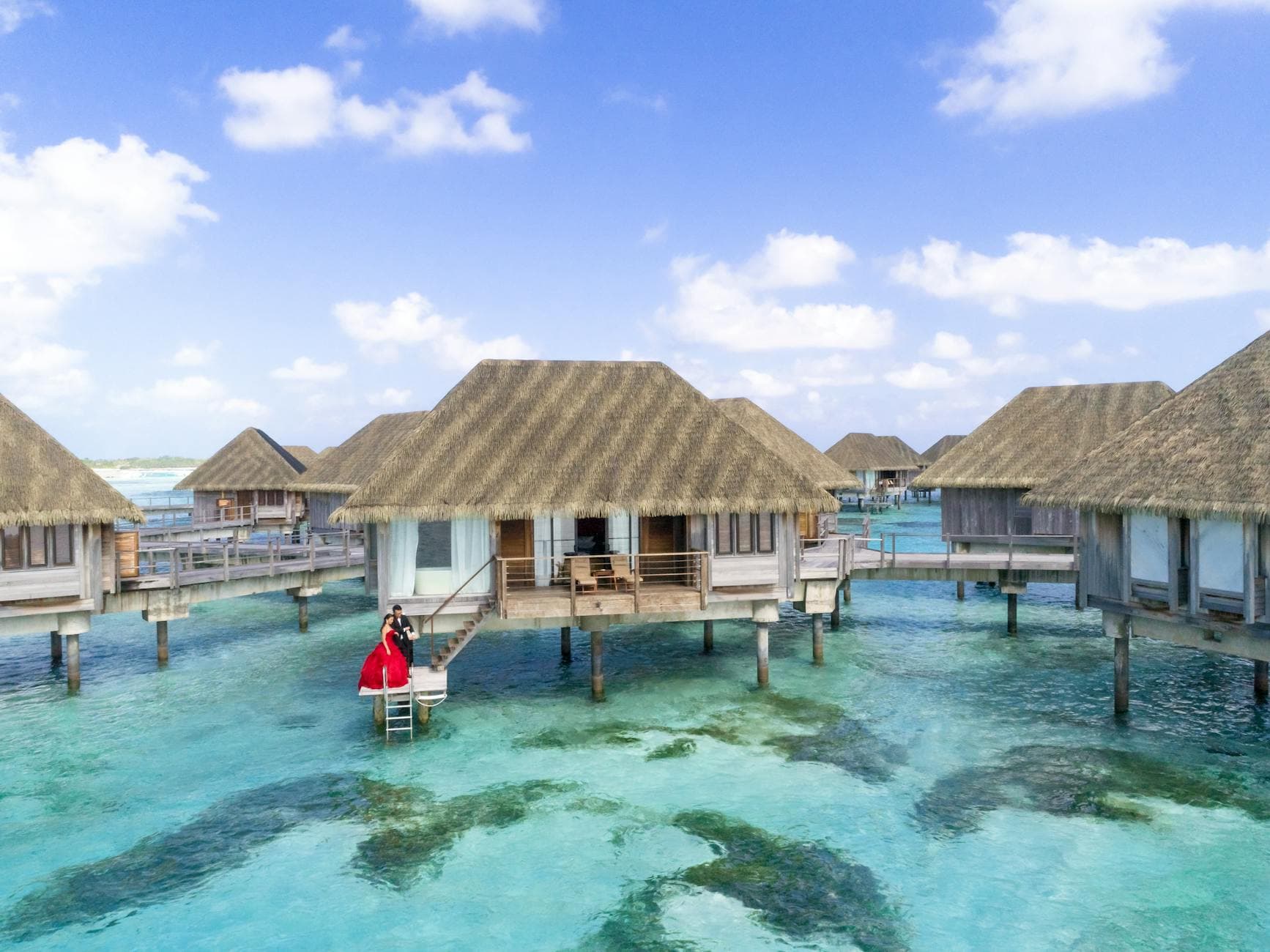
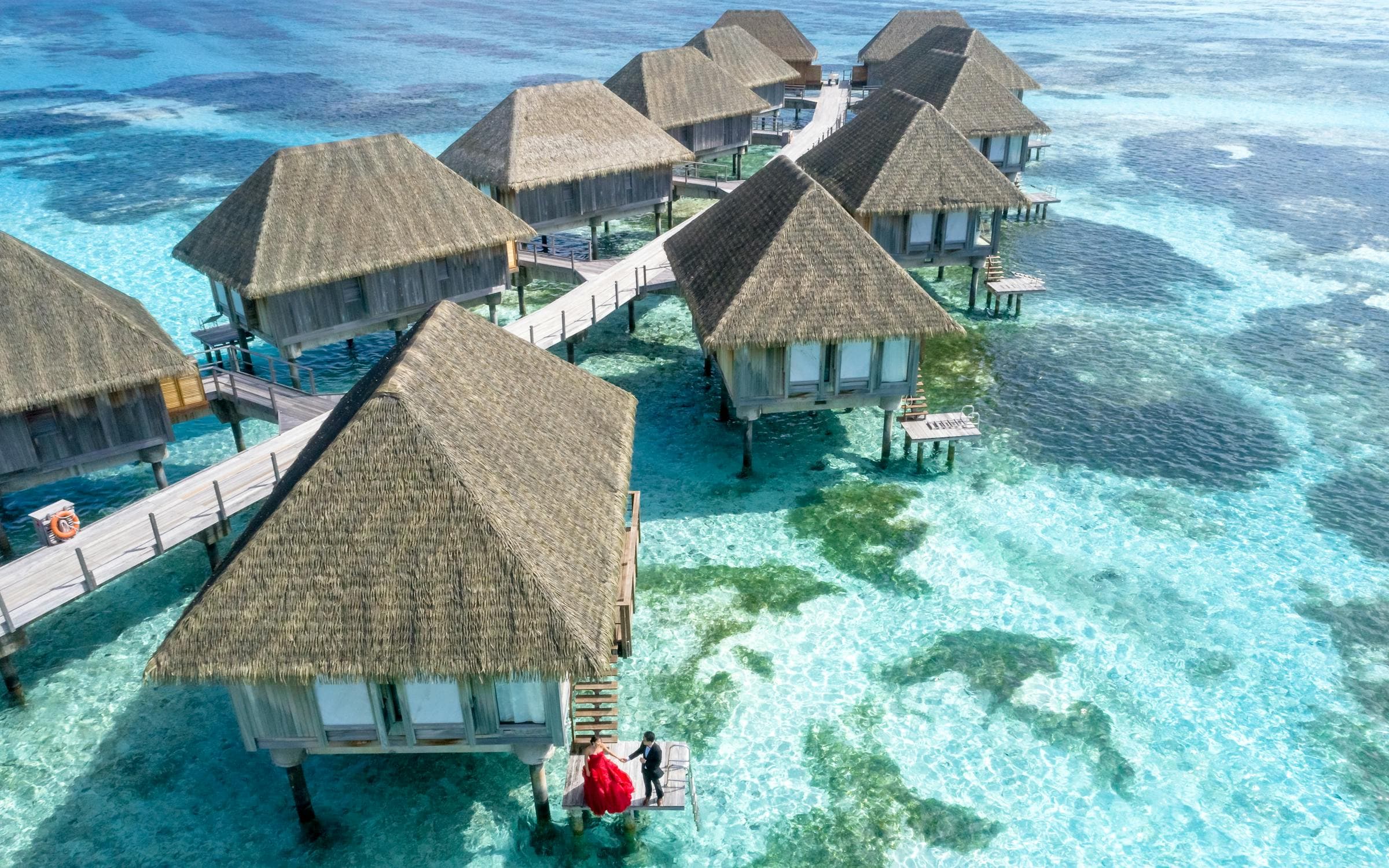
The iconic Maldives accommodation. These are standalone structures built on stilts over the lagoon, connected to the island by a wooden walkway. Most feature glass floor panels for watching marine life below, private decks with direct ladder or step access to the water, and outdoor bathrooms or soaking tubs. Premium versions include private infinity pools, butler service, and overwater hammocks.
Overwater villas command the highest prices and are the most sought-after accommodation type for honeymoons. Book early: the best units (sunset-facing, end-of-jetty positions with maximum privacy) sell out months in advance for peak season.
Beach Villas
Ground-level villas set directly on the sand, typically with private garden areas, outdoor showers, and direct beach access. Beach villas tend to be more spacious than overwater units and often include larger private pools. They offer a different rhythm: sand between your toes, the sound of waves rather than water beneath you. Many couples find beach villas more practical for day-to-day living while still delivering the luxury and privacy they are looking for.
Water Bungalows
A step below the full overwater villa in size and amenities, water bungalows are the more affordable overwater option. They may lack private pools or the most expansive deck space, but they still deliver the core experience of sleeping above the ocean. For couples who want the overwater experience without the top-tier price, water bungalows are a smart compromise.
Guesthouse Accommodation (Local Islands)
Since 2009, the Maldives has permitted guesthouses on inhabited local islands. These are modest but clean accommodations in villages like Maafushi, Thulusdhoo, Dhigurah, and Fulidhoo. You will not get the private island experience, but you will get genuine Maldivian culture, dramatically lower prices, and access to the same ocean. For budget-conscious honeymooners, a guesthouse stay combined with day trips to sandbanks and snorkelling sites can be genuinely wonderful.
Budget Breakdown
One of the most common questions couples ask is simply: how much does a Maldives honeymoon actually cost? The answer varies enormously depending on accommodation tier, transfer method, meal plan, and activity choices. Here are realistic ranges for 2026. These are wider planning ranges: the budget tier is 5 nights, and flights are priced by origin. For one itemised 7-night, two-person budget from the US East Coast, see the Maldives honeymoon cost page, where flights are $1,200–$2,400 per person in economy.
Budget Tier: $3,000 - $5,000 (5 Nights)
- Accommodation: Guesthouse on a local island (Maafushi, Thulusdhoo, or Dhigurah), $80-$150 per night
- Flights: Economy from major hubs, $800-$1,500 per person depending on origin
- Transfers: Public ferry or local speedboat from Male, $20-$80 per person
- Meals: Local restaurants and guesthouse dining, $30-$60 per day for two
- Activities: Snorkelling trips, sandbank excursions, dolphin cruises booked locally, $50-$100 per excursion
- What you get: Authentic Maldivian village life, beautiful beaches, excellent snorkelling, lower prices. What you trade is the private island seclusion and luxury service.
Mid-Range Tier: $5,000 - $10,000 (7 Nights)
- Accommodation: 4-star resort with beach villa or entry-level water bungalow, $200-$500 per night
- Flights: Economy or premium economy, $800-$2,000 per person
- Transfers: Speedboat ($150-$300 per person round trip) or seaplane, priced per person by each resort (Conrad Maldives lists US$700 per adult round trip on its getting-here page)
- Meals: Half-board (breakfast and dinner included), with lunch and drinks additional
- Activities: Resort-organised excursions, complimentary house reef snorkelling, spa treatments at additional cost
- What you get: The resort island experience with good service, private beaches, and quality diving and snorkelling. You may share the island with more guests than at a luxury property, and villas will be smaller, but the core experience is strong.
Luxury Tier: $10,000 - $25,000+ (7 Nights)
- Accommodation: 5-star overwater villa with private pool, $800-$3,000+ per night
- Flights: Business class on long-haul routes, $2,000-$5,000+ per person
- Transfers: Seaplane (often included in package or $400-$700 per person round trip), private yacht transfer at some properties
- Meals: All-inclusive or full-board with premium dining options, often including alcohol
- Activities: Complimentary non-motorised water sports, private sandbank dinners, spa credits, personalised excursions, guided diving
- What you get: The full fantasy. Butler service, sunset-facing overwater villas, private dining anywhere on the island, exceptional house reefs, world-class spas, and the sense that every detail has been considered.
Hidden Costs to Budget For
- Seaplane transfers are a significant line item, often $400-$700 per person round trip, and are not always included in room rates
- Resort drink prices can be steep: a cocktail may run $15-$25, making all-inclusive plans worthwhile for some couples
- Spa treatments at luxury resorts often start at $150-$300 per session
- Excursions like sunset fishing, diving courses, or private island picnics typically range from $100-$500 per couple
- Service charges and taxes (typically 10% service charge plus 17% tourism GST, the rate since 1 July 2025 according to the Maldives Inland Revenue Authority) are added to most resort bills
Best Time to Visit
The Maldives sits close to the equator, so temperatures remain warm year-round (28-32 degrees Celsius). The key variable is rainfall.
Dry Season (Northeast Monsoon): November to April
This is peak season and the most popular time for honeymoons. Expect clear skies, calm seas, excellent underwater visibility (30+ metres), and very little rain. January through March are the driest months. The trade-off is higher prices and fuller resorts: booking well in advance is essential for this window.
Wet Season (Southwest Monsoon): May to October
The wet season brings more cloud cover, occasional heavy rain showers (usually brief), and rougher seas on the eastern sides of atolls. However, the Maldives rarely experiences all-day rain even in the wettest months. The western sides of atolls remain relatively sheltered, and many resorts offer significant discounts (20-40% off peak rates). For budget-conscious couples willing to accept some rain, the wet season is a legitimate option.
Best Months by Activity
- Snorkelling (best visibility): January to April
- Diving (general): Year-round, with best visibility November to April
- Whale shark encounters (South Ari): Year-round, with slight peak December to April
- Manta ray season (Baa Atoll): June to November (Hanifaru Bay)
- Surfing: May to October (southwest swells)
- Budget-friendly travel: May to July, September to October
A Note on Shoulder Months
November and April sit at the transitions between seasons. Both can offer excellent weather with slightly lower prices than the December-March peak. These months are often the sweet spot for couples seeking value without significant weather risk.
Getting There
Flights to Male
Velana International Airport (MLE) in Male is the sole international gateway. Major airlines serving the Maldives include Emirates (via Dubai), Qatar Airways (via Doha), Singapore Airlines (via Singapore), Sri Lankan Airlines (via Colombo), Turkish Airlines (via Istanbul), and several seasonal carriers. Flight time from Dubai is approximately 4 hours; from Singapore, roughly 4.5 hours; from London via a Gulf hub, around 10-12 hours total.
Direct flights operate from an increasing number of Asian cities. From North America or Europe, at least one connection is required.
Seaplane Transfers
For resorts beyond speedboat range (typically those more than 80 kilometres from Male), seaplanes are the standard transfer. These are small Twin Otter floatplanes operated primarily by Trans Maldivian Airways (TMA) and Maldivian Air Taxi. Flights operate only during daylight hours (roughly 6:00 AM to 3:30 PM for departures), which means late international arrivals require an overnight stay near the airport or in Male before continuing to the resort the next morning.
Seaplane flights are an experience in themselves: the aerial views of atolls, reefs, and sandbanks from low altitude are extraordinary and often cited by honeymooners as one of the trip highlights.
Speedboat Transfers
Resorts in North and South Male Atoll, and some in nearby atolls, offer speedboat transfers directly from the airport. These range from 20 minutes to 90 minutes depending on distance. Speedboats operate at any hour, which is a significant advantage for couples arriving on late-night flights. You can transfer to your resort immediately rather than waiting for morning.
Domestic Flights
A few distant atolls (Addu, Haa Alifu) are served by domestic flights to regional airports, followed by a short speedboat ride. This is less common for mainstream honeymoon resorts but worth knowing about for the most remote properties.
Planning Your Arrival
The smoothest experience: book an international flight arriving in Male before 2:00 PM to connect with a same-day seaplane transfer. If arriving later, budget for one night at an airport hotel or Male city hotel. Many resorts coordinate transfers and will advise on timing when you book.
Top Honeymoon Experiences
Beyond the simple luxury of your villa and the beauty of the surrounding ocean, the Maldives offers a remarkable range of experiences designed for couples.
1. Private Sandbank Dinner
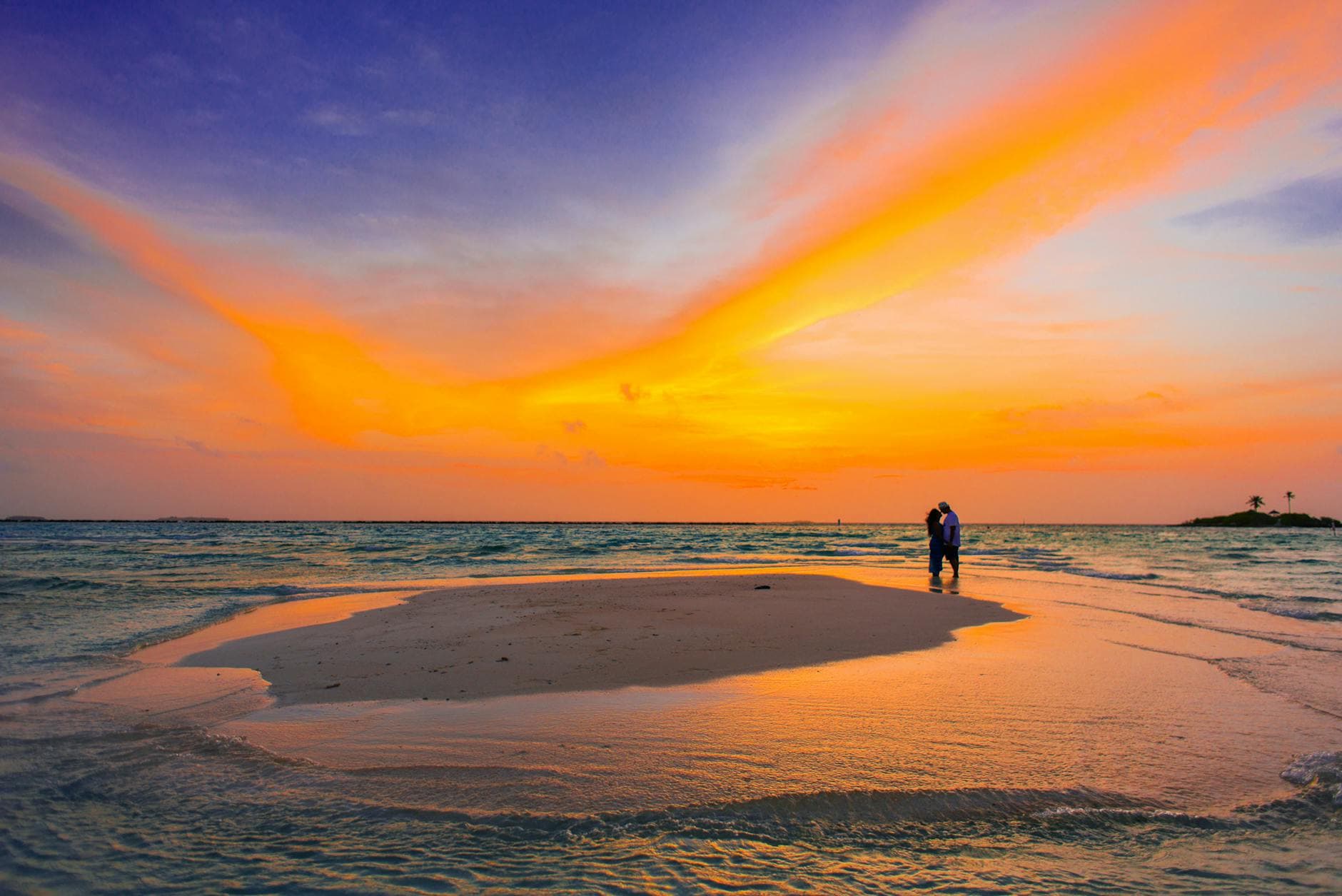
Perhaps the most romantic dining experience available anywhere. Your resort arranges a table on a tiny, uninhabited sandbank (nothing but sand, ocean, and sky) with a private chef preparing a multi-course meal. Torches and candles provide the only light. This is the single most-requested honeymoon experience in the Maldives, and for good reason.
2. Sunset Dolphin Cruise
The Maldives is home to large pods of spinner dolphins. Sunset cruises on traditional dhoni boats take you into deep channels where dolphins leap, spin, and play in the golden light of late afternoon. Nearly every resort offers this, and success rates for sightings are high.
3. Couples Spa Treatment
Maldivian resort spas are consistently ranked among the best in the world. Many offer overwater treatment rooms with glass floors, outdoor garden pavilions, and signature rituals using coconut, frangipani, and local botanicals. Book a couples treatment early in your stay to set the tone for the week.
4. House Reef Snorkelling
Many Maldivian resorts sit on islands with accessible house reefs just metres from shore. Stepping off your beach or descending the ladder from your overwater villa into a reef alive with parrotfish, surgeonfish, moray eels, reef sharks, and turtles is a daily privilege that never loses its wonder. No boat trip required: just grab a mask and fins.
5. Scuba Diving
The Maldives is one of the world's premier diving destinations. Even if you are not certified, many resorts offer discover scuba programmes that allow beginners to dive to 12 metres with an instructor. For certified divers, night dives, channel dives with pelagic species, and manta ray cleaning station dives are unforgettable.
6. Underwater Dining
Several Maldives resorts feature restaurants built below the waterline, with panoramic glass walls offering views of the surrounding reef. Dining surrounded by fish, rays, and the shifting blue light of the ocean is surreal and memorable.
7. Sunrise Fishing
Traditional Maldivian line fishing at dawn on a dhoni boat is a peaceful, low-key experience. Many resorts will cook your catch for lunch or dinner: a satisfying full-circle experience.
8. Island Hopping
If you are staying at a resort near inhabited islands, day trips offer a glimpse into local Maldivian life: mosques, fish markets, small shops, and the rhythm of island communities. This is also an opportunity to support local economies directly.
9. Stargazing
With minimal light pollution, the Maldives offers extraordinary night skies. Some resorts provide telescopes or employ astronomers for guided stargazing sessions. Lying on your villa deck and watching the Milky Way arc overhead is one of those quiet honeymoon moments that stays with you.
10. Floating Breakfast
A signature Maldives indulgence: breakfast served on a floating tray in your private pool or in the lagoon beside your villa. It is as photogenic as it is impractical, and it has become something of a rite of passage for honeymooners.
What to Pack
Packing for the Maldives is refreshingly simple, but a few specifics matter.
Essentials
- Reef-safe sunscreen (SPF 50+): This is critical. The Maldives has banned sunscreens containing oxybenzone and octinoxate to protect coral reefs. Bring mineral-based (zinc oxide or titanium dioxide) sunscreen. Resort shops stock it, but at premium prices.
- Rash guard or UV swim shirt: The equatorial sun is intense. A rash guard provides sun protection during extended snorkelling sessions and reduces sunscreen use.
- Snorkel mask and fins: Many resorts provide these complimentary, but bringing your own ensures a proper fit. A well-fitting mask transforms the snorkelling experience.
- Waterproof phone case or underwater camera: You will want to capture the marine life. A quality waterproof case or a dedicated underwater camera is worth the investment.
- Insect repellent: Mosquitoes are present, particularly at dusk. DEET-based repellent or natural alternatives are advisable.
- Light rain jacket: Even in dry season, brief showers occur. A packable rain shell takes up minimal space.
Clothing
- Resort wear is casual. Swimwear, shorts, sundresses, and sandals cover the vast majority of situations. A few resorts have smart-casual dress codes for dinner (collared shirts, no flip-flops), so check your resort's policy.
- Modest clothing for Male visits. If you transit through Male or visit local islands, the Maldives is a Muslim country and modest dress is expected: shoulders and knees covered for both men and women. Pack one or two items accordingly.
- A light layer for air conditioning. Resort restaurants and seaplanes can be cool. A light cardigan or linen shirt is useful.
Often Overlooked
- Dry bag: Invaluable for boat transfers and beach excursions to keep electronics, passports, and valuables safe.
- Power adapter: The Maldives uses UK-style three-pin plugs (Type G). Most resorts provide universal adapters, but do not rely on it.
- Prescription medication: Resort islands have limited medical facilities. Bring a full supply of any medications you need.
- Motion sickness remedies: Speedboat transfers in rougher conditions can be choppy. If you are prone to motion sickness, come prepared.
Booking Tips
When to Book
For peak season travel (December through March), book 9 to 12 months in advance. The best overwater villas (particularly sunset-facing, end-of-jetty units) are the first to sell out. For shoulder season or wet season travel, 4 to 6 months of lead time is usually sufficient, though booking early still secures better rates and preferred room categories.
All-Inclusive vs Half-Board vs Full-Board
- All-inclusive covers meals, drinks (often including alcohol), and sometimes activities and excursions. This is the best option for couples who want to relax without tracking expenses. At resorts where individual drink and meal prices are high, all-inclusive often represents genuine value.
- Full-board includes breakfast, lunch, and dinner but not drinks. This works well for couples who drink moderately and prefer to control beverage costs.
- Half-board covers breakfast and dinner. Lunch becomes an additional expense, which can add up at resort prices. Half-board suits couples who plan to be out snorkelling or on excursions during the day and may eat lightly at midday.
As a general rule: the more remote and expensive the resort, the more value an all-inclusive plan provides, because your alternatives for dining and drinking are limited to the resort itself.
Honeymoon Packages
Most Maldives resorts offer dedicated honeymoon packages that bundle accommodation with extras such as couples spa treatments, private dinners, room upgrades (subject to availability), champagne on arrival, and sunset cruises. These packages often represent 10-20% savings compared to booking each element separately. Always ask about honeymoon packages when enquiring, and bring a copy of your marriage certificate: some resorts require proof for honeymoon rates. For a detailed breakdown of what different Maldives package tiers include and how to compare them, see our Maldives honeymoon packages guide.
Direct Booking vs Travel Agent vs Online Platform
- Direct booking with the resort often yields the best rate guarantee, room upgrade potential, and direct communication about special requests.
- Specialist travel agents with Maldives expertise can be invaluable for first-time visitors. They know which resorts match which preferences, can negotiate packages, and handle the logistics of transfers and connections.
- Online travel platforms sometimes offer flash deals, but typically provide less flexibility for special requests and room preferences.
For a honeymoon (where details, timing, and special touches matter) direct booking or a specialist agent tends to produce the best outcomes.
Transfer Booking
Seaplane and speedboat transfers are usually booked through your resort, not independently. Confirm your transfer arrangements at the time of room booking, and provide your international flight details so the resort can coordinate timing. If your international flight arrives after the last seaplane departure (typically 3:30 PM), your resort will arrange overnight accommodation near the airport.
Where to Stay
Choosing the right property is the single most important decision in your Maldives honeymoon planning. The right resort transforms a good trip into an extraordinary one.
When evaluating properties, consider these factors in order of importance:
- House reef quality: A great house reef means world-class snorkelling steps from your villa, every single day, at no extra cost. This is often the differentiator between a good resort and an unforgettable one.
- Villa category and position: Sunset-facing overwater villas with maximum privacy (end of jetty) command premium prices for good reason. The orientation of your villa affects your daily experience significantly.
- Island size and resort density: Smaller islands with fewer villas mean more privacy and exclusivity. Larger islands offer more facilities and dining options. Neither is objectively better: it depends on what you value.
- Transfer method and time: A seaplane transfer adds cost but also adds to the experience. A speedboat transfer saves money and allows flexible arrival times. Match the transfer to your budget and flight schedule.
- Meal plan value: Compare all-inclusive pricing against estimated a la carte spending. At remote luxury resorts, all-inclusive almost always wins.
For resort picks and prices, see our Maldives honeymoon page.
Final Thoughts
The Maldives delivers on its promise. The water really is that blue. The sand really is that white. The marine life really is that abundant and that close. And the feeling of waking up in an overwater villa, sliding open the doors to an unbroken ocean horizon, and knowing that this is the beginning of your married life together. That feeling is real and it is worth every hour of planning.
Start with your budget. Choose your atoll. Book early. And then let the Maldives do what it does better than anywhere else on earth: give you and your partner the space, beauty, and stillness to simply be together.
Your honeymoon is not a holiday. It is the first chapter of your story together. Make it extraordinary.
Keep Exploring
Destination guides:
- Bora Bora Honeymoon Guide 2026 — The other overwater-villa titan, fully covered
- Bali Honeymoon Guide 2026 — A tropical alternative with culture and value
- Best Honeymoon Destinations for 2026 — Our ranked list of the world's top honeymoon spots
Comparisons:
- Maldives vs Bora Bora: Which Paradise Is Right for Your Honeymoon?
- Bali vs Maldives Honeymoon — Beach villa culture vs overwater seclusion
- Fiji vs Maldives: Comparing Two Overwater-Bungalow Icons
- Maldives vs Mauritius: full breakdown — Indian Ocean head-to-head on cost, beaches, and romance
Planning resources:
- Maldives Honeymoon Packages: What's Included and What to Compare — Package tiers, pricing, and booking tips
- Best All-Inclusive Honeymoon Resorts 2026 — Lily Beach and Constance Halaveli reviewed
- How Much Does a Honeymoon Actually Cost?
- 15 Cheap Honeymoon Destinations That Don't Feel Cheap
- The Complete Honeymoon Planning Checklist
Plan Your Trip
Where to Stay in Maldives
Hand-picked hotels and resorts across budget, mid-range, and luxury tiers.
Planning your budget?
Try the free Budget Calculator →Compare destinations side-by-side
See how this destination stacks up against others on cost, weather, and romance.