Costa Rica vs Hawaii: Adventure Honeymoon Face-Off (2026)
This is not the comparison most people expect. Hawaii and Costa Rica do not compete on the same axis as, say, Hawaii and the Caribbean. There is no all-inclusive versus a la carte debate here. No "relaxation versus adventure" split. Both destinations are built for couples who want to be outside, moving through landscapes that leave them genuinely speechless.
Costa Rica is a Central American country roughly the size of West Virginia, packed with volcanic peaks, cloud forests, rainforest canopies, and two coastlines, Pacific and Caribbean, each with a completely different character. Hawaii is a volcanic archipelago in the middle of the Pacific, where four main islands deliver sea cliffs, lava fields, bamboo forests, and beaches in colours that should not exist in nature.
The real question is not which one is more beautiful. They both are. The question is what kind of adventure honeymoon you want, how much you want to spend, and whether you feel like leaving the country to get it.
Table of Contents
- Quick Verdict
- At a Glance: Costa Rica vs Hawaii
- Cost Comparison
- Beaches
- Romance Factor
- Activities & Adventures
- Wildlife
- Food & Dining
- Weather & Best Time to Visit
- Nightlife
- Logistics: Passports, Flights & Getting Around
- Sample 7-Day Itineraries
- Our Verdict: How to Choose
- FAQ
Quick Verdict
Choose Costa Rica if you want a budget-friendly adventure honeymoon with unmatched biodiversity, jungle lodges, volcanic hot springs, and the thrill of being in a foreign country, all without breaking the bank.
Choose Hawaii if you want adventure and dramatic landscapes without needing a passport, with more polished infrastructure, world-class dining, and beaches that range from black sand to green sand to classic gold.
At a Glance: Costa Rica vs Hawaii
| Category | Costa Rica | Hawaii |
|---|---|---|
| Best For | Budget adventurers, wildlife lovers, eco-travellers | Adventure + beach couples, foodies, no-passport ease |
| Avg Daily Cost (couple) | $150–$350 | $400–$700 |
| Flight Time (NYC) | 5–6h nonstop | 10–11h nonstop |
| Flight Time (LAX) | 5.5–6h nonstop | 5–6h nonstop |
| Best Months | Dec–April (dry season) | April–June, Sept–Nov |
| Passport Required | Yes (US citizens) | No (US citizens) |
| Vibe | Jungle adventure, eco-lodges, raw nature | Polished adventure, resort luxury, volcanic drama |
| Budget Range (7 nights, couple) | $2,500–$6,000 | $3,300–$23,600+ (flights from the West Coast, our Hawaii guide) |
| Wildlife | Sloths, toucans, monkeys, sea turtles, frogs | Sea turtles, humpback whales, monk seals, reef fish |
| Beach Variety | White sand (Pacific), dark sand (volcanic), wild surf | Black, green, red, gold, white: volcanic geology |
| Our Rating | 8.5/10 | 8.5/10 |
Cost Comparison
This is where Costa Rica pulls ahead decisively. It is one of the most affordable tropical honeymoon destinations accessible from the United States, and the price gap against Hawaii is significant at every budget tier.
Costa Rica: 7-Night Honeymoon for Two
| Expense | Budget | Mid-Range | Luxury |
|---|---|---|---|
| Flights (2 pax, from NYC) | $500 | $700 | $1,200 |
| Hotels/Lodges (7 nights) | $350 | $1,050 | $3,500 |
| Food & Drinks | $300 | $600 | $1,400 |
| Activities & Tours | $200 | $500 | $1,200 |
| Transport (shuttles/rental) | $200 | $350 | $500 |
| Total | $1,550 | $3,200 | $7,800 |
Hawaii: 7-Night Honeymoon for Two
We use the totals from our Hawaii honeymoon guide: 7 nights for two people, with flights from the US West Coast included. They are estimates, not quotes.
| Budget | Mid-Range | Luxury | |
|---|---|---|---|
| Total | $3,300–$4,700 | $5,300–$8,000 | $12,400–$23,600+ |
The Costa Rica table above prices flights from New York. A couple flying to Hawaii from the East Coast should expect to pay more than the Hawaii figures, which use West Coast fares.
What Those Numbers Mean in Practice
A comfortable mid-range honeymoon in Costa Rica ($3,200 in the table above) costs roughly 40 to 60 percent less than the same trip in Hawaii ($5,300–$8,000). That is not a rounding error. It is the difference between staying seven nights and staying twelve, or between a good hotel and an extraordinary one.
In Costa Rica, a boutique jungle lodge with a volcano view, a hot springs pool, and breakfast included runs $80–$150 per night. A beachfront boutique hotel on the Nicoya Peninsula (the kind of place with eight rooms, a surf break out front, and a chef who cooks with ingredients from the garden) runs $120–$200 per night. These are not hostels. These are beautiful, well-run properties that simply exist in a lower-cost economy.
In Hawaii, the equivalent experience starts at $250 and quickly climbs past $400. A boutique property on Maui's North Shore or a well-located hotel in Poipu, Kauai, runs $300–$500 per night before you eat a single meal.
Meals in Costa Rica are another story. A casado (the national lunch plate: rice, beans, plantains, salad, and a protein) costs $5–$8 at a local soda (family-run restaurant). A full dinner for two at a mid-range restaurant with drinks runs $30–$50. In Hawaii, a plate lunch is $12–$18 and a mid-range dinner for two with drinks runs $80–$140.
Beer tells the story plainly: an Imperial (Costa Rica's national lager) costs $2–$3 at a bar. A local craft beer in Maui costs $8–$12.
The bottom line: If budget is a primary consideration, Costa Rica delivers a genuinely luxurious-feeling honeymoon at a fraction of Hawaii's price. Couples who would be stretching for a budget Hawaii trip could have a comfortable mid-range Costa Rica trip for the same money.
Beaches
Both destinations have beautiful coastline, but the beach experiences are fundamentally different.
Costa Rica: Wild, Untamed, and Split Between Two Oceans
Costa Rica has coastline on both the Pacific Ocean and the Caribbean Sea, which gives it unusual range for a country its size. The Pacific side is where most honeymooners end up: longer beaches, better infrastructure, and the iconic sunsets. The Caribbean side is rawer, less developed, and carries a distinctly Afro-Caribbean cultural influence.
Standout beaches:
- Playa Manuel Antonio (Central Pacific): A white-sand crescent inside Manuel Antonio National Park, where monkeys swing through the trees above your towel and sloths hang in the canopy. The beach itself is gorgeous, but the wildlife is what makes it unforgettable.
- Playa Conchal (Guanacaste): A beach made almost entirely of tiny crushed shells rather than sand. The water is calm and clear, perfect for snorkelling. One of the most unusual beach textures you will ever walk on.
- Playa Santa Teresa (Nicoya Peninsula): Long, wide, and backed by jungle, this is Costa Rica's surf-and-yoga capital. The sunset here, viewed from a beachfront bar with your feet in the sand, is the kind of moment that ends up framed on your wall.
- Playa Uvita (South Pacific): Home to the Whale's Tail: a natural sandbar formation shaped like a whale's tail that emerges at low tide. You can walk out to the tip and stand surrounded by ocean on three sides.
- Playa Cocles (Caribbean coast): Dark sand, palm trees leaning over the surf, and a laid-back Caribbean vibe that feels more like Jamaica than Central America. Reggae plays from the beach bars. The pace slows to a crawl.
Costa Rica's beaches are not manicured. You will not find rows of sun loungers and cocktail service on most of them. What you get instead is jungle running right to the waterline, wildlife everywhere, and the feeling that you have stumbled onto something untouched. For couples who find beauty in wildness, that is the whole point.
Hawaii: Geological Theatre
Hawaii's beaches are, per square mile, the most varied on earth. Volcanic geology creates sand in colours that do not exist anywhere else, and each island has a completely different coastal personality.
Standout beaches:
- Ka'anapali Beach (Maui): A long, golden stretch backed by resorts with daily cliff diving at Black Rock. Walkable, swimmable, and the water clarity is stunning.
- Poipu Beach (Kauai): Golden sand, gentle waves, excellent for snorkelling. Monk seals occasionally haul out to sun themselves ten feet from your towel.
- Punalu'u Black Sand Beach (Big Island): Jet-black volcanic sand where green sea turtles bask in the sun. Visually surreal: the contrast of black sand, blue water, and green turtles is impossible to capture in a photograph.
- Papakolea Green Sand Beach (Big Island): One of only four green sand beaches in the world. Olivine crystals from volcanic rock give the sand its unearthly colour. Reaching it requires a 2.5-mile hike each way, which keeps the crowds thin.
- Lanikai Beach (Oahu): Fine white powder, calm turquoise water, two small islands just offshore. Regularly ranked among the top ten beaches in the world.
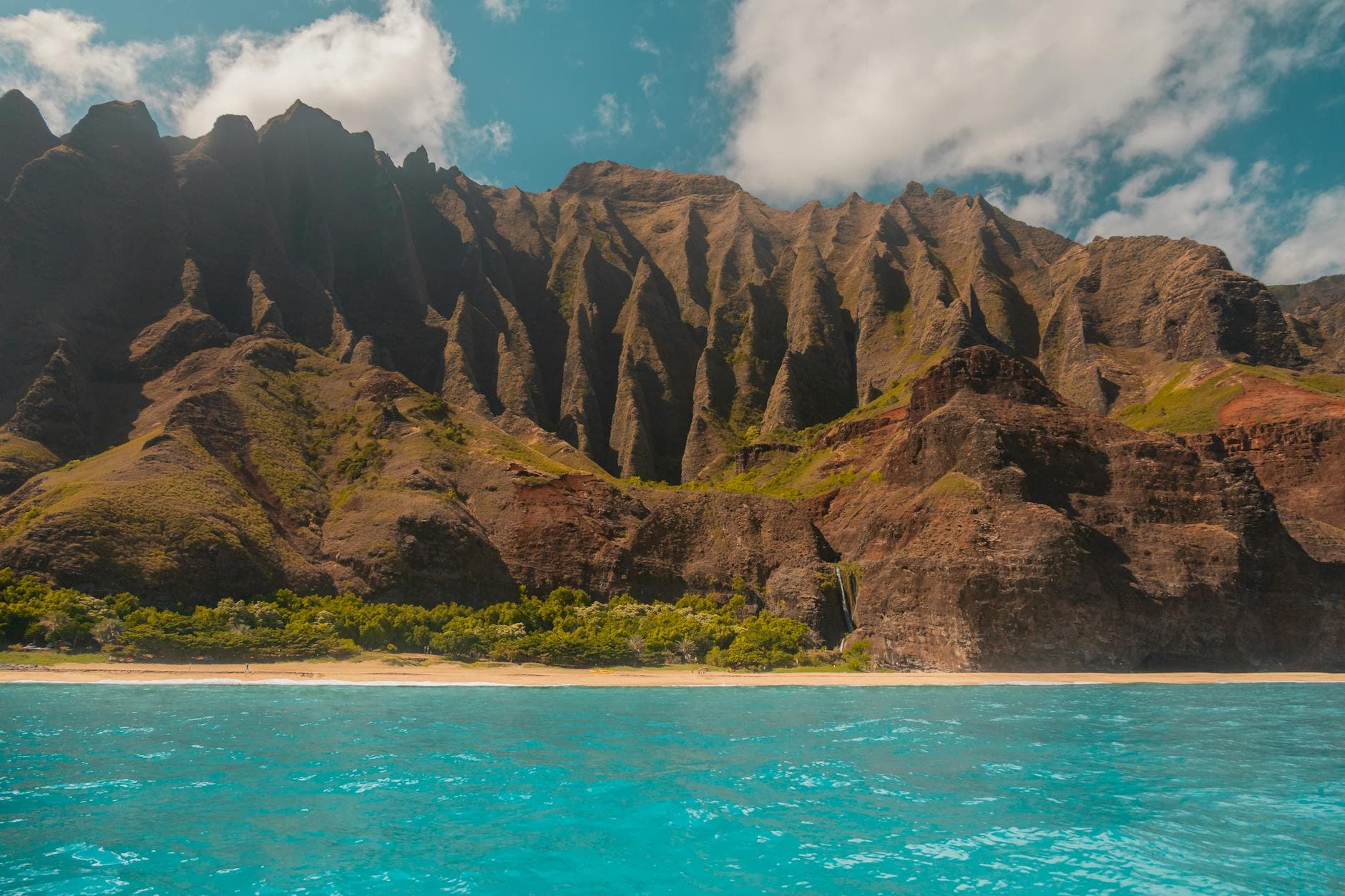
Hawaii also wins on what surrounds its beaches. The Na Pali Coast on Kauai (17 miles of 4,000-foot emerald cliffs) is one of the most dramatic coastlines on the planet. You can sail, kayak, or helicopter along it, and the scale never stops being shocking.
The Bottom Line on Beaches
Hawaii offers more variety in sand colour and coastal geology. Costa Rica offers more wildness and the unique experience of monkeys and toucans sharing the beach with you. If you want Instagram-perfect, geologically extraordinary beaches, Hawaii is the pick. If you want remote, jungle-backed beaches where nature has not been tamed for tourism, Costa Rica wins.
Romance Factor
Costa Rica: Jungle Intimacy
Costa Rica's romance comes from isolation, immersion, and shared discovery. When you are sitting in a volcanic hot spring at the base of Arenal Volcano at night, with steam rising around you, howler monkeys calling from the forest, and zero light pollution overhead, you are not at a resort. You are somewhere genuinely wild, and you are sharing it with only each other.
Most romantic moments:
- Soaking in the hot springs at Tabacon Thermal Resort while Arenal Volcano towers above you in the darkness, its silhouette framed by stars
- A private waterfall hike in Monteverde where your guide leads you off the main trail to a swimming hole surrounded by cloud forest, no one else there
- Watching the sunset from a plunge pool at a cliffside boutique hotel in Santa Teresa, the Pacific turning gold below you
- A couples' chocolate-making class at a cacao farm near La Fortuna. You learn to make truffles from raw cacao pods picked that morning
- Waking up in an open-air jungle bungalow where the morning sounds are toucans and howler monkeys rather than traffic
- Walking the bioluminescent plankton beach at Playa Ostional on a moonless night, each footstep leaving a trail of blue light
Costa Rica rewards couples who feel most connected when the world shrinks to just the two of them. The lodges are small, the experiences are intimate, and the natural settings create a privacy that even the best resorts cannot manufacture.
Hawaii: Cinematic Romance
Hawaii's romance is bigger, bolder, and more visually spectacular. Every major romantic moment comes with a backdrop that looks like it was designed by a film studio, because, in many cases, it literally was a film set.
Most romantic moments:
- Watching sunrise from the 10,023-foot summit of Haleakala on Maui, bundled in blankets above the clouds, the crater filling with colour
- A private sunset sail along the Kona coast with wine, whale breaching in the distance during winter months
- Driving the Road to Hana together with no schedule: 620 curves, 59 bridges, and a waterfall around every bend
- A couples' massage at a world-class resort spa followed by dinner overlooking Wailea Beach
- Stargazing from the summit of Mauna Kea on the Big Island, one of the clearest night skies on earth
- A helicopter flight over the Na Pali Coast where your partner grabs your hand because the cliffs are that dramatic
Hawaii makes romance cinematic. The settings are so visually powerful that everyday moments (a morning coffee on a lanai, a drive along the coast) feel amplified.
The Bottom Line on Romance
Costa Rica's romance is earthy, intimate, and wrapped in nature. Hawaii's romance is dramatic, grand, and visually spectacular. If you melt when you are alone together in a hot spring with howler monkeys overhead, Costa Rica is your answer. If your heart races watching sunrise above the clouds on a volcano summit, Hawaii has that covered. Both are deeply romantic: they just operate on different frequencies.
Activities & Adventures
This is the core of both destinations. Neither Costa Rica nor Hawaii is a "lie on the beach for a week" honeymoon. Both reward couples who want to do things.
Costa Rica: Top Honeymoon Activities
- Hanging bridges and zip-lines in Monteverde Cloud Forest: Walk suspended bridges through the canopy 200 feet above the forest floor, then zip-line back down. Selvatura Park runs one of the best operations, with 13 cables including one that stretches nearly a mile. Budget $50–$85 per person.
- White-water rafting on the Pacuare River: Class III and IV rapids through a remote jungle canyon. Multi-day trips include camping on the riverbank in permanent tents. This is considered one of the top ten rafting rivers in the world. Full-day trips from $90–$120 per person.
- Night wildlife walk in Monteverde: A guide with a flashlight leads you through the cloud forest after dark. You will see red-eyed tree frogs, sleeping toucans, tarantulas, kinkajous, and insects that glow. Two hours, $25–$40 per person.
- Arenal Volcano hike and hot springs: Hike the old lava trails on Arenal's flanks during the day, then soak in naturally heated thermal pools at Tabacon, Baldi, or Ecotermales. The free public hot springs at the base of the volcano (El Choyin) are genuinely hot and genuinely free.
- Manuel Antonio National Park: The smallest and most visited national park in Costa Rica, and for good reason. Capuchin monkeys, two-toed sloths, iguanas, and a postcard beach all within a two-hour trail loop. Arrive early. Closed Tuesdays.
- Surfing lessons in Santa Teresa or Tamarindo: Consistent, warm-water breaks suitable for beginners on the Pacific coast. Two-hour lessons run $40–$60 per person, including board rental.
- Corcovado National Park (Osa Peninsula): National Geographic called it "the most biologically intense place on earth." Tapirs, scarlet macaws, all four Costa Rican monkey species, and jaguars (rare but present). Requires a guide and a commitment: this is not a casual day trip. Two-day guided trips from $250 per person.
- Snorkelling at Cahuita National Park (Caribbean coast): Costa Rica's best reef snorkelling, with brain coral, parrotfish, and nurse sharks in shallow, warm water. Park entry is by donation.
Hawaii: Top Honeymoon Activities
- Drive the Road to Hana (Maui): 620 curves, 59 bridges, and some of the most extraordinary coastal scenery in the United States. Stop at Twin Falls, Wai'anapanapa State Park (black sand beach), and the Pipiwai Trail to 400-foot Waimoku Falls.
- Helicopter tour of the Na Pali Coast (Kauai): The only way to see the full scale of Kauai's 4,000-foot sea cliffs. Blue Hawaiian and Jack Harter are the established operators. Budget $250–$350 per person.
- Snorkel at Molokini Crater (Maui): A crescent-shaped volcanic crater three miles offshore with 150-foot visibility. Morning departures beat the afternoon wind.
- Hawaii Volcanoes National Park (Big Island): Walk through ancient lava tubes, hike across volcanic craters, and trace where Kilauea's flows reshaped the coastline. Unlike anything else in the United States.
- Sunrise at Haleakala (Maui): Drive to the 10,023-foot summit before dawn. The crater fills with colour as the sun rises. Reservations required and they sell out weeks in advance.
- Kayak to the Mokulua Islands (Oahu): Paddle from Lanikai Beach to the twin islands offshore. Bring a picnic lunch. It is a workout, but reaching those islands on your own power is deeply satisfying.
- Surf lesson at Waikiki (Oahu): The gentle waves where modern surfing was born. Two-hour lessons run $80–$120 per person.
- Sunset sail off Ka'anapali or Kona: Catamarans depart nightly with drinks, appetisers, and the sun dropping into the Pacific. From $80–$150 per person.
The Bottom Line on Activities
Costa Rica offers more raw, immersive adventure: the kind where you are in the jungle, on a river, face-to-face with wildlife that is not behind glass. Hawaii offers more polished adventure with better infrastructure: the kind where a world-class helicopter tour transitions seamlessly into a beachside dinner. Costa Rica's activities are also markedly cheaper. A full day of zip-lining, hanging bridges, and hot springs in Arenal costs less than a single helicopter ride in Kauai.
Wildlife
This is not close.
Costa Rica: The Biodiversity Capital of the Western Hemisphere
Costa Rica contains roughly 5% of the world's known species in a landmass that occupies 0.03% of the earth's surface. That statistic sounds academic until you walk through Manuel Antonio and a white-faced capuchin monkey reaches down from a branch to examine your hat, or a three-toed sloth slowly rotates its head 180 degrees to look at you with an expression of total indifference.
What you are likely to see:
- Three-toed sloths: common in Manuel Antonio, Monteverde, and La Fortuna. Guides carry telescopes and know exactly which trees to check. You will see one.
- Howler monkeys: their calls carry for miles through the forest. They sound like dinosaurs. You hear them before you see them, and then you see them everywhere.
- White-faced capuchin monkeys: intelligent, bold, and occasionally larcenous. They will steal food from your bag if given the chance. Entertaining to watch.
- Toucans: the keel-billed toucan, with its absurdly oversized rainbow bill, is common in Caribbean lowlands and cloud forest edges. The bird looks like it was designed by a children's book illustrator.
- Scarlet macaws: pairs fly overhead at dawn and dusk in the Osa Peninsula and around Carara National Park. Bright red, blue, and yellow against a green canopy.
- Red-eyed tree frogs: Costa Rica's poster animal. Nocturnal, so you see them on guided night walks. Bright green body, electric blue flanks, red eyes, orange feet. Absurdly photogenic.
- Humpback whales: visible from shore at Marino Ballena National Park (Uvita) from July through October and December through March. Two separate populations migrate through, giving Costa Rica an unusually long whale season.
- Sea turtles: olive ridley turtles nest in massive arrivals (arribadas) at Ostional, and green, hawksbill, and leatherback turtles nest at Tortuguero on the Caribbean coast. Watching hundreds of turtles emerge from the ocean to lay eggs on a moonlit beach is a once-in-a-lifetime experience.
Hawaii: Ocean Megafauna and Island Endemics
Hawaii's wildlife is more limited in species count but includes some remarkable encounters, particularly marine life.
What you are likely to see:
- Green sea turtles (honu): common on beaches across all islands. Punalu'u Black Sand Beach on the Big Island is the most reliable spot. They bask on the sand within feet of onlookers.
- Humpback whales: Maui's waters are the primary breeding ground for North Pacific humpback whales. From December through April, you can see them breaching from shore. Whale watch boats out of Lahaina and Ma'alaea get you within 100 yards.
- Hawaiian monk seals: one of the most endangered marine mammals on earth. Roughly 1,500 remain. They occasionally haul out on beaches in Kauai and Oahu. If you see one, you are seeing something genuinely rare.
- Spinner dolphins: pods of 100+ dolphins spin and leap in the waters off the Big Island's Kona coast. Snorkel tours operate in their habitat, though new regulations limit approach distances to protect them.
- Nene (Hawaiian goose): the state bird, once nearly extinct, now recovering. You will see them on Maui (Haleakala area) and Big Island (Volcanoes National Park).
- Reef fish: Hawaii's coral reefs support humuhumunukunukuapua'a (reef triggerfish), parrotfish, tang, butterflyfish, and moray eels. Snorkelling at Molokini Crater or Hanauma Bay delivers reliable, diverse marine life.
The Bottom Line on Wildlife
Costa Rica wins this category by a wide margin. The sheer volume and variety of wildlife you encounter daily (monkeys, sloths, toucans, frogs, snakes, butterflies, sea turtles) is extraordinary. Hawaii's marine life is excellent, particularly whale watching and sea turtle encounters, but the terrestrial wildlife simply cannot compete with a country that contains 5% of global biodiversity.
Food & Dining
Costa Rica: Simple, Fresh, and Cheap
Costa Rican food is not elaborate, and that is part of its charm. The cuisine is built on rice, beans, fresh fruit, grilled proteins, and tropical flavours that are consistently good without being showy.
What to eat:
- Casado: the national lunch plate. Rice, black beans, fried plantains, salad, and a protein (chicken, fish, beef, or pork). Served at every soda in the country. $5–$8 and genuinely filling.
- Gallo pinto: the national breakfast. Rice and beans fried together with Salsa Lizano (a tangy Worcestershire-like sauce unique to Costa Rica). Served with eggs, plantains, and sour cream. You will eat this every morning and never tire of it.
- Ceviche: fresh fish or shrimp marinated in lime juice with cilantro, onion, and peppers. The Pacific coast version is particularly good, made with whatever was caught that morning.
- Chifrijo: a bar snack of rice, beans, chicharrones (fried pork), pico de gallo, and avocado. Addictive and built for sharing over cold Imperials.
- Fresh tropical fruit: mangoes, papayas, pineapples, guanabana (soursop), and cas (a tart local fruit) are ubiquitous. Roadside fruit stands sell bags for $1–$2.
Costa Rica's dining scene has grown beyond traditional fare, particularly in tourist areas. Santa Teresa, Nosara, and the Arenal area have excellent international restaurants (wood-fired pizza, sushi, Israeli-influenced cafes, farm-to-table Costa Rican fusion) run by expats and local chefs. A dinner for two at one of these spots runs $30–$60 with drinks.
Coffee is a religion. Costa Rica produces some of the best arabica in the world, and you can tour farms in the Central Valley (Doka Estate, Hacienda Alsacia) to see the process from plant to cup. A proper Costa Rican coffee, brewed strong and served black, costs $1–$2.
Hawaii: Pacific Fusion and World-Class Dining
Hawaiian cuisine draws from Polynesian, Japanese, Chinese, Filipino, Portuguese, and American traditions, and the result is a food scene that rewards exploration at every price point.
What to eat:
- Poke: raw ahi tuna marinated in soy, sesame oil, and seaweed. Hawaii's signature dish, and it is better here than anywhere on the mainland. Foodland and Tamura's on Maui have legendary poke counters.
- Plate lunch: two scoops of rice, macaroni salad, and a protein (kalua pig, chicken katsu, loco moco). $12–$18 and deeply local.
- Kalua pig: whole pig slow-cooked in an underground imu oven. Smoky, tender, and central to any traditional luau.
- Malasadas: Portuguese-style fried dough rolled in sugar. Leonard's Bakery in Honolulu has had a line out the door since 1952.
- Shave ice: feathery ice drenched in tropical syrups, served over ice cream or azuki beans. Matsumoto's on Oahu's North Shore is the pilgrimage.
Hawaii's fine dining scene is mature and excellent. Merriman's on Big Island and Maui pioneered the Hawaii Regional Cuisine movement: local farms, local fish, Pacific Rim techniques. Mama's Fish House on Maui's North Shore is perhaps the most famous restaurant in the state, where the menu tells you which fisherman caught your meal. Expect $150–$250 for dinner for two at this level.
The Bottom Line on Food
Hawaii has the more interesting and more diverse food scene, particularly at the mid-range and fine-dining levels. The fusion of Pacific and Asian cuisines creates flavours you will not find anywhere else. Costa Rica's food is simpler, more traditional, and dramatically cheaper: a full day of excellent meals for two costs $30–$50, which might cover appetizers in Wailea. If food is a defining priority for your honeymoon, Hawaii has the edge. If you want to eat well without thinking about the bill, Costa Rica wins.
Weather & Best Time to Visit
Costa Rica
Costa Rica has two seasons: dry (December through April) and green/rainy (May through November). The terminology matters: "rainy season" does not mean it rains all day. It means sunny mornings and afternoon downpours that typically last one to three hours before clearing.
- Dry season (December–April): Sunny, warm (80–90 F in lowlands, 60–75 F in cloud forests), and the most popular time to visit. The Guanacaste region and Nicoya Peninsula are driest. Prices are highest.
- Green season (May–November): Landscapes are lush and vivid. Mornings are reliably sunny. Afternoon rain arrives like clockwork and usually passes quickly. Crowds thin dramatically. Rates drop 20–40 percent. Wildlife is actually easier to spot because animals gather near water sources.
- Caribbean coast exception: The Caribbean side of Costa Rica runs on its own schedule. September and October are the driest months on the Caribbean coast, which is the opposite of the rest of the country. If you want Caribbean beaches in Costa Rica, time accordingly.
Best honeymoon months: Late November through February (dry season, before peak crowds peak) or June and early July (green season, minimal rain, steep discounts).
Hawaii
Hawaii has remarkably consistent weather year-round, which makes it one of the most flexible honeymoon destinations in the world.
- Peak season (mid-December–March): Slightly cooler (75–80 F), occasional rain on windward sides, humpback whale season. Highest prices.
- Shoulder season (April–June, September–November): Warm (80–88 F), drier, fewer crowds, better rates. This is the sweet spot.
- Summer (July–August): Hot, dry, busy with family vacations. Prices rise but not to peak levels.
Hawaii's microclimates mean you can drive twenty minutes from rain to sunshine. The leeward (west/south) sides of every island are consistently drier and sunnier.
Best honeymoon months: April, May, September, and October. Warm weather, smaller crowds, rates 20–30 percent below peak.
The Bottom Line on Weather
Hawaii is more forgiving. You can book almost any month and find good weather on the dry side of your island. Costa Rica demands more strategic timing: dry season is reliably excellent, but even green season works well if you plan around the afternoon rain pattern. Neither destination sits in a hurricane belt, which is an advantage over the Caribbean.
Nightlife
Costa Rica
Costa Rica's nightlife is localized and varies wildly by region.
Tamarindo is the closest thing to a party town on the Pacific coast. Surf bars, live music, and a handful of clubs stay open past midnight. It is not Cancun, but it has energy. Sharky's and Pacifico Bar are the anchor spots.
Santa Teresa is mellower: cocktail bars built into the jungle, sunset DJ sessions on the beach, and craft beer spots where the crowd is young, international, and tan. Banana Beach is the vibe.
San Jose has a legitimate urban nightlife scene that most tourists skip entirely. Barrio Escalante is the dining and cocktail district, with wine bars, speakeasies, and restaurants that would fit in any major city. If you are spending a night in the capital before heading to the coast, do not sleep on this neighbourhood.
Manuel Antonio and Arenal are quieter. A few bars, a few restaurants with live music, but most couples are in bed by ten because they are hiking at six.
Hawaii
Hawaii's nightlife is mellow by design, similar to Costa Rica but with more polish.
Waikiki on Oahu has the most options: Duke's for sunset cocktails, a handful of bars and clubs around the International Market Place. Maui's nightlife centres on Lahaina (rebuilt after the 2023 fire) and Wailea, where resort bars and live music dominate. Kauai and Big Island are genuinely quiet after 9 PM.
Luaus are Hawaii's signature evening experience. The Old Lahaina Luau on Maui and Smith's Tropical Paradise on Kauai combine Hawaiian food, music, and hula in an outdoor setting. Budget $100–$150 per person. These are cultural experiences, not nightlife in the traditional sense.
The Bottom Line on Nightlife
Neither destination is a nightlife powerhouse, and most adventure-focused honeymooners are not looking for one. Costa Rica's Tamarindo and Santa Teresa have a younger, more international bar scene. Hawaii's evening experiences are more polished and resort-driven. If nightlife is a priority, neither of these should be your first choice, but both have enough to keep you entertained for a drink or two after dinner.
Logistics: Passports, Flights & Getting Around
This is where the practical realities diverge.
Passport Requirement
Hawaii: No passport needed for US citizens. You land, collect bags, and drive to your hotel. Same domestic travel rules as flying to any US state.
Costa Rica: Passport required. Your passport must be valid for at least one day beyond your departure date (though six months of validity is recommended). No visa is needed for stays under 90 days. You will fill out a digital health form before entry, and immigration is typically fast and straightforward.
For couples who already have passports, this is a non-issue. For couples whose passports are expired or who have never had one, Hawaii eliminates the problem entirely. Standard passport processing takes 6–8 weeks; expedited takes 2–3 weeks.
Flights
From the East Coast (NYC/DC):
- Costa Rica: 5–6 hours nonstop to San Jose (SJO) or Liberia (LIR). Airlines include United, Delta, JetBlue, and Spirit. Expect $350–$600 per person round-trip.
- Hawaii: 10–11 hours nonstop to Honolulu (HNL) or Maui (OGG). Expect $500–$900 per person round-trip.
From the West Coast (LAX/SFO):
- Costa Rica: 5.5–6 hours nonstop to SJO or LIR. Expect $300–$550 per person round-trip.
- Hawaii: 5–6 hours nonstop. Expect $250–$450 per person round-trip, sometimes lower on Southwest.
From the Midwest (Chicago/Houston):
- Costa Rica: 4–5 hours nonstop from Houston; 5 hours from Chicago. Expect $300–$550 per person round-trip.
- Hawaii: 8–9 hours nonstop to Honolulu. Expect $450–$800 per person round-trip.
Pro tip for Costa Rica: Fly into Liberia (LIR) if you are heading to Guanacaste, Nicoya Peninsula, or Arenal. Fly into San Jose (SJO) if you are heading to the Central Valley, Manuel Antonio, Caribbean coast, or Osa Peninsula. Choosing the right airport saves hours of driving.
Getting Around
Costa Rica: Renting a car is the best way to explore. Roads between major destinations are paved but can be narrow, winding, and slow. A 4WD is recommended for the Nicoya Peninsula and any unpaved routes. Rental cars run $30–$60 per day for a compact SUV. Shared shuttle services (Interbus, Caribe Shuttle) connect major tourist areas for $30–$60 per person per trip if you prefer not to drive. Domestic flights (Sansa Airlines) connect San Jose to Quepos, Tamarindo, Drake Bay, and other destinations in 30–50 minutes for $80–$130 each way.
Hawaii: A rental car is essential on every island except Oahu (where you can get by with rideshare and transit). Hawaiian roads are well-maintained and easy to navigate. Rental cars run $50–$100 per day. Inter-island flights (Hawaiian Airlines, Southwest) cost $60–$150 each way and take 30–45 minutes.
The Bottom Line on Logistics
Hawaii is logistically simpler: no passport, better roads, English everywhere, familiar systems. Costa Rica requires a passport and more planning around transport, but the flight time from the East Coast is nearly half what it takes to reach Hawaii. For West Coast couples, Hawaii is the logistical winner. For East Coast couples, Costa Rica is closer, cheaper to fly to, and worth the passport requirement.
Sample 7-Day Itineraries
Costa Rica: Volcanoes, Cloud Forest & Pacific Coast
Day 1: Arrive San Jose, transfer to La Fortuna (Arenal) Fly into SJO, pick up rental car, drive to La Fortuna (3 hours). Check into a boutique hotel with volcano views. Evening soak at Tabacon hot springs. Dinner at Don Rufino in town.
Day 2: Arenal Adventure Day Morning: Hike the Arenal Volcano trails through old lava fields. Afternoon: La Fortuna Waterfall (500 steps down, 500 steps back up, worth every one). Evening: Free public hot springs at El Choyin with cold Imperials.
Day 3: Monteverde Cloud Forest Drive to Monteverde (3.5 hours via the scenic route around Lake Arenal). Afternoon: Selvatura hanging bridges walk through the cloud forest canopy. Evening: Night wildlife tour: frogs, sleeping toucans, and insects you have never imagined.
Day 4: Transfer to Nicoya Peninsula Morning: zip-line tour in Monteverde. Afternoon: Drive to Santa Teresa or Nosara (4–5 hours). Check into a beachfront boutique hotel. Sunset cocktails on the sand.
Day 5: Beach & Surf Day Morning: couples' surf lesson on a warm-water break. Afternoon: lazy beach day. Explore the town on foot: smoothie bowls, yoga studios, and boutique shops. Dinner at a farm-to-table restaurant in the jungle.
Day 6: Explore the Coast Drive to nearby beaches (Playa Manzanillo, Playa Hermosa). Snorkel, swim, or just find an empty stretch of sand. Couples' massage at your hotel spa. Farewell dinner at the best restaurant you have found all week.
Day 7: Depart Morning beach walk. Drive to Liberia airport (LIR) for departure, or connect back to SJO.
Estimated total (mid-range): $3,000–$3,500 for two, including flights from NYC.
Hawaii: Maui & Big Island Split
Day 1: Arrive Maui Fly into Kahului (OGG). Pick up rental car. Drive to Ka'anapali or Wailea. Settle in. Sunset on the beach with a mai tai.
Day 2: Road to Hana Leave early. Drive the 620 curves. Stop at Twin Falls, Wai'anapanapa Black Sand Beach, and the Pipiwai Trail to Waimoku Falls. Take your time. This is not a race.
Day 3: Haleakala Sunrise & South Maui Wake at 3 AM. Drive to the Haleakala summit for sunrise above the clouds (book reservations in advance). Nap in the afternoon. Dinner at Mama's Fish House on the North Shore.
Day 4: Snorkel & Beach Day Morning: boat trip to Molokini Crater for snorkelling in 150-foot visibility. Afternoon: beach time at Wailea or Ka'anapali. Evening: luau at Old Lahaina Luau.
Day 5: Fly to Big Island Short inter-island flight to Kona (KOA). Check into a resort or boutique hotel on the Kohala Coast. Afternoon: snorkel at Two Step (Honaunau Bay) near the Place of Refuge.
Day 6: Hawaii Volcanoes National Park Drive to Volcanoes National Park (2.5 hours from Kona). Walk through Thurston Lava Tube. Hike the Kilauea Iki trail across a solidified lava lake. Watch the crater glow at dusk.
Day 7: Depart Morning: visit Punalu'u Black Sand Beach to see sea turtles. Drive back to Kona for departure flight.
Estimated total (mid-range): $5,300–$8,000 for two, the mid-range total in our Hawaii guide, with flights from the US West Coast included.
Our Verdict: How to Choose
After comparing every category, here is where we land.
Choose Costa Rica if...
- Budget matters. You can have a genuinely excellent honeymoon in Costa Rica for $2,500–$3,500 total. That is less than the $3,300 low end of a 7-night Hawaii trip.
- Wildlife is important to you. Nothing in the United States matches the biodiversity of Costa Rica's national parks. Sloths, monkeys, toucans, and tree frogs are part of the daily scenery, not rare sightings.
- You want raw adventure. White-water rafting through a jungle canyon, zip-lining above a cloud forest, hiking to a remote beach: Costa Rica's adventures feel less curated and more immersive.
- You live on the East Coast or Midwest. Costa Rica is 5–6 hours from most major eastern cities, roughly half the flight time to Hawaii.
- You want the feeling of being abroad. Different language, different currency, different food, different pace. A Costa Rica honeymoon feels like an international adventure because it is one.
Choose Hawaii if...
- You do not have a passport or prefer the simplicity of domestic travel.
- Food is a priority. Hawaii's dining scene (poke, plate lunch, farm-to-table fusion) is more diverse and more sophisticated than what Costa Rica offers.
- You want beach variety. Black sand, green sand, red sand, gold sand: Hawaii's volcanic geology creates beaches you will not find anywhere else.
- You live on the West Coast. Hawaii is 5–6 hours away with cheap flights, making it the easier and often less expensive option.
- You want polished infrastructure. Excellent roads, reliable services, world-class resorts, and the familiarity of travelling within the United States.
- Whale watching is on your list. Maui's humpback whale season (December–April) is one of the best in the world.
If you genuinely cannot decide...
Consider what you will remember in ten years. If the answer is "the moment a sloth turned its head to look at me from three feet away" or "sitting in a volcanic hot spring under a sky full of stars," go to Costa Rica. If the answer is "watching the sunrise above the clouds on Haleakala" or "that green sand beach we hiked an hour to reach," go to Hawaii. Both will give you stories. They are just different stories.
Keep Exploring
Destination guides:
- Hawaii Honeymoon Guide 2026: Island-by-island breakdown
- Best Honeymoon Destinations for 2026: Our ranked list of the world's top spots
- Mexico Honeymoon Guide 2026: Another adventure-meets-beach option nearby
Comparisons:
- Hawaii vs Caribbean Honeymoon: The classic comparison
- Bali vs Maldives Honeymoon: If you are considering Southeast Asia
- Thailand vs Bali Honeymoon: Budget adventure in Asia
Planning resources:
- How Much Does a Honeymoon Actually Cost?
- 15 Cheap Honeymoon Destinations That Don't Feel Cheap
- The Complete Honeymoon Planning Checklist
FAQ
Do I need a passport for Costa Rica or Hawaii?
Hawaii is a US state: no passport required for American citizens. Costa Rica requires a valid passport for entry. Your passport must be valid for at least one day beyond your planned departure from Costa Rica, though six months of remaining validity is recommended. If your passports are expired or you have never applied, Hawaii eliminates this concern entirely.
Which is cheaper, Costa Rica or Hawaii?
Costa Rica is significantly cheaper at every tier. A mid-range 7-night honeymoon in Costa Rica costs $3,000–$3,500 for two. The equivalent in Hawaii runs $5,300–$8,000 for two with flights from the West Coast, according to our Hawaii guide. These are estimates. Flights from the East Coast are also shorter to Costa Rica.
Is Costa Rica safe for honeymooners?
Costa Rica is one of the safest countries in Central America and has a long history of welcoming tourists. Standard travel precautions apply: do not leave valuables visible in your car, use hotel safes, and avoid walking alone in unfamiliar urban areas at night. The tourist corridors (Arenal, Monteverde, Manuel Antonio, Nicoya Peninsula, Guanacaste beaches) are well-patrolled and have strong tourism infrastructure. Petty theft (car break-ins, pickpocketing in San Jose) is the primary risk, not violent crime.
Can I see wildlife in both destinations?
Yes, but the scale is different. Costa Rica's biodiversity is extraordinary: monkeys, sloths, toucans, macaws, frogs, and sea turtles are part of daily life in national parks and eco-lodges. Hawaii's wildlife highlights are marine: green sea turtles on beaches, humpback whales off Maui (December–April), monk seals, and colourful reef fish. If wildlife encounters are a primary motivator for your trip, Costa Rica is the clear choice.
What is the best time of year to visit Costa Rica for a honeymoon?
The dry season (December through April) offers the most reliable sunshine and is the most popular time to visit. Late November and early December are a sweet spot: dry season pricing has not fully kicked in, and the weather has already improved. Green season (May through November) is underrated for honeymooners: lower prices, fewer crowds, lush landscapes, and rain that typically falls in short afternoon bursts rather than all-day downpours.
Can I combine Costa Rica and Hawaii in one trip?
Technically yes, but it is not practical. They are in completely different directions from the US mainland, and combining them would add significant flight time and cost. A better approach: choose one for your honeymoon and save the other for a future anniversary trip. Both destinations reward return visits: there is always another island (Hawaii) or another region (Costa Rica) to explore next time.
Which destination is better for couples who want both adventure and relaxation?
Both deliver this combination well, but with different default settings. Costa Rica defaults to adventure with pockets of relaxation: you plan active mornings and relax in hot springs or on the beach in the afternoon. Hawaii defaults to relaxation with adventure options: your resort is the home base, and you choose how active to make each day. If you lean toward "adventure with downtime," Costa Rica. If you lean toward "relaxation with adventure days," Hawaii.
Planning an adventure honeymoon and still weighing Costa Rica against Hawaii? Explore our destination guides, use our budget calculator to build your trip budget, or check our planning checklist to get started.
Plan Your Trip
Planning your budget?
Try the free Budget Calculator →Compare destinations side-by-side
See how this destination stacks up against others on cost, weather, and romance.